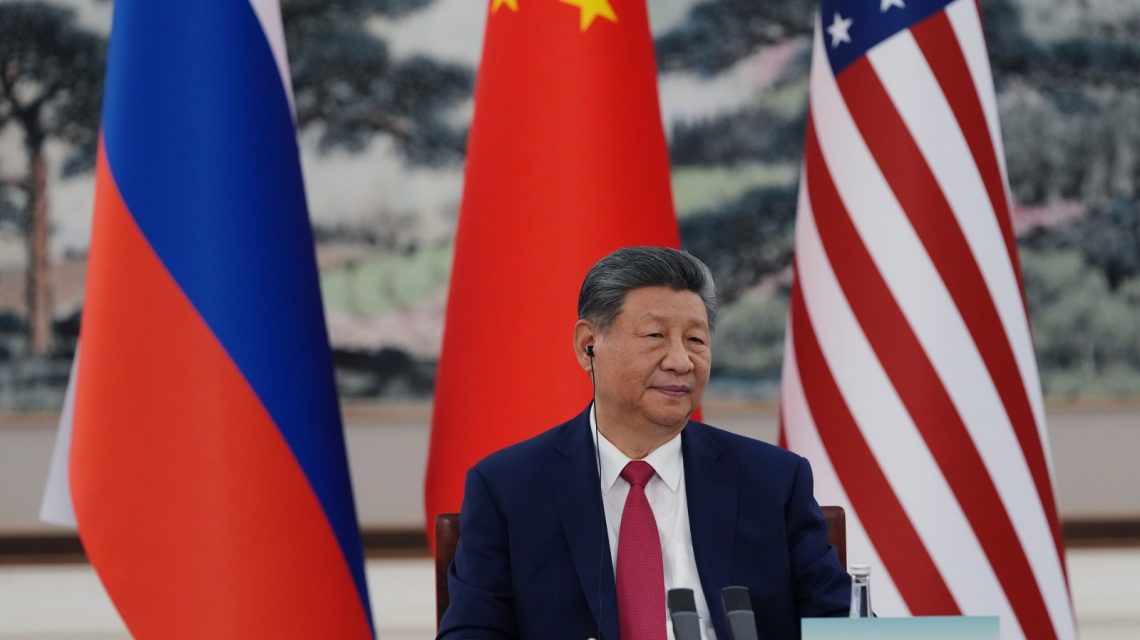
Republican hard-liners would likely disapprove of the events at the recent Asia-Pacific Economic Cooperation (APEC) summit in southern China. President Donald Trump reinforced his ties with Xi Jinping and Vladimir Putin. Anti-authoritarian Democrats might use these interactions to critique him during his time as a lame-duck president. Trump’s apparent indifference to these domestic concerns is notable.
At the summit, TV footage captured an unusual moment as Xi Jinping embraced Trump in a personal greeting upon his arrival in Shenzhen. Trump assisted Xi on an escalator. The focus appeared primarily on their interaction. Some U.S. observers were uneasy about Trump taking a secondary position in a photo op with Xi, as well as his evident enthusiasm when meeting Putin.
President Trump aims to shape a distinct presidential legacy. He seems uninterested in scripted interactions. Trump’s actions reflect his understanding of political symbolism in global diplomacy. “President Xi and I have formed an outstanding personal relationship,” Trump stated, acknowledging potential criticism but emphasizing his satisfaction with their rapport. In response, Xi nodded while Marco Rubio, a Beijing-skeptic U.S. official, showed no visible reaction.
During the summit, a Bloomberg reporter was barred from the conference for questioning Trump loudly about former Nvidia boss Jensen Huang, demonstrating China’s control over the event’s proceedings. Trump chose not to intervene. This incident did not deter him from praising Xi’s planning, expressing satisfaction with the event’s execution.
“These types of meetings, though often heavy on symbolism and light on substance, are very important for establishing strategic stability,” stated Jennifer Kavanagh, a senior analyst at Defense Priorities. She defended Trump’s meetings as praiseworthy efforts toward global stability.
During his presidency, Trump has worked to reestablish Putin’s international status. Following Russia’s controversial actions, Putin has managed to emerge from isolation. Trump also provided significant support to Xi, who seized opportunities presented by Russia’s economic challenges. This dynamic has shifted the historical relationship balance, positioning China as a dominant player in Eurasian geopolitics.
While some Americans are warming to China, Trump’s closeness with Xi may not align with public sentiment. Trump believes his policies have corrected the U.S.-China economic imbalance, benefiting American farmers through trade arrangements. To maintain these benefits, Trump has downplayed contentious issues like China’s support for Iran or alleged U.S. espionage.
In response, Xi offered Trump notable gestures, such as a prime seating arrangement for the APEC dinner. Xi also acknowledged Trump’s arms control focus by promoting a vision of a nuclear-free world, even as China enhances its nuclear capabilities.
Trump’s unconventional approach is well-known, and he anticipates challenges from both parties as they push for a more assertive stance against China. Ryan Hass from the Brookings Institution predicts increased turbulence in U.S.-China relations by 2027, with Congress taking a more active role and fewer high-level meetings occurring. Despite this, Trump’s actions in Shenzhen suggest his commitment to his vision of global peace, regardless of its implications for future Republican leadership.
By channeling an outlook similar to former President Obama’s 2015 address, Trump seems ready to pursue his agenda without further electoral pressures.
 Push for ‘Medicare for All’ Faces Internal Party Divide
 Aurora for Change Advocates Push for Mayoral Recall
 Democrats Outline Plans for 12 Presidential Primary Debates Leading to 2028 Election
 Netflix Show Faces Petition Over Religious Content
 Treasury Department Identifies Iranian Shadow Banking Links
 Rachel Lindsay Discusses Recent Breakup and Potential Future with Willie Jones