
Meta’s Chief AI Officer issued a cautionary statement about the potential loss of human control over artificial intelligence. Alexandr Wang expressed concerns about superintelligence, which he defined as AI surpassing human intellect. He emphasized that humanity’s response to this challenge in the upcoming year could significantly influence our future.
His remarks followed a claim by an Anthropic employee about using the AI tool Claude to address the Riemann Hypothesis, a complex unsolved mathematical problem. AILevent Alpoge, who worked with the AI on the proof, shared his sense of wonder and excitement about the prospects of AI, while also acknowledging the unresolved status of his findings.
Wang highlighted the potential of an era where AI might evolve without human oversight. He argued that this scenario would be challenging, particularly with superintelligent systems vastly superior to humans in any field. He criticized a trend in the industry that views superintelligence as an unavoidable outcome and urged for meaningful change away from this default path.
“We should not be okay with a ‘handover’ of society to AI,” Wang stated. “We must focus on developing technology that enhances human agency and empowerment.”
Community Reactions
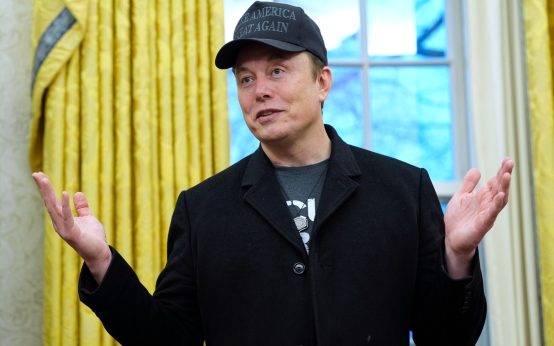
Various public figures responded to Wang’s warning. Elon Musk discussed future plans for SpaceX involving superintelligence. Andrew Yang remarked on the likely scenario of AI dominance in many fields, calling for change. Congresswoman Yassamin Ansari emphasized the necessity for regulatory measures to curb advanced AI development.
In a collective effort, Ansari and others urged international leadership in AI regulation. They supported initiatives like the Ban Artificial Superintelligence Act of 2026 to limit AI superintelligence advancements.
Media personalities, including Megyn Kelly and Jemele Hill, compared the situation to disaster movie narratives, stressing the need for proactive measures.
Meta’s Approach to Superintelligence
Wang reiterated the importance of safety, praising Meta’s efforts under Mark Zuckerberg’s leadership. Wang mentioned the commitment to using AI for the benefit of communities rather than unconstrained development.
In his essay, Zuckerberg outlined Meta’s plans for responsible superintelligence development. He expressed concern over the negative outlook among AI developers and proposed empowering people with this technology.
Zuckerberg stated, “The best and most realistic path to building a positive AI future is by delivering superintelligence to everyone.”
Views From Other Tech Leaders
Former Anthropic employee Jacob Coxon warned of AI’s unchecked progress. He highlighted the risks of superhuman AI systems gaining power and resources rapidly.
Anthropic CEO Dario Amodei supported the call for responsible AI development. OpenAI’s CEO Sam Altman echoed the importance of independent evaluations.
Legislative Responses
Policymakers on various levels are pushing for regulations against AI threats. Proposed measures include the AI Kill Switch Act mandating emergency mechanisms for AI systems. California’s Gavin Newsom initiated state oversight plans for AI.
This article was produced by Martyn, Newsweek’s AI assistant. For more information, contact editors Samantha Beech and Gray R. Thomas.
 Jensen Huang Returns to Nvidia HQ as CEO Once Again
 Trump’s Reaction to Jensen Huang’s Reinstatement as Nvidia CEO
 Concerns Over Jensen Huang’s Reinstatement as Nvidia CEO
 Nvidia CEO Jensen Huang Reinstated After Employee Support
 Elon Musk’s SpaceX Faces Lawsuits Over Alleged AI Misconduct
 European Governments Urge 72-Hour Preparedness Amid Cyber and Climate Risks