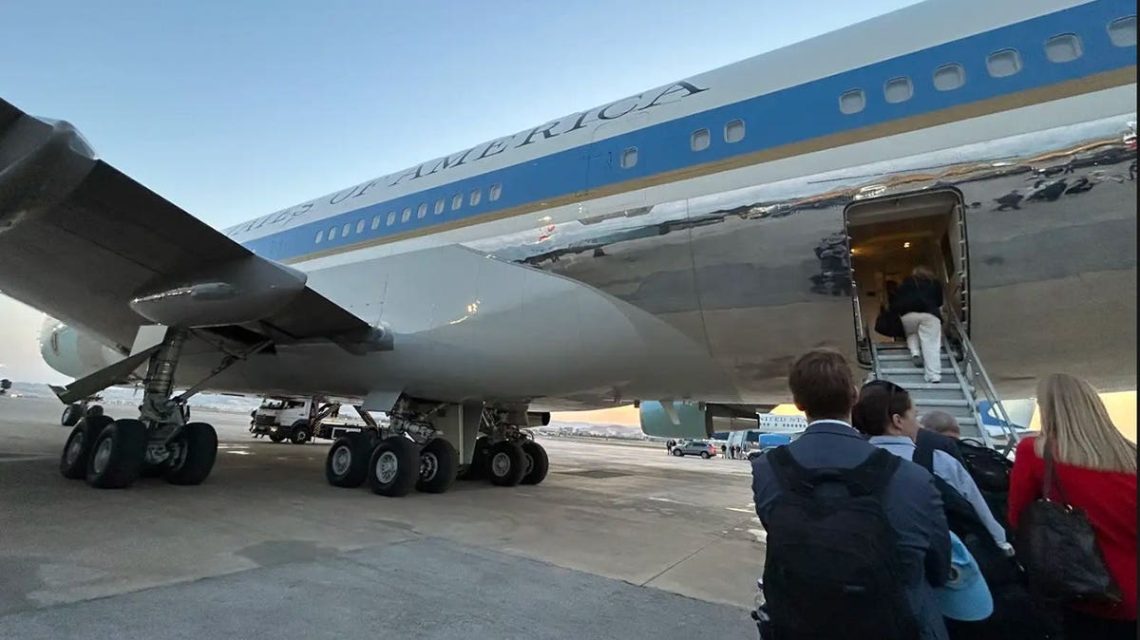
In recent years, President Donald Trump has been involved in several secretive travel operations, notably while on Air Force One. These maneuvers, designed to protect the president from potential threats, demonstrate a history of sophisticated decoys and secrecy.
Early Instances of Secretive Travel
One notable instance occurred on December 26, 2018, when Trump made a surprise Christmas visit to U.S. troops in Iraq. During this trip, the president’s aircraft flew unannounced, with window shades drawn and lights dimmed to conceal its presence. Despite these efforts, a British plane spotter identified the flight, which led to speculation about Trump’s movements.
Ankara Deception
On July 8, a more elaborate strategy unfolded as Trump departed a NATO summit in Ankara, Turkey. Amid credible Iranian threats, a diverting decoy operation was executed. Trump publicly boarded the legacy Air Force One but exited secretly into an airport catering truck. He then transferred to a smaller Air Force C-32A, while the larger presidential jet took off with journalists and some White House staff.
The decoy aircraft used the “AF1” call sign, whereas the C-32A carrying Trump used “RCH18,” confusing observers and keeping his whereabouts hidden.
Continuation and Adaptation
This approach builds on previous operations, such as when Trump traveled to Afghanistan for Thanksgiving in 2019. That event involved a similar strategy, leaving one presidential plane visible in Florida to act as a decoy. Trump instead used another aircraft, preserving the appearance that he was at Mar-a-Lago.
The Ankara operation took this method further, incorporating public boarding of known aircraft and use of less conspicuous planes for actual travel. The practice reflects an ongoing effort to maintain security and unpredictability in global movements.
Responses and Implications
Secret Service and military coordination play crucial roles in these operations, highlighting the significance of protecting national leadership. Despite an absence of direct confirmation from the White House, it’s evident that addressing potential threats requires innovative, sometimes public, ruse tactics.
These strategies showcase the complexities and logistical planning needed to shield the president, especially in volatile regions or under direct threats. Trump’s administration has shown it will adapt and expand such measures as necessary for safety and to counter threats.
 Key Developments from Today’s News
  Key Events in Politics and Technology: U.S. and U.K. Developments
 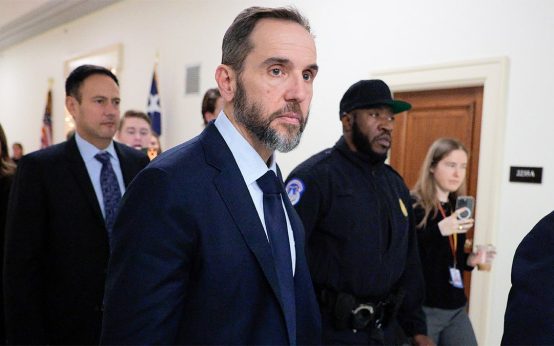 Jim Jordan Criticizes Jack Smith for Misleading Congress
  Trump Announces $15 Billion Iowa Steel Mill Investment
  Abdul El-Sayed’s Health-Focused Campaign in Michigan
  Plaintiffs Challenge Identity Representation in Kansas