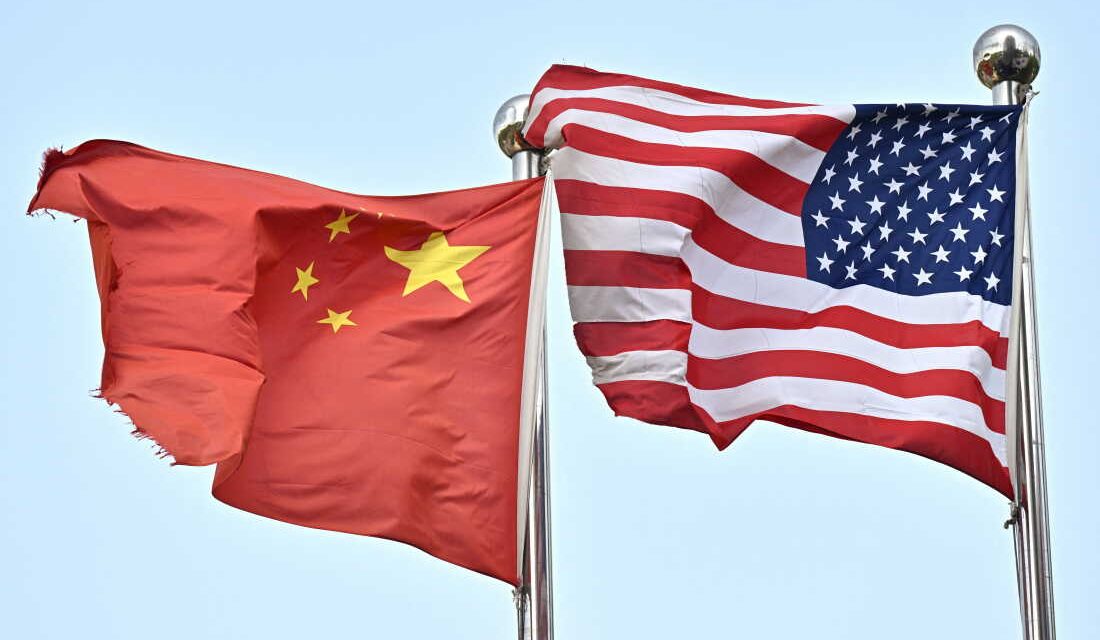
The United States and China are currently engaged in a tense competition marked by mutual distrust over artificial intelligence (AI). Many experts doubt that a meeting between President Trump and Chinese leader Xi Jinping planned for next Thursday in Washington will ease the situation. Recent accusations from the Trump administration suggest Chinese AI companies have been involved in intellectual property theft by replicating advanced U.S. AI models, prompting threats of sanctions. China has criticized U.S. restrictions on chip exports, accusing the U.S. of using a ‘Cold War playbook’ to suppress Chinese AI development. The room for compromise seems limited.
Despite the official tensions, former officials and policy experts have noticed active bilateral communications at a sub-national level, referred to as ‘Track Two’ diplomacy. For decades, informal private meetings and conferences have underpinned government-to-government, or ‘Track One’, interactions. These are often organized by think tanks or universities and bring together experts to discuss a wide range of issues, including AI.
Sarah Beran, a former U.S. diplomat and incoming president of the National Committee on U.S.-China Relations, emphasizes the importance of AI in such discussions. The committee, which has been fostering policy exchanges since 1972, manages several Track Two dialogues. Beran notes the difficulty of AI discussions due to the current lack of trust between the two nations. She mentions the fear that AI could be used strategically, making it a challenging topic.
Track Two aims to foster understanding and work towards policy agreements acceptable to both nations. Occasionally, governments may use these dialogues as informal channels to test ideas. Beran recalls that when formal military discussions halted after Nancy Pelosi’s 2022 Taiwan visit, Track Two was used to propose resuming communications, which then-President Biden and Xi agreed to do at a 2023 summit.
Retired Air Force General Jack Shanahan, involved in Track Two military AI discussions, highlights how these informal talks led to an agreement that human control should govern any use of nuclear weapons. This consensus emerged from years of quiet dialogue.
Samm Sacks from the Johns Hopkins School of Advanced International Studies notes her participation in several detailed Track Two discussions on AI. Such dialogues allow candid conversations on sensitive issues without the pressure to reach public agreements. Sacks believes these discussions highlight common ground on AI, even amid tensions over chip exports and intellectual property accusations.
Shanahan concurs, observing a shift in China’s perspective on AI as the technology evolves. Despite perceiving itself as technologically behind, China acknowledges the significance of AI discussions.
Official-level tensions remain high, with the U.S. and China focusing on different concerns. The U.S. is worried about cyber vulnerabilities and AI control loss, while China emphasizes regime stability and hardware self-reliance. These differing priorities influence the nature of Track Two dialogues and temper expectations for concrete outcomes.
Scott Kennedy from the Center for Strategic and International Studies appreciates how Track Two talks enhance understanding of each side’s red lines and decision-making processes. While these dialogues map out differing viewpoints, they require government backing to be effective. According to Kennedy, current leadership is lacking, resulting in a vacuum that Track Twos alone cannot fill.
Sacks warns of a precarious moment in AI disagreements, with Track Two’s utility at risk. U.S. AI companies’ recent call for a global agreement to slow AI development did not sit well with China. She believes both governments should signal the need to address AI safety and related risks collaboratively.
Some Track Two participants have noted the Trump administration’s limited engagement with these dialogues, adding challenges to their work. They will closely watch the upcoming Trump-Xi meeting for indications of AI’s importance as a topic for expert discussion.
Beran emphasizes the need to build confidence in these discussions as safe spaces for dialogue. The National Committee’s next meeting is planned in the coming months, aiming to leverage any presidential statements as a starting point for upcoming Track Two conversations on AI.
 Concerns Surface Over SpaceX Facility in Louisiana
  Sony Cancels Funding for Kojima Productions’ New Game
  Addressing Artificial Intelligence Concerns Beyond Political Lines
  Navigating AI Responses in Health Queries
  Democrats Urged to Address AI Regulation Amid Trump’s Position
  Concerns Over Chinese Influence in Automotive Technology