Rescue Operations in Venezuela
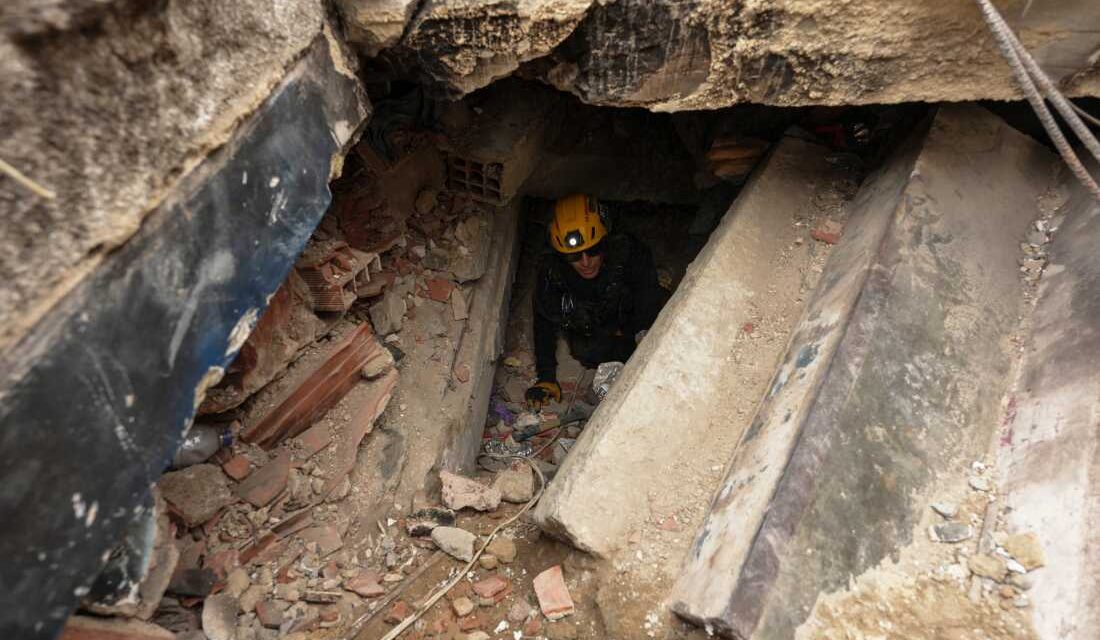
In the coastal town of Caraballeda, Venezuela, an American search-and-rescue team is diligently working to save lives following devastating earthquakes. On Tuesday, members of the Los Angeles County Fire Department were seen sifting through the rubble of a collapsed 12-story building.
Assisted by local Venezuelan volunteers, many of whom have personal ties to the tragedy, the situation is dire. Three teenage girls remain trapped under the debris. With urgency, crew members instruct, ‘Keep scooping! Keep scooping!’ as the search for survivors continues.
Earthquake Impact and Rescue Efforts
The aftermath of last week’s twin earthquakes has been catastrophic. According to officials, at least 2,295 fatalities are reported, with tens of thousands missing. The Venezuelan government’s sluggish response leaves much of the rescue operations to international teams. Among the most active are those from Los Angeles County, known for their expertise in disaster zones such as Nepal, Mexico, and Turkey.
Equipped with advanced tools like sniffer dogs, jackhammers, and sonar instruments, their mission is to locate and communicate with trapped individuals. LA fire Capt. Michael Toepfer explained their approach, instructing possible survivors to tap or knock to signal their presence. Despite challenges, there have been faint responses from the debris.
Survival Beyond Initial Hours
Rescue operations generally focus intensively within the first 24 to 72 hours post-disaster. However, Nichole Bosson, a doctor with the team, highlights cases where victims survive longer under certain conditions such as access to food and water. She recalls a Nepal mission where a teen was rescued after five days.
Building Conditions and Challenges
The affected building, notorious for its poor construction quality, adds complexity to the rescue efforts. Styrofoam mixed with concrete is visible in the collapsed structure, reflecting substandard construction practices. During the earthquakes, the building was impacted by another structure, complicating access further.
Personal Tragedy and International Support
Khaterine Roa, the mother of the three trapped girls, is actively engaged with rescue teams, desperate for a successful outcome. She expresses gratitude for the efforts of the American firefighters amid the Venezuelan government’s absence.
U.S. Assistance and Challenges
At a press conference, John Barrett from the U.S. Embassy in Caracas stated that American support in Venezuela for earthquake response reached approximately $300 million. This includes search-and-rescue teams, logistical aid, and vital supplies.
The closure of the U.S. Agency for International Development casts uncertainty on long-term U.S. involvement in disaster response across the region. Despite this, the international community, including countries like Switzerland, Chile, and Jordan, collaborates in Venezuela’s time of need.
Political Implications
The Trump administration’s current strategy involves support for Venezuela’s oil industry rather than focusing solely on political shifts. This tactical stance has implications for U.S. relations and aid strategies in the region.
Ongoing Rescue Efforts
Back at the site in Caraballeda, LA firefighters face difficulties navigating the collapsed and intertwined structures. As night fell, hopes for tapping signals diminished. The focus shifted to recovery.
Despite setbacks, the rescue teams find snippets of hope. In nearby operations, a 2-year-old boy trapped for six days was successfully rescued. This fuels determination among responders continuing to battle adversity with unified international effort.
 Ukraine Deploys Ground Robots in ‘Operation Vivaldi’
  Understanding AI’s Impact Compared to Historical Threats
  State Department Alerts on Middle East Travel Amid Rising Tensions
  Iran’s Attacks on Bahrain: The Impact on Military Families
  United Russia’s Dominant Election Result: Implications for Putin’s Ukraine Policy
  Canada’s Tariff Reduction on Chinese EVs Raises Security Concerns