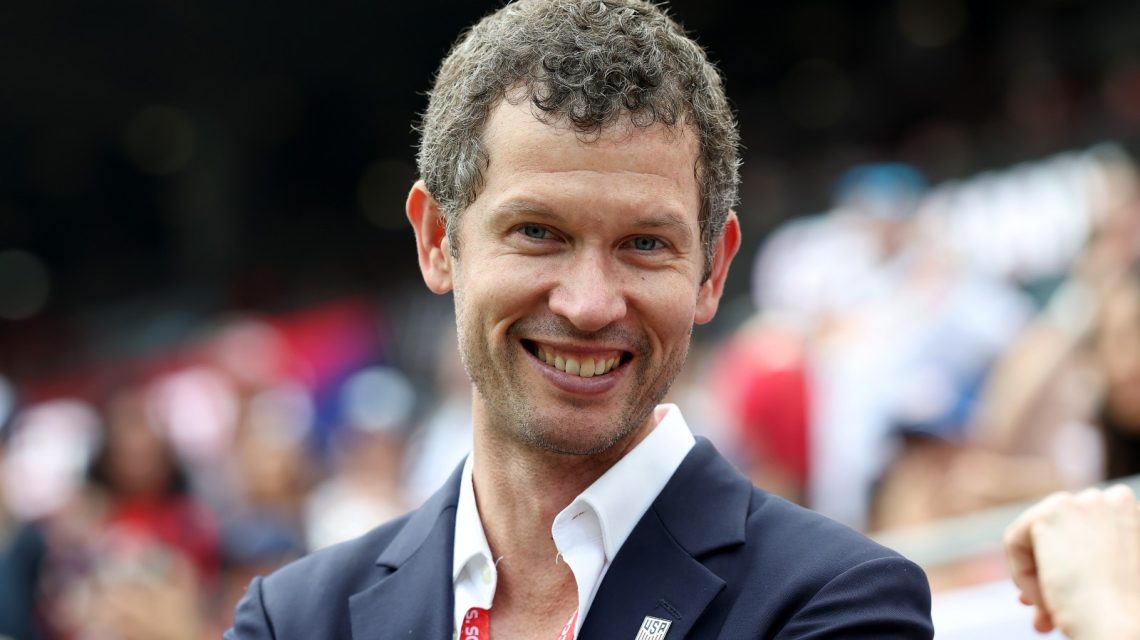
Sports leave lasting memories. Fans remember their first game or their team’s big win. With the 2026 FIFA World Cup approaching, JT Batson, CEO of the U.S. Soccer Federation, recalls his early days on the soccer field. ‘I started at the YMCA in Augusta, Georgia,’ Batson shared in an interview with Newsweek’s Newsmakers Impact series. ‘The jerseys were hot and uncomfortable, and soccer was new to our community. Our parents played baseball or football, not soccer. We chased the ball around a lot, but international college players in Augusta became our coaches and brought real soccer to us.’
These experiences shaped Batson’s career. ‘I also played baseball, basketball, tennis, and golf,’ he said. ‘But soccer stuck with me, thanks to great coaches and fun times with friends. Coaching made a huge impact I could never forget.’
Building a Soccer Legacy
The 2026 World Cup, co-hosted by the U.S., Canada, and Mexico, is about more than just on-field performance. Batson mentions, ‘We’re focused on ensuring our men’s team is ready to succeed, but we also want the World Cup to inspire more Americans to play soccer.’
Soccer’s simplicity is part of its charm. All it takes is a ball. Yet, other sports dominate U.S. parks. ‘Basketball courts are everywhere,’ Batson noted. ‘When a sport is accessible, more kids play it. Through the Soccer Forward Foundation, we’re bringing soccer to every U.S. school with help from Bank of America. Our Places to Play initiative ensures kids have a safe place to play near home.’
‘In New York City, soccer should be played on various surfaces, like blacktops or high school gyms. Kids everywhere need access. We also want big events to inspire them. Our national teams now reflect America’s diversity, a change we’re proud of.’
While informal play lacks formal coaching, guidance is crucial. ‘Coaching is vital,’ Batson emphasized. ‘We provide coaching education for all coaches in America, from parents to professionals. We offer online and in-person opportunities and plan to invest more in this area.’
Access and Affordability
Access and affordability are key concerns for the World Cup 2026, with ticket costs drawing criticism. Yet, Batson highlights involving all soccer fans. ‘Many won’t attend games, so we focus on community events that don’t require tickets. Fanfests and other activities offer involvement.’
‘Most fans watch World Cup on TV. We’ve worked on how to make them feel part of the event. This includes introducing popular new jerseys with Nike and creating various merchandise options for fans.’ Batson recalls watching the 1990 World Cup in a friend’s living room, emphasizing community spirit.
On-Field Achievements
Success isn’t just participating. ‘Our top goal is soccer success. Winning means winning World Cups. We’ve won four with the women’s team and hope for a fifth in Brazil. We must build pathways, infrastructure, and improve teams to ensure success,’ Batson explained.
Batson participated in hiring Mauricio Pochettino and Emma Hayes as coaches. ‘They are world-class with the ability to inspire current and future players.’ The coaches emphasize youth development and coaching education.
Defining Success
Batson envisions success as engagement with the national team, proud performances, and connecting fans with players. ‘Fans should feel proud and connected to our teams, willing them to success. The World Cup will break records and be a massive party.’ Beyond immediate results, its legacy will be felt for years in increased participation and continued investment in soccer, ensuring sustained success.
 Tennessee’s Successful ‘Happy Hour’ Promotion at Neyland Stadium
  Attorney Criticizes ASU’s Handling of Hockey Player Injury Amid Heat Wave
  Chicago White Sox Use Innovative Pitching Strategy in Playoffs
  Rangers Triumph Over Lightning with Shesterkin’s Historic Goalie Goal
  Philadelphia Eagles Face Key Player Absences in NFC Clash Against Los Angeles Rams
  Hot Mic Incident Misidentifies Reporters, Sparks Online Controversy