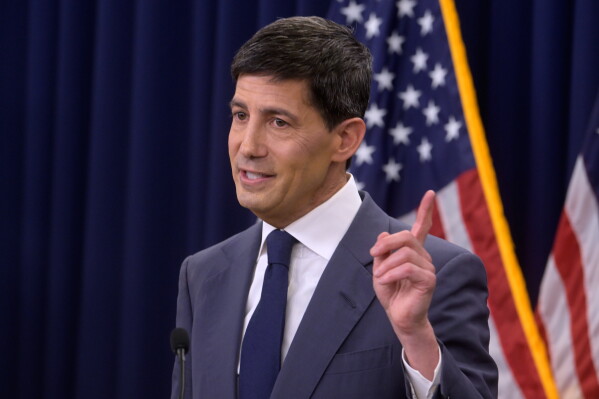
U.S. stocks fell on Wednesday amid speculation that the Federal Reserve might raise interest rates to control inflation. While higher rates can limit rising prices, they also tend to slow the economy and negatively impact investment values.
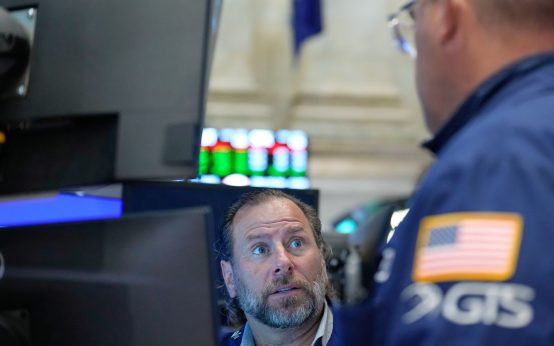
The S&P 500 dropped 1.2%, erasing earlier gains after the Fed released projections indicating that nine out of 18 policymakers anticipate at least one rate increase this year. The Dow Jones Industrial Average shifted from a 280-point morning gain to a 507-point drop, a 1% decrease. Meanwhile, the Nasdaq composite declined by 1.3%.
Fed Chairman Kevin Warsh, in his first press conference, did not provide a forecast for interest rates by the end of 2026. He is considering changing how the Fed communicates with markets, removing future rate hints, known as “forward guidance.” Warsh wants markets to respond to economic data rather than Fed predictions.
Warsh suggested potential changes to the Fed’s quarterly projections on interest rates, the economy, and inflation. Current projections made Wall Street uneasy, although Warsh noted a lack of strong conviction behind them. Stock prices fluctuated following the projections. Despite this, the Fed opted to keep the federal funds rate unchanged at the meeting.
In the bond market, U.S. Treasury yields increased. The 10-year yield, which impacts mortgage and loan rates, rose from 4.43% to 4.49%. The two-year yield, more closely linked to Fed actions, jumped from 4.05% to 4.21%. Traders increased their bets, showing an 84% probability of a rate hike this year, up from 59.5% previously, according to CME Group data.
Global concerns about inflation have pushed bond yields higher, potentially slowing economies and reducing investment values. In the stock market, SpaceX saw a 4.9% drop as its first loss post-U.S. stock market debut last week. Significant declines for Microsoft, Amazon, and Nvidia contributed to the S&P 500’s losses.
Amid these drops, La-Z-Boy’s shares surged 14.8% due to better-than-expected profits and revenue, benefiting from new store openings. Overall, the S&P 500 decreased by 91.25 points to 7,420.10, the Dow Jones Industrial Average fell 507.12 points to 51,492.55, and the Nasdaq composite dropped 354.69 points to 26,021.66.
A report on Wednesday highlighted increased retail revenue in May, suggesting consumer spending might sustain the economy despite high inflation causing increased financial concern among shoppers. Oil prices remained stable following earlier declines, amid optimism regarding a U.S.-Iran deal. Brent crude oil rose by 0.7% to $79.55 per barrel, lower than previous weeks but still above pre-war levels.
International stock market performance varied, with South Korea’s Kospi rising 1.6% and Hong Kong’s Hang Seng decreasing by 0.7%, marking significant global moves.
 Wall Street Sees Relief Amid Oil Price Drop and Resilient Stocks
  Maximize Savings with New Interest Rate Hikes
  Maximizing Returns with Short-Term CDs
  Debate Over Mortgage Accessibility Continues Amid Lender Standards
  Maximize Savings with the Right Interest-Bearing Account
  Wall Street Dips as AI Stocks Decline