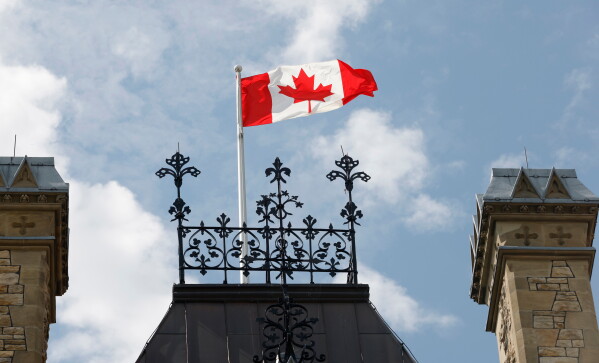
The United States’ relationship with Canada has faced significant challenges under President Donald Trump’s administration due to a series of tariffs and economic threats. Trump’s aggressive trade policies have strained diplomatic ties, causing uncertainty for businesses and consumers on both sides of the border.
Early 2025: Initial Tariff Threats
In January 2025, Trump announced plans to impose 25% tariffs on Canadian imports, citing undocumented immigration and drug trafficking as national emergencies. After announcing the tariffs, there was a brief cooling period when a 30-day pause was agreed upon, with more limited tariffs taking effect in March. The U.S. later postponed the 25% tariff on goods compliant with the US-Mexico Canada Agreement, a trade deal from Trump’s first term.
Despite delays, new steel and aluminum tariffs were implemented, taxing these imports at a rate of 25%. In response, Canada imposed additional retaliatory tariffs worth over $20 billion on American imports.
April to June 2025: Increased Global Tariffs
In April, Trump introduced “reciprocal” tariffs affecting almost all U.S. trading partners, alongside the existing tariffs on Canada. Legal challenges followed, with the U.S. Court of International Trade ruling against Trump’s use of emergency powers in May, though a federal appeals court temporarily halted this ruling.
Meanwhile, Canada matched U.S. tariffs on auto imports with a 25% duty on non-USMCA compliant vehicles. June saw the U.S. enforcing 50% tariffs on foreign steel and aluminum, prompting Canadian threats of future tariffs on American steel and aluminum.
July to October 2025: Turbulent Trade Talks
As tensions escalated, Trump set a 35% tariff on Canadian goods starting August 1 and introduced a 50% tariff on imported copper globally. Canada responded by aligning some of its tariffs with U.S exemptions, despite criticisms of surrendering to U.S. demands.
Trade negotiations stumbled when Canada faced U.S. backlash over its tax on tech firms, a policy later retracted by Prime Minister Mark Carney. In October, Carney announced plans to double non-U.S. exports within ten years to counteract Trump’s tariffs.
Late 2025 to Early 2026: Legal and Legislative Responses
The legality of Trump’s tariffs reached the Supreme Court by November 2025. A 6-3 ruling in February 2026 struck down the tariffs imposed with emergency powers. Trump quickly responded with a temporary 10% global tariff under different legislation.
Canadian trade strategies began shifting towards China, reducing tariffs on Chinese electric vehicles in January. In retaliation, Trump threatened a steep 100% tariff on Canadian goods if Canada pursued further Chinese trade deals, though these threats were not enacted.
March 2026 to Present: Continuing Tariff Disputes
In March 2026, talks for renewing the US-Mexico-Canada Agreement started, with Canada proposing a 16-year renewal. However, the U.S. declined a long-term agreement, with the current deal set to remain until 2036.
By July, Trump announced plans to impose 50% tariffs on Canadian goods, including those protected by the USMCA. These tariffs began on August 22 after last-minute failed negotiations, affecting approximately 5% of Canada’s annual exports to the U.S. In retaliation, Carney pledged matching tariffs from September 8 onward.
 Alani Bankhead Faces Allegations and Campaign Challenges in Montana
  States Take Action Against Cash Welfare Abuse
  Global Coordination Behind Anti-Israel Protests
  Violence in Twin Cities Spurs Criticism from GOP Candidate
  Jack Smith’s Political Involvement and Controversial Actions
  Addressing Challenges in Horizontal Escalation