Senator Lindsey Graham passed away on July 11 at 71. A preliminary autopsy suggests an aortic dissection as the cause. This condition involves a tear in the artery wall, often described as sudden. Aortic disease typically remains silent until a dangerous event occurs.
What Can Go Wrong in the Aorta
The aorta is the largest artery, extending from the heart down the chest and abdomen. Problems related to it often get confused although they have distinct differences.
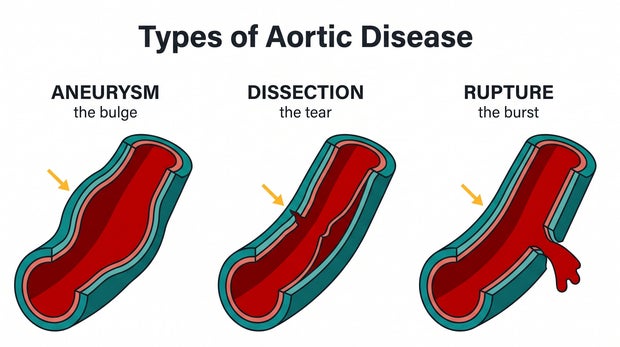
- Aneurysm: A bulge in the artery wall, causing it to stretch and become fragile over time. Most aneurysms go unnoticed until discovered during unrelated scans.
- Dissection: A sudden tear in the inner artery lining, leading to severe chest or back pain. It can occur without any prior enlargement.
- Rupture: A complete breakdown of the artery wall, often fatal as it leads to immediate extensive bleeding.
Dissections occur more frequently in older individuals due to high blood pressure and hardened arteries. In younger people, aneurysms may stem from inheritable conditions affecting connective tissue strength.
Graham’s dissection differed from Grant Wahl’s case. While Graham’s was associated with age and arterial hardening, Wahl’s was linked with an inherited condition. Understanding the distinction is crucial for individuals with potential aortic conditions in their families.
The Aneurysm Nobody Saw
In December 2022, Grant Wahl, a soccer journalist, suddenly died while reporting on the World Cup in Qatar. An undiagnosed aneurysm in his aorta had reached 6.0 cm, ultimately leading to rupture. Unlike Graham’s longstanding arterial issues, Wahl’s arteries showed no typical hardening.
Why I Asked for an Autopsy
As a physician and epidemiologist, I needed clarity on my husband’s death. The full autopsy provided insights and countered misinformation spreading online. The report confirmed that prior vaccinations played no role in the rupture.
What the Autopsy Found in His DNA
The autopsy revealed a variant in Wahl’s FBN1 gene, linked to Marfan syndrome, a condition affecting connective tissue. Though he did not display Marfan symptoms, this variant was likely the cause of his aneurysm. Pinpointing such genetic factors remains a complex endeavor. Research continues into how these genetic variants lead to disease or why some never manifest symptoms.
Turning a Death into Prevention
Identification of the genetic variant allowed Wahl’s relatives to undergo testing, aiding in proactive health measures. His brother, Eric, has normal aortic measurements and undergoes regular monitoring.
This knowledge enables families to intervene early. It’s a continuation of work started by others advocating for aortic health. Organizations like the John Ritter Foundation push for broader awareness in medical settings as emergency misdiagnoses persist.
Should You Get Checked?
Screening is advisable if you have first-degree relatives with aortic issues. Features of a connective tissue disorder, a family history of sudden unexplained deaths, or cardiovascular anomalies warrant evaluation. Men aged 65 to 75 who have ever smoked should request an abdominal ultrasound.
Genetic testing should be considered for individuals with aortic issues who exhibit connective tissue disorder symptoms or have a relevant family history. Early detection allows manageable interventions, emphasizing the necessity for awareness in high-risk families.
Although hindsight might elude us, the potential to identify risk in others is invaluable. If aortic issues have affected your family, discuss imaging and genetic testing with your doctor.
 A Pressing Solution for Alzheimer’s
  Understanding the Perils of Ectopic Pregnancy
  Concerns Over Medicaid Cuts for Autism Therapy in Georgia
  Addressing Poverty in Medical Practice
  The Urgent Risks of Ectopic Pregnancy
  Addressing the Urgent Need for Solutions to Alzheimer’s