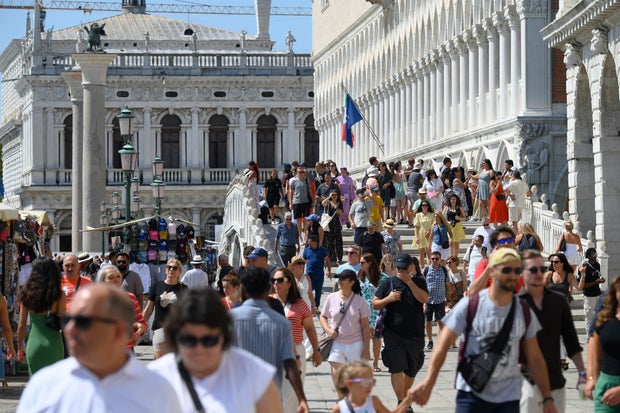
On Friday, Venice’s recently elected mayor, Simone Venturini, proposed a new strategy to address overcrowding in the renowned UNESCO world heritage city. The plan involves a dynamic pricing system for the city’s access fee, potentially increasing charges to $59 on the busiest days. This shift aims to tackle the inadequacies of the current $11 fee for last-minute reservations, which has failed to deter excessive visits on peak days.
Instead of a uniform higher charge, the city wants to implement surge-pricing, allowing fees to rise with demand. This change is intended not only to manage visitor numbers but also to support the financial demands of city maintenance.
We spend 100 million euros annually just to maintain Venice physically, and nobody gives us that money. Not Europe. Not the Italian state. International critics don’t pay it either. It’s paid by the people of Venice, and in part through tourism taxes,Venturini stated.
Venturini, formerly the city’s top tourism official, emphasized the necessity of these funds to clean and sustain Venice’s infrastructure. With the new access fee proposal, an amendment to Italy’s special law governing Venice would be required. Venturini mentioned discussions with the tourism minister regarding this initiative.
The fee itself has faced criticism from activists and political opponents who argue that it does little to alleviate crowding and instead commodifies Venice as a mere tourist attraction. In response, Venturini reiterated the critical need for funds due to the waste generated by day-trippers, explaining the high cleanup costs managed manually with brooms and boats.
The proposal has sparked debate, with critics labeling the higher fees prohibitive, especially for families. Venturini clarified that the $59 figure represents a maximum limit, providing flexibility as the city collaborates with researchers to find the right pricing threshold.
While some politicians have suggested capping visitor numbers daily, current Italian law prohibits such measures. Recent statistics from the Ocio housing advocacy group reveal the historic center’s resident population has dipped below 48,000, while tourist accommodations exceed 51,500 beds. Venturini argued these figures may not account for unregistered students and seasonal workers residing in Venice.
 Fall Exploration in California: Colors, Entertainment, and Concerns
  Teen Pickleball Star Elsie Hendershot Faces Busy Schedule
  Exploring Accommodation Options in New York City
  FAA Proposal on Flight Attendant Breaks Faces Union Opposition
  State Department Alerts on Middle East Travel Amid Rising Tensions
  Midair Brawl Erupts on London-Bound Flight