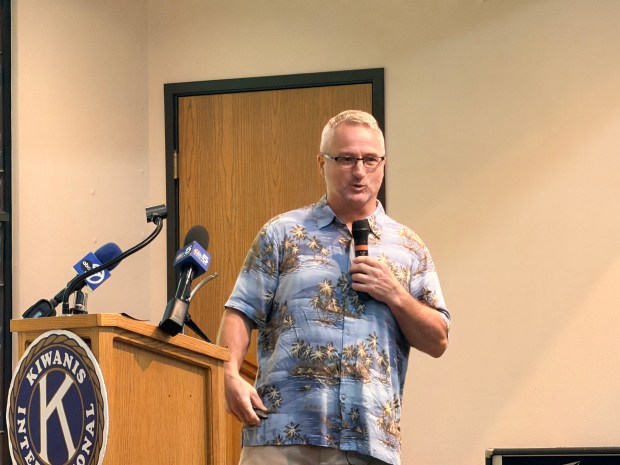
With temperatures on the rise, many are heading to beaches and pools. Dave Benjamin, the Executive Director of the Great Lakes Surf Rescue Project, is urging people to be aware of water safety. He emphasized the lack of water survival knowledge among the public, stating that education in schools is essential.
Benjamin noted that men’s risk-taking tendencies and peer pressure contribute to their higher drowning rates. He explained that males often overestimate their swimming skills by about 50%, unlike females who assess their abilities accurately. Surprisingly, those who can swim drown more frequently than those who can’t. Benjamin argues that understanding one’s limitations in the water is vital. He further critiqued that many who believe they can swim cannot manage the length of a pool in calm water.
Benjamin identified Lake Michigan, particularly its southern end, as a dangerous area for swimmers. Wind and lake conditions can carry individuals into deeper water or dangerous currents. To date, there have been 29 drownings in the Great Lakes this year. The Chicago area’s large population contributes to these numbers, coupled with unfavorable wind conditions.
Water safety is not common sense.
Benjamin recounted a personal near-drowning experience, which spurred his dedication to water safety. Despite his extensive swimming and surfing experience, it was not enough when he was caught off guard by a surf mishap. Realizing the need to educate others, his organization, Great Lakes Surf Rescue Project, keeps track of drowning statistics and actively promotes water safety awareness.
Tragedies like the recent drownings at Port Sheldon and the loss of 13-year-old Keegan Roberts underline the need for water safety programs, which sometimes suffer due to funding cuts. Benjamin stresses that drowning is a significant yet overlooked public health issue.
He advised against jumping into rescue others in trouble, recommending that people use life rings to assist from a distance. If performing CPR, individuals should remember that near-drowning victims require five rescue breaths along with chest compressions. Training offered by the Great Lakes Surf Rescue Project is available for lifeguards and the general public to learn these vital skills.
Benjamin’s past visits to the Valparaiso Noon Kiwanis Club highlighted that drowning was once the leading cause of unintentional death for children aged 1 to 4. Now, this grim statistic remains, emphasizing the critical need for proper water safety measures and attention to potential hazards in everyday environments.
 States Move to Restrict Tianeptine Amid Growing Concerns
  Potential Changes in Medicare Reimbursement for Lab Tests
  Understanding and Addressing the Complexity of Suicide
  Recall of Meat Products from Star Meat Delivery Inc.
  Questions Arise After Presley Gerber’s Death in Rehab
  Upcoming Concerns and Influence in Health Politics