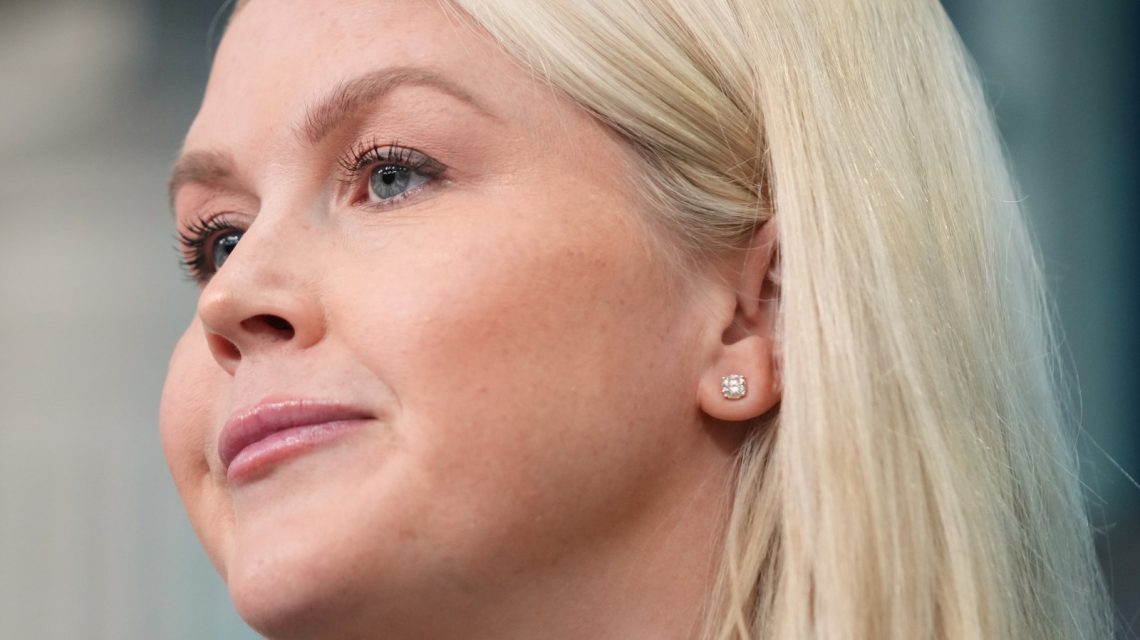
White House Press Secretary Karoline Leavitt took aim at her own generation, Generation Z, accusing them of being raised with “silver spoons” and showing laziness due to their privileged upbringing. During her appearance on Jesse Watters Primetime Thursday, she criticized young Democrats and extended her reproach to Gen Z as a whole.
Speaking with host Jesse Watters, Leavitt expressed concerns that young Democratic voters support progressive candidates like New York City’s Mayor Zohran Mamdani, and those who President Donald Trump referred to as “godless communists” following their primary victories in New York. Watters weighed in by mentioning that young people in their twenties often complain about expenses without having substantial employment experience. “Do you think that’s gaining traction, the complaining?” Watters asked Leavitt.
Leavitt responded affirmatively, attributing it to her generation’s upbringing. “Gen Z and those younger have been raised with silver spoons in their mouths, getting everything handed to them,” she stated. She explained that this is contrary to American values, which emphasize meritocracy, hard work, and achieving the American dream.
Watters then inquired if laziness was a generation-wide issue. “A little bit,” Leavitt replied, attributing it to both laziness and liberal indoctrination, criticizing the public education system and supporting parents who choose homeschooling.
Watters suggested younger people with behavioral issues could benefit from military service to “shape them up.” Leavitt humorously recommended sending them to Cuba or Iran, claiming they’d quickly wish to return.
Newsweek reached out to the White House for comments on Friday morning.
“Lazy” is a descriptor previously applied to millennials, who faced criticism for enjoying avocado toast while confronting employment challenges, financial instability, and difficulties in buying homes. Generation Z now faces similar accusations due to concerns over inflation and mismatched reality compared to their elders’ experiences.
The younger generation of Americans, not just young progressive Democrats, express apprehension over their financial situations and the economic trajectory of the nation. A CNBC and SurveyMonkey survey from the past month revealed 42 percent of Gen Z feel the American Dream is exclusive to some, while only 22 percent believe they’ve achieved it. In contrast, 68 percent of baby boomers affirm attaining their American Dream.
Among the reasons cited by 45 percent of Americans, across all age groups, for doubting the American Dream’s attainability are living costs, noted by 81 percent; housing prices at 60 percent; healthcare expenses at 49 percent; and low wages at 47 percent.
Surveys illustrate the economic instability Gen Z faces alongside waning confidence in U.S. opportunities. The Bureau of Labor Statistics indicates Gen Z unemployment rates vary from 14.6 percent for those aged 16 to 19 to 7.1 percent for ages 20 to 24. The unemployment rate for Americans aged 25 to 54 is 3.7 percent, while those over 55 exhibit a lower 2.8 percent rate.
Housing challenges are prominent, with JP Morgan data showing home prices have surged by 60 percent since the pandemic began. Mortgage rates are historically high, having doubled post-2022. The homeownership rate fell to a 2019 low last year at 65 percent, according to Census data, with the median age for first-time homebuyers now 40, implying the oldest Gen Zers face a 12-year wait.
Young voters initially supported Trump in the 2024 presidential election, albeit recent surveys highlight waning GOP approval as economic hardships grow. An Institute of Politics (IOP) at Harvard Kennedy School poll in April disclosed Gen Z’s struggles with inflation and housing (at 50 percent and 41 percent respectively), deeming them urgent national concerns (at 46 percent and 40 percent respectively).
Overall, 45 percent of young Americans report difficulties in meeting financial obligations (at 10 percent) or surviving with minimal security (at 35 percent). Younger Americans express dissatisfaction, reflected in tumbling approval ratings for Trump. The Economist/YouGov poll documented Trump’s net approval with ages 18 to 29 at minus 45, marking a series low.
As the midterms approach, Democrats might gain from Gen Z’s disapproval of Trump and the GOP, though Gallup data presents a nuanced picture. January survey results show 17 percent of Gen Z identify as Republicans, 27 percent as Democrats, yet a predominant 56 percent consider themselves Independents.
For editorial inquiries, contact Tobias Meyjes or Gray R. Thomas at Newsweek.
 Zohran Mamdani Faces Backlash at Staten Island Event
  Legal Battle Over Media Ban at White House
  Governor Pritzker Addresses Hasan Piker Controversy
  Trump and NYC Mayor Mamdani: Political Divides and Collaborative Efforts
  Rep. Jared Golden Endorses Mike Lawler for Reelection
  Seattle Protects Nonmonogamous Relationships from Discrimination