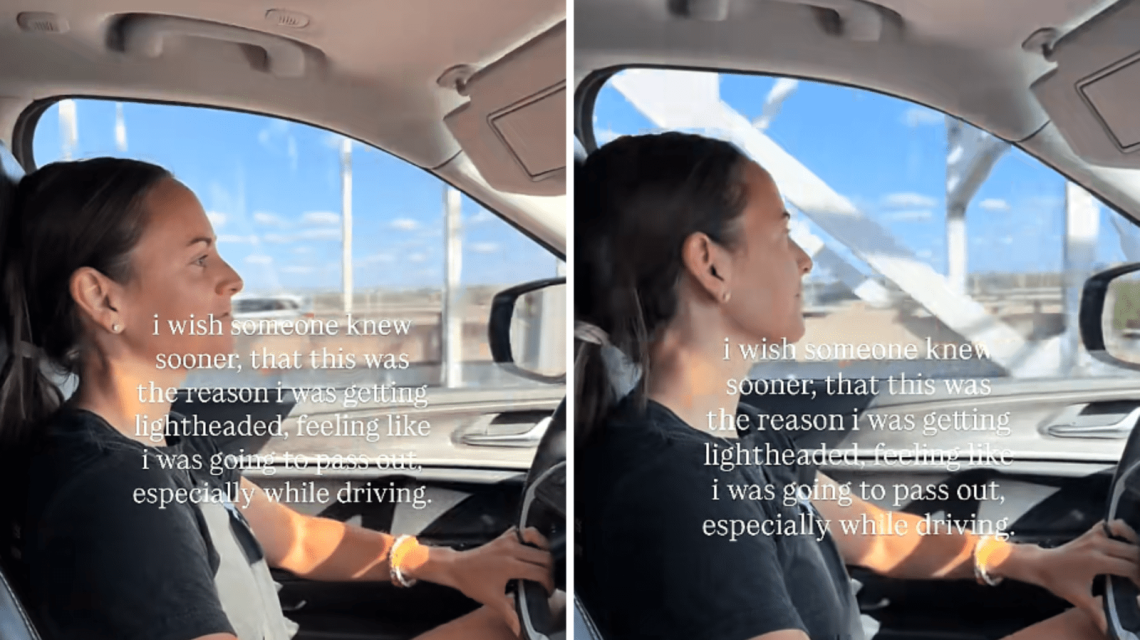
A St. Louis resident, Cayla Kranz, experienced frequent dizzy spells without explanation until she received a diagnosis. The 35-year-old fitness and nutrition coach encountered a significant dizzy spell in October 2025, which she describes as unforgettable. This occurred while driving with her two young children, aged three and one.
“Suddenly, my vision darkened, my head was heavy, and I felt lightheaded as if I was going to pass out,” Kranz recalled. She managed to safely stop the car and call for help, marking what she refers to as “the big episode” that drastically affected her life.
Before this event, Kranz often experienced mild episodes of feeling “off” and “lightheaded,” attributing these to other factors like contacts or intense workouts. She repeatedly visited urgent care and underwent numerous tests, including EKG and cardiology examinations, but all results were normal, leaving her without answers.
Following the significant incident, her symptoms persisted. Kranz noted, “I experienced constant shaky vision, lightheadedness, derealization, heart palpitations, anxiety, and felt stuck in a fight or flight response.” Despite undergoing further examinations, including an MRI scan, the results remained inconclusive. A range of specialists, from primary care doctors to ophthalmologists, could not provide a diagnosis.
The turning point came when a client, who is a physical therapist, recognized Kranz’s symptoms as related to a vestibular issue. Upon researching vestibular migraines, Kranz found the symptoms aligned with her experiences. These migraines can include balance issues, vertigo, nausea, and sensitivity to light, smell, and noise. Not everyone experiences all symptoms, making diagnosis challenging.
Kranz expressed gratitude toward her client for pointing her in the right direction. “Who knows how much longer I would have been searching for answers,” she said. This experience, she noted, taught her to appreciate every day. She reiterated a motto she lives by: “You can do hard things.” With support from her family and network, Kranz continues managing her condition, which, while not curable, is treatable.
She now experiences more good days than bad and is hopeful about her future. Kranz offers words of encouragement: “Know you’re never alone, and better days are possible.”
 Family Files Lawsuit Following Tierra Walker’s Death Due to Preeclampsia
  Concussions Increase Alzheimer’s Risk in Older Adults
  Porsha Williams Opens Up About Her Health Journey
  Communicating with Children about Weight Loss Medications
  Successful Separation of Ethiopian Conjoined Twins
  AI Integration in Healthcare: Navigating Challenges and Opportunities