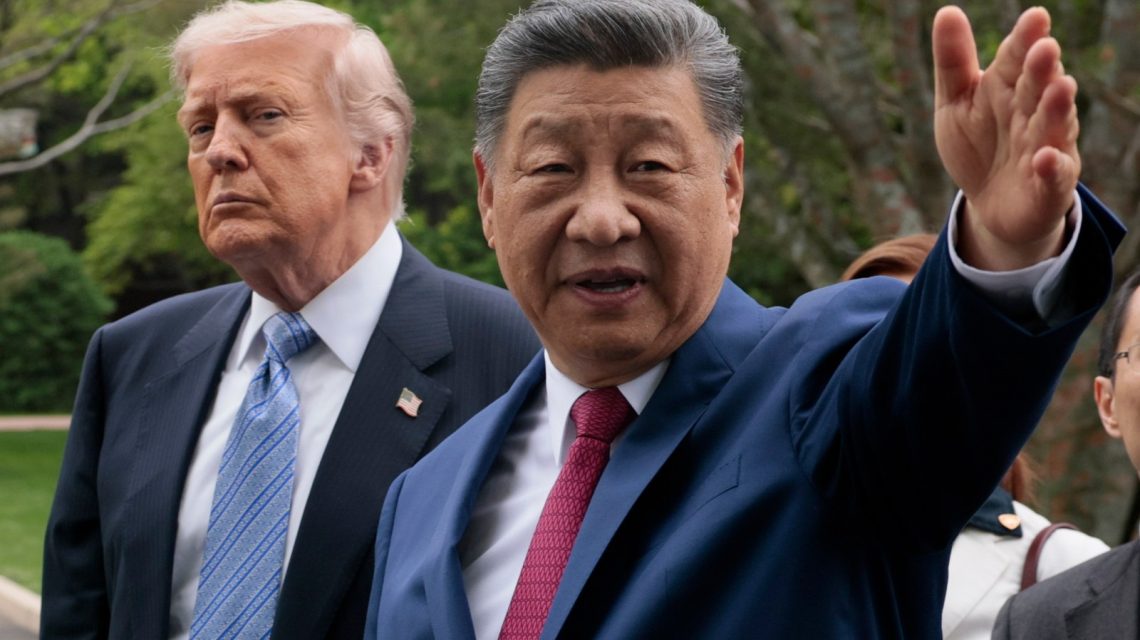
Chinese leader Xi Jinping has highlighted the critical importance of emerging technologies to China’s future economic leadership. He expressed to the ruling party elites the necessity of understanding cutting-edge technological advancements. In his January 30 speech, published in Qiushi, the Communist Party’s theoretical journal, Xi emphasized strengthening knowledge in frontier science and technology to improve decision-making within the party.
Xi reiterated the need to advance in areas like quantum technology, biomanufacturing, hydrogen and nuclear fusion energy, brain-computer interfaces, embodied AI, and 6G. These fields are considered potential new growth drivers for China’s economy. Xi stated that building future industrial giants in these sectors is crucial for technological leadership and strategic dominance. By identifying key industries and control points, China has led in green technology and secured its position in the supply chain of rare earth metals.
Upgrading the World’s Factory
For over two decades, Beijing has heavily invested in establishing China as a global manufacturing hub. This strategy includes land development and subsidizing local firms beyond the fiscal and environmental limits faced by Western democracies.
China’s industrial policies have allowed its companies to thrive globally, often overtaking competitors from both the West and the Global South. Electric vehicle manufacturer BYD, for instance, benefits from cost advantages and market control due to government support such as tax breaks and favorable loans. This approach enabled BYD to surpass Tesla in 2025 as the leading electric vehicle seller, with significant sales in Europe.
As a countermeasure, the U.S. has restricted Chinese electric cars from its market, and the EU is transitioning from tariffs to implementing price controls.
Cyber Revolution and Scientific Advancements
China is positioning itself at the forefront of a cyber revolution, driven by artificial intelligence, robotics, and integrated smart devices. Its goal is to lead in scientific advancements, surpassing the U.S. as the leading provider of online services and connected hardware, starting with AI.
China is investing in the necessary infrastructure, including extensive power grids, to support decades of AI research. However, whether China can match America’s computing power remains uncertain.
This strategic plan aims to confront domestic challenges such as a declining population and international resistance to policies perceived as deindustrializing the rest of the world.
Unlevel Playing Field
A recent OECD report indicates that industrial subsidies across key sectors are at their highest since the 2008 financial crisis, with China receiving the majority. In 2024, Chinese firms accounted for 52 percent of the $108 billion in global subsidies. These subsidies contribute significantly to global market share gains for Chinese firms—up to 60 percent.
The OECD likens subsidies to sports doping, with the risk of them allowing less productive firms to succeed unfairly. This could hinder global innovation and competition, despite short-term consumer benefits from lower prices.
The Chinese government attributes its dominance in strategic sectors to the competitiveness of its products.
 House Republicans Release Transcripts in Jack Smith Investigation
  RNC Files Lawsuit for Transparency in New Jersey’s Voter Roll Maintenance
 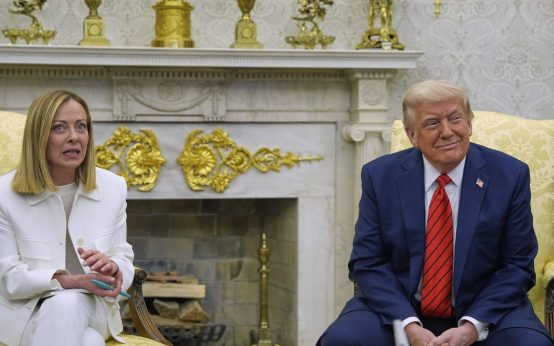 Italian PM Giorgia Meloni Skips UN General Assembly Amid Growing Tensions
  Calls Grow for Ireland’s Soccer Team to Boycott Matches Against Israel
  Congressman Randy Fine’s Bold Political Stance and Views on AI Regulation
  Political Messaging and Strategy Leading Up to Midterms