The U.S. military is currently facing uncertainty regarding troop levels in Europe due to conflicting directives from President Donald Trump. This situation impacts military personnel and could potentially incur millions of dollars in costs, according to two defense officials.
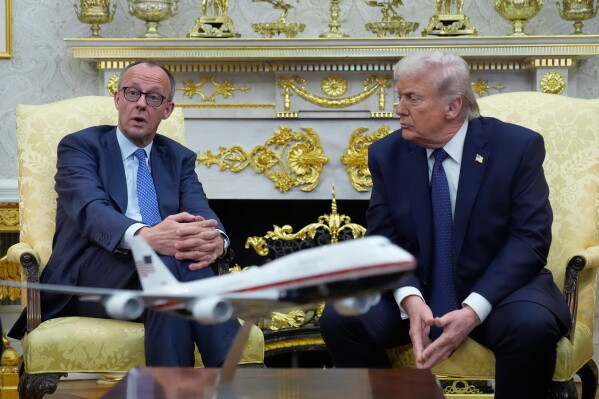
In May, NATO allies were confused when Trump announced the deployment of 5,000 troops to Poland shortly after ordering the same number removed from Europe. This followed tensions with Germany’s Chancellor Friedrich Merz over the Iran war. The Trump administration claims that planned troop reductions in Europe have been coordinated with allies.
President Trump announced on social media that troops would be sent to Poland coinciding with the Pentagon’s cancellation of a soldier rotation there, as reported by a defense official. U.S. Transportation Command indicated that sending equipment had cost the military $32 million. The military now faces the task of aligning policies with the president’s latest directives.
These changes not only concern European allies but also affect American troops’ morale and strain the Army’s already tight budget. A memo canceled the rotational deployment of 4,000 troops from the 2nd Armored Brigade Combat Team, based in Texas, to Poland.
Some troops, ready to travel, were notified that flights were canceled, while 1,000 soldiers who had gone ahead are awaiting confirmation to return. The working assumption is to source these troops from units already stationed in Europe.
The military’s equipment transport incurred significant costs, a portion of which was $32 million. These costs could have been reduced with earlier decision-making. The unscheduled return of troops and equipment presents a financial challenge not anticipated in the Pentagon’s budget.
Joe Costa from the Atlantic Council noted that returning personnel and equipment, along with deployment cancellation expenses, represent unforeseen costs. Contracts for transporting troops often include cancellation fees, as highlighted by John Deni, also from the Atlantic Council.
The Defense Department and White House have not addressed questions regarding these changing deployment costs. Pentagon officials have reiterated that the decision to reduce troop levels involves a comprehensive process.
The possibility of relocating troops from Germany is considered costly, totaling billions. Costa explains that moving troops from Germany involves logistical challenges and significant readiness costs.
Deployment changes affect morale due to the extensive planning involved for soldiers and families, as pointed out by Deni. Disruptions could have long-term consequences since moving military units to Poland might take years.
These troop movements occur amidst an Army budget shortfall, as acknowledged by Gen. Christopher LaNeve, potentially reaching up to $6 billion. Training courses have been reduced nationwide due to financial constraints.
Army Secretary Dan Driscoll expressed optimism about progress on reimbursement payments for border mission tasks, though no reimbursements have yet been received.
Burdened by necessary budget adjustments, the U.S. military in Europe is reducing support for non-combat training, focusing strictly on critical functions.
 Twitch Streamer Hasan Piker Discusses Controversial Commentary
  A Shifting Political Landscape: The Decline of Autocratic Power
  Trump Delivers Warning to Iran, Cuba at UN General Assembly
  Lukashenko and Putin’s Unique Relationship and Belarus’ Strategic Role
  Alan Ritchson Faces Backlash Over Political Remarks
  Himalayan Pilgrimage: A Couple’s Narrow Escape and Lingering Questions