
On warm afternoons, DeAnna Brandon enjoys time with her grandchildren and dogs in a backyard kiddie pool. However, she fears these cherished moments may be threatened by new Medicaid work requirements. Living in Rockwell, North Carolina, and a blood cancer survivor, Brandon worries these requirements could impact her health coverage. Initially expecting to qualify for a medical frailty exemption, recent developments by the Trump administration have cast doubts.
The Centers for Medicare and Medicaid Services (CMS) released an interim final rule indicating that being sick may not suffice to bypass new work mandates. Brandon will need to prove her medical condition significantly affects her ability to meet these requirements. If unsuccessful, she might lose her coverage, affecting her chemotherapy treatment that keeps her cancer in remission. She states, “Working is outside of the realm of possibility for me.”
Health experts raise alarms over the changes. The guidance differs from previous expectations and could lead to more Americans losing health insurance. Harvard Professor Adrianna McIntyre highlights the potential increase in paperwork for Medicaid patients, potentially causing needless loss of coverage.
The new Medicaid restrictions, first introduced under Trump’s tax and policy law in 2025, are criticized by Democrats. The restrictions affect those covered under Medicaid’s expansion, targeting lower-income individuals. Enrollees aged 19 to 64 must demonstrate 80 hours of work or community service monthly, or attend school part-time, with exceptions for medically frail individuals and those in addiction treatment.
Last week’s CMS announcement redefined “medical frailty,” requiring proof that a condition significantly impairs one’s ability to meet legal requirements. By 2028, enrollees must verify this with documentation. This requirement leaves advocates concerned about the type of documentation needed, given some doctors’ hesitance to provide such notes.
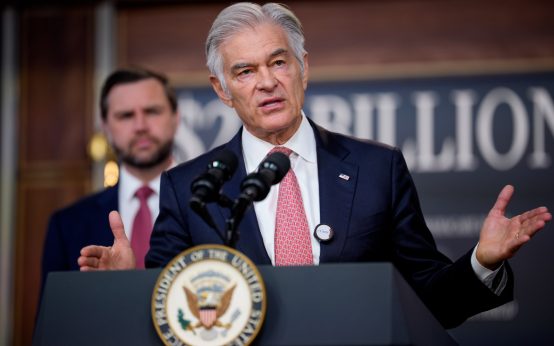
States, unprepared for these changes, are confused about the government’s approach. Dr. Mehmet Oz, CMS Administrator, suggests leveraging Medicaid claims data to auto-exempt eligible enrollees. However, officials express concern that claims data alone doesn’t confirm significant impairment.
Nebraska, which implemented work requirements early, may need to adjust its approach due to misaligned diagnostic codes. Healthcare advocates fear these changes may dissuade rural doctors from accepting Medicaid patients, further burdening them with paperwork.
Preparing for the upcoming policy launch involves significant expense. Despite a $200 million federal allotment and partnerships with tech companies, expenses could exceed $1 billion, shared by federal and state tax dollars.
Republicans argue the rules aim to curb government dependence while preserving benefits for those in need. Dr. Oz cited a report suggesting able-bodied Medicaid recipients average significant leisure time daily. He states, “Work requirements are going to turn this around, we hope.”
Despite these views, enrollees failing to meet work requirements feel misrepresented. Mids Meinberg, a freelance writer with chronic health issues, shares that despite a fulfilling career, his health prevents consistent work hours. He believes many face similar challenges where disabilities impact work capability but lack state acknowledgment.
Brandon wants to emphasize her contributions beyond conventional employment, stating, “We’re valuable, and we can still contribute to our communities even if it’s not working.”
 Potential Changes in Medicare Reimbursement for Lab Tests
  Understanding and Addressing the Complexity of Suicide
  Recall of Meat Products from Star Meat Delivery Inc.
  Questions Arise After Presley Gerber’s Death in Rehab
  Upcoming Concerns and Influence in Health Politics
  Fraud Task Force Saves Billions by Tackling Obamacare Misuse