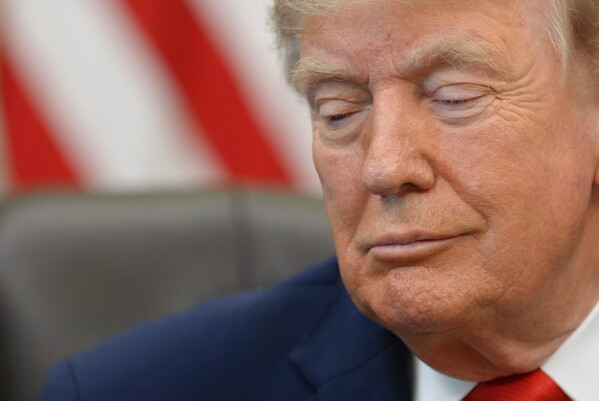
U.S. stocks experienced their strongest day in two months on Thursday, boosted by President Donald Trump’s decision to withdraw his threat to bomb Iran. This move raised hopes for a potential agreement that could resume the global oil supply.
The S&P 500 surged 1.8% after recent declines, reversing to levels seen in early May. The Dow Jones Industrial Average climbed by 929 points, or 1.9%, while the Nasdaq composite increased by 2.5%. Stocks gained momentum after Trump announced on social media that discussions with Iran had escalated to the highest leadership levels, with a signing event expected soon.
A deal with Iran could reopen the Strait of Hormuz, allowing oil tankers to transport crude from the Persian Gulf to global markets. Consequently, the price of benchmark U.S. crude fell 2.6% to $87.71 per barrel. Brent crude, the international standard, dropped 2.9% to $90.38, though it remains higher than its pre-war price of about $70.
Previously, tensions between the U.S. and Iran had increased inflation as high oil prices impacted the economy. A report on Thursday indicated that U.S. wholesale prices rose more than anticipated in May. The European Central Bank responded by raising interest rates, hoping to control inflation. Higher rates can limit inflation but also slow economic growth and reduce investment values across sectors, including stocks and cryptocurrencies. The technology sector, particularly artificial intelligence, faced criticism for inflated investments.
AI stock volatility has affected the U.S. market recently. Marvell Technology, for instance, saw an increase of 11.1% after significant fluctuations in previous days. Nvidia’s CEO recently suggested the company could achieve a trillion-dollar valuation, further fueling the tech sector’s momentum. Chip manufacturers like Lam Research and KLA saw significant gains, with jumps of 12.7% and 12.9%, respectively.
Despite minor setbacks, such as Oracle’s 8.5% drop due to heavy spending on AI, the S&P 500 rose by 127.31 points, reaching 7,394.30. The Dow Jones climbed to 50,848.75, while the Nasdaq increased to 25,809.66.
In the bond market, Treasury yields dropped as lower oil prices reduced inflation pressure. The 10-year Treasury yield fell to 4.45% from 4.55%. A continued decrease in oil prices may allow the Federal Reserve to maintain its interest rate without the anticipated hikes. Investment markets responded to Trump’s announcement by reassessing rate hike expectations, with some predicting possible rate cuts if inflation subsides. Small companies, particularly those relying on borrowed capital, saw a benefit, with the Russell 2000 index climbing 3%.
International markets reacted modestly, with European indexes rising while Asian markets closed mixed. London’s FTSE 100 increased by 0.5%, whereas Hong Kong’s Hang Seng dropped 0.7%.
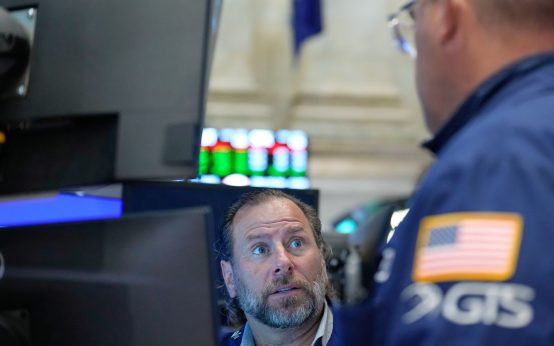 Wall Street Sees Relief Amid Oil Price Drop and Resilient Stocks
  Maximize Savings with New Interest Rate Hikes
  Maximizing Returns with Short-Term CDs
  Debate Over Mortgage Accessibility Continues Amid Lender Standards
  Maximize Savings with the Right Interest-Bearing Account
  Wall Street Dips as AI Stocks Decline