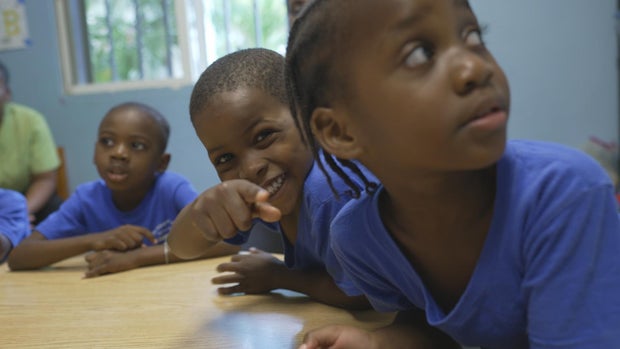
Haiti rarely makes headlines for uplifting reasons. Sixteen years after a catastrophic earthquake claimed around 200,000 lives and left over a million homeless, the nation struggles. The government borders on collapse, and gangs vie for influence over Port-au-Prince. Yet there exists a beacon of hope in this embattled city—a sanctuary where children find solace and a future at the Have Faith Haiti orphanage, overseen by bestselling author Mitch Albom and his wife, Janine.
Since the earthquake, they have opened their doors to vulnerable children: abandoned infants, toddlers with disabilities, and street beggars. Their mission, though challenging, emphasizes love, faith, and education to bring about remarkable outcomes.
Travel to Haiti’s capital is risky, as international flights avoid the dangerous hub. Each month, Mitch Albom flies two hours from Florida to Cap-Haïtien. There, a helicopter takes him to Port-au-Prince, revealing a landscape of dry riverbeds and mountainous regions shorn of trees. Upon reaching the capital, the streets become a chaotic tapestry of deteriorated buildings below.
Safely on the ground, armed guards escort Albom to the orphanage in reinforced vehicles. The facility resembles a fortress with 30-foot concrete walls, barbed wire, and watchtowers. Beyond its gates is a transformative space.
“Mr. Mitch, Mr. Mitch,” the children chant upon his arrival.
Inside, 63 children are nurtured by over 50 teachers and staff. From infants under nannies’ care to teenagers in dormitories, most have remained within this seven-acre haven for more than four years. They engage in chores, attend church, and receive an education.
Classes are conducted in both French and English, preparing them for higher education. Albom stresses the importance of nurturing each child’s potential.
Mitch Albom: “All children deserve to feel like they have a future and the future is possible.”
The children here come from some of the toughest circumstances. While not all are orphans, each story underscores desperation. Some parents brought them out of sheer necessity when unable to provide basic care. Albom makes heart-wrenching decisions about admissions.
Mitch Albom: “We don’t give aptitude tests to get in here. Most of the kids that come to us aren’t even speaking yet. But if you put them in the right environment… they’ll grow.”
Selections are based on dire circumstances; families with one parent, lacking stable homes, or severe health issues are prioritized.
Anderson Cooper: “What are those interviews like?”
Mitch Albom: “‘I don’t have any food to give my baby.’ ‘The parents died. I don’t know who this child is.’ ‘We found this child under a tree. He was six weeks old, and he was starving.'”
The orphanage has profoundly impacted its residents. Bettinie, left after her father’s death, and Gina, who dreams of becoming a lawyer, are testaments to the haven’s supportive environment.
Both recount their initial experiences with apprehension but found solace in the community here.
Beyond nurturing potential, safety remains a critical concern. Port-au-Prince is largely under gang control, prompting Yonel, the Haitian director of the orphanage, to run emergency drills. A concrete bunker equipped with a generator, provisions, and surveillance ensures readiness.
Funding presents continuous challenges. The operation relies heavily on the Alboms and additional donations. Despite skepticism about aid effectiveness in Haiti, the effort remains undeterred.
Seventeen high school graduates have secured American scholarships in the last eight years. All have pledged to return post-graduation, giving back to Haiti for a period at the orphanage.
Mitch Albom: “I hope our kids can stabilize this country. And that’s part of what we’re trying to raise them to do.”
During a visit to Mitch Albom’s home in Detroit, Haitian students discussed their aspirations. Widley dreams of becoming an ambassador, and J.U. envisions a future in Haitian politics, despite the inherent risks.
Bianka emphasized the transformative power of education in leading Haiti towards a brighter future.
Anderson Cooper: “It seems like all of you want your futures to be with Haiti.”
J.U.: “To me, Haiti isn’t just my country. It’s like my home where I was raised…my future is with Haiti.”
While Haiti’s broader future remains uncertain, the commitment of these young individuals offers hope. Continued support from the international community, despite hurdles like visa uncertainties, remains crucial.
 Investigation Continues After the Deaths of Naseem Stevens and Rapper BloodHound Q50
  Renowned Journalist Jodie T. Allen Passes Away at 88
  Exploring Architecture Passion: Marie Olmos’s Journey with Frank Lloyd Wright Trust
  A Mother’s Journey: Raising a Son with Down Syndrome
  Female Athletes Discuss Competing Against Transgender Athletes
  Toddler’s Unusual Bedtime Request Helps Him Sleep