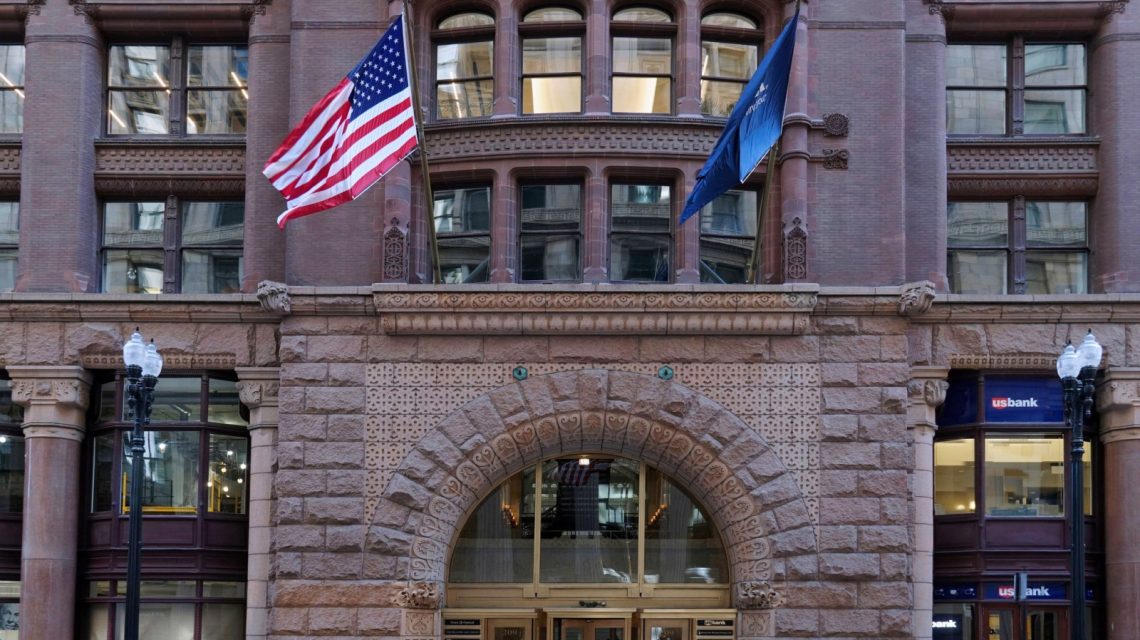
Chicago’s Rookery Building is a significant link to the advent of modern skyscrapers. Commissioned in 1885, it is the oldest high-rise in the United States with a steel-frame system, a breakthrough that altered how cities could expand vertically.
This building emerged when engineers and architects explored new construction methods, blending traditional masonry with iron and steel supports. It set structural guidelines for future skyscrapers.
The world’s first skyscraper, the Home Insurance Building in Chicago, used a steel frame for support, according to Guinness World Records. Though demolished in 1931, The Rookery remains a lasting example of this engineering milestone.
“Nearly half of the U.S.’s 125 million buildings are over 50 years old,” says the American Institute of Architects (AIA).
Adaptive reuse has risen significantly, with nearly 25,000 new apartments in converted buildings in 2024, as per a RentCafe survey.
Environmental Benefits of Reuse
The AIA highlights that reusing structures can eliminate 50 to 75 percent of carbon emissions tied to new builds, as retrofitting avoids releasing embodied carbon.
Architect Gordon Gill stresses refreshing older buildings to maintain relevance instead of constructing new ones.
Origin from Chicago’s Reconstruction
The Rookery’s beginnings are tied to Chicago’s renewal after the Great Fire of 1871. The city sought superior methods to build taller, resilient structures, paving the way for skyscrapers.
Commissioned in 1885, designed by Daniel Burnham and John Root, it opened three years later as “the largest and finest office building in the United States,” reaching 12 stories and 181 feet.
Its innovative structure blended masonry exterior walls with iron and steel interior supports, addressing challenges like differential settling. This was pivotal in skyscraper design evolution.
Engineering New Architectural Language
The Rookery’s innovations surpassed height. A lobby plaque notes it as “Chicago’s oldest skyscraper” and the first with a steel-grillage foundation. Root’s foundation allowed the building to float atop Chicago’s soft soil by distributing weight horizontally.
This engineering was crucial for taller buildings in a city with challenging grounds. The architecture incorporated global influences such as Byzantine geometry, Venetian coloring, and Islamic arches.
Light and Modern Interiors
The Rookery features a light court, addressing lighting and ventilation concerns of the 19th century. Burnham and Root designed it to maximize daylight and airflow, incorporating glass expanses and a central light well for light distribution.
The Chicago Architecture Center notes that the light court “maximizes light and air,” with a glass ceiling illuminating a marble-clad lobby.
The Rookery’s restoration reflects a shift towards preservation, ensuring its impact endures in future cities.