Europe’s right-wing and populist leaders are increasingly distancing themselves from the White House. Many had once closely aligned with President Donald Trump, but recent policy disputes have caused fractures. Analysts note the disagreements reflect both policy differences and political risks for European leaders seen as too tied to Trump.
Widening Disputes
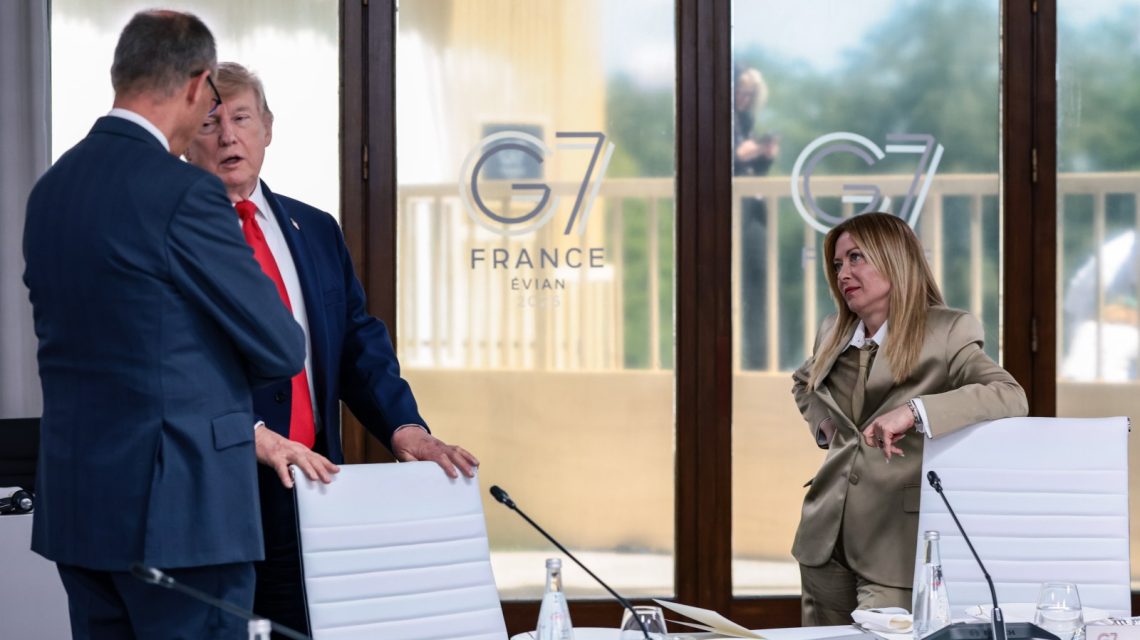
Conflicts over U.S. foreign policy, including the war involving Israel and Iran, threats like acquiring Greenland, and tariffs against European allies have strained relations. On Thursday, tensions came to a head when Trump accused Italian Prime Minister Giorgia Meloni of requesting a photo at the G7 summit. She denied the claim, leading to the cancellation of Italy’s foreign minister’s visit to the U.S.
“The break between Meloni and Trump had already taken place when Trump attacked the pope,” said Nathalie Tocci, a professor at Johns Hopkins’ School of Advanced International Studies. Meloni stood by Pope Leo, while Trump criticized her support.
Attempts to repair the relationship have been fruitless, reflecting Trump’s disdain for European leaders. Newsweek sought comments from the White House and U.S. Department of State.
Meloni’s Break With Washington
Meloni, once seen as Trump’s reliable European partner, exemplifies this shift. She initially portrayed herself as a bridge between Washington and Brussels but has since diverged. Meloni has opposed the U.S. concerning the Iran conflict, asserting disagreement with the American approach.
Her government also refused U.S. access to the Sigonella air base in Sicily for military operations related to the conflict. This decision highlights internal political pressures, with the conflict being unpopular domestically and energy price concerns rising.
According to Tocci, “Far-right nationalists eventually always end up clashing, by definition.” With Trump as a nationalist leader, clashes with others like Meloni were inevitable.
Upon reflecting on the institutional relationship between Italy and the U.S., Tocci states, “Having a good political relationship with Trump is impossible.”
France’s National Rally Signals Distance
France’s National Rally, previously aligned with Trump’s nationalist views, has become more critical. Marine Le Pen described Trump’s foreign policy regarding Iran as “erratic.” Party president Jordan Bardella warned against what he termed “imperial ambitions,” pointing to U.S. actions in Greenland and Venezuela.
This move has drawn backlash from European right-wing parties previously supportive of Trump’s agenda.
German Criticism
Germany’s Alternative for Germany (AfD) party, once welcoming of Trump’s support, has criticized his foreign policy and suggested withdrawing U.S. troops from German bases. Chancellor Friedrich Merz has publicly criticized the U.S. administration over its negotiations with Tehran. Trump retorted by criticizing Merz and threatened to reduce U.S. military presence in Germany, affecting NATO in Europe.
Political Liabilities
Nigel Farage in the UK, a long-time Trump supporter, described the Greenland situation as a “very hostile act” but avoided a full split from Trump. European right-wing parties, while sharing ideological views on nationalism, face domestic voter concerns about foreign entanglements and disruptions.
The Path Forward
The relationship is not severed between the U.S. and Europe’s right-wing movements. However, recent conflicts have strained the bonds. Trump continues to maintain ties with some nationalist figures, though disagreements over Iran, trade, and territorial issues expose limits, particularly when U.S. actions conflict with European priorities.
 Challenges Facing the Supreme Court’s Public Perception
  California Democratic Aide Arrested for Visa Overstay by Federal Authorities
  Twitch Streamer Hasan Piker Discusses Controversial Commentary
  Experts Doubt Export Ban Will Lower Fuel Prices
  A Shifting Political Landscape: The Decline of Autocratic Power
  Trump Delivers Warning to Iran, Cuba at UN General Assembly