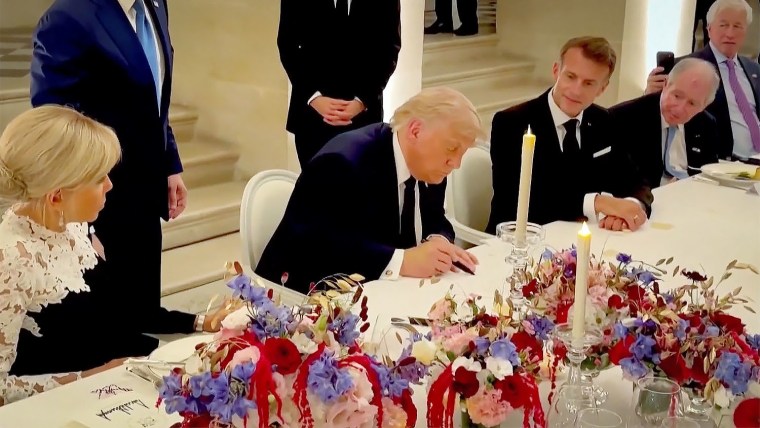
The efforts by the United States and Iran to reach a peace agreement have been marked by confusion and mixed messages, with ongoing military actions adding complexity to the situation. Recently, a memorandum of understanding (MOU) was brokered, yet the process has been fraught with uncertainty.
Signing Confusion and Military Actions
The White House announced that Vice President JD Vance signed the agreement on a recent Sunday, but then planned a formal ceremony for the following Friday. On the same day, President Donald Trump asserted he would authorize the reopening of the Strait of Hormuz as part of a complete deal. However, he later contradicted himself by stating the crucial waterway would open post-signing on Friday.
Disparate messages from Trump administration officials further clouded the timeline, indicating the memorandum’s text could be released within one to two days, or by Friday. During the Group of Seven summit in France, Trump considered reading the MOU aloud at a news conference, yet officials ultimately disclosed it during a call while Trump was speaking.
The signing ceremony remains uncertain after an unexpected re-signing by Trump and Iranian President Masoud Pezeshkian at Versailles, witnessed by French President Emmanuel Macron.
Changing Dynamics and Political Reactions
The lack of clarity over the agreement comes amid various military engagements since U.S. and Israel attacks on Iran in February. The temporary ceasefire from early April stays contentious, with continued strikes despite efforts for peace.
Domestically, criticism mounts over Trump’s handling of the conflict, especially with rising gas prices and the upcoming midterm elections. Even Republican allies voice concerns, with Sen. Bill Cassidy condemning the 14-point MOU as a significant foreign policy error, while Sen. Lindsey Graham views the MOU as beneficial for U.S. interests.
Implementation Challenges
As Vice President Vance announced the start of a 60-day period for a long-term agreement, operational hurdles persisted. The opening of the Strait of Hormuz was delayed despite the MOU’s stipulation for immediate action. U.S. Central Command reported that while the blockade of Iranian ports lifted, U.S. military forces would continue to ensure commercial vessel safety in the region. There were no immediate reports of Iranian threats to commercial shipping.
Additionally, the issuance of sanctions waivers for Iran’s oil exports, a key MOU condition, remains unresolved. The document outlines that the U.S. Department of Treasury should allow Iranian crude oil transactions and related services until sanctions end.
Further Complications
Planned negotiations in Switzerland faced delays due to recent Israeli military strikes in Lebanon, threatening the fragile deal. Iran requested assurances for halting hostilities in Lebanon, as dictated by the MOU.
Concerns linger about Israel’s potential to disrupt peace efforts with continued actions against Hezbollah in Lebanon. Israeli Prime Minister Benjamin Netanyahu and officials voiced criticism of the MOU, further complicating the situation.
Despite these challenges, President Trump expressed optimism for a lasting agreement, anticipating easier progress in forthcoming negotiations.
 A Shifting Political Landscape: The Decline of Autocratic Power
  Trump Delivers Warning to Iran, Cuba at UN General Assembly
 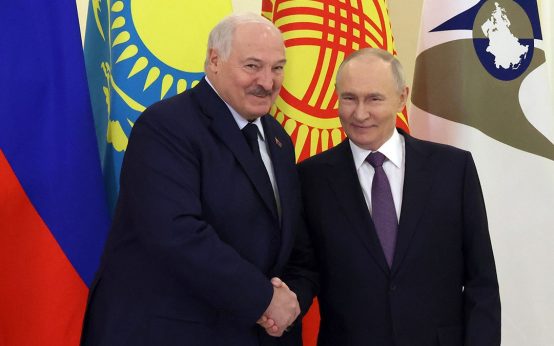 Lukashenko and Putin’s Unique Relationship and Belarus’ Strategic Role
  Alan Ritchson Faces Backlash Over Political Remarks
  Himalayan Pilgrimage: A Couple’s Narrow Escape and Lingering Questions
  Former CEO Sentenced for Bank Fraud and Sanctions Evasion