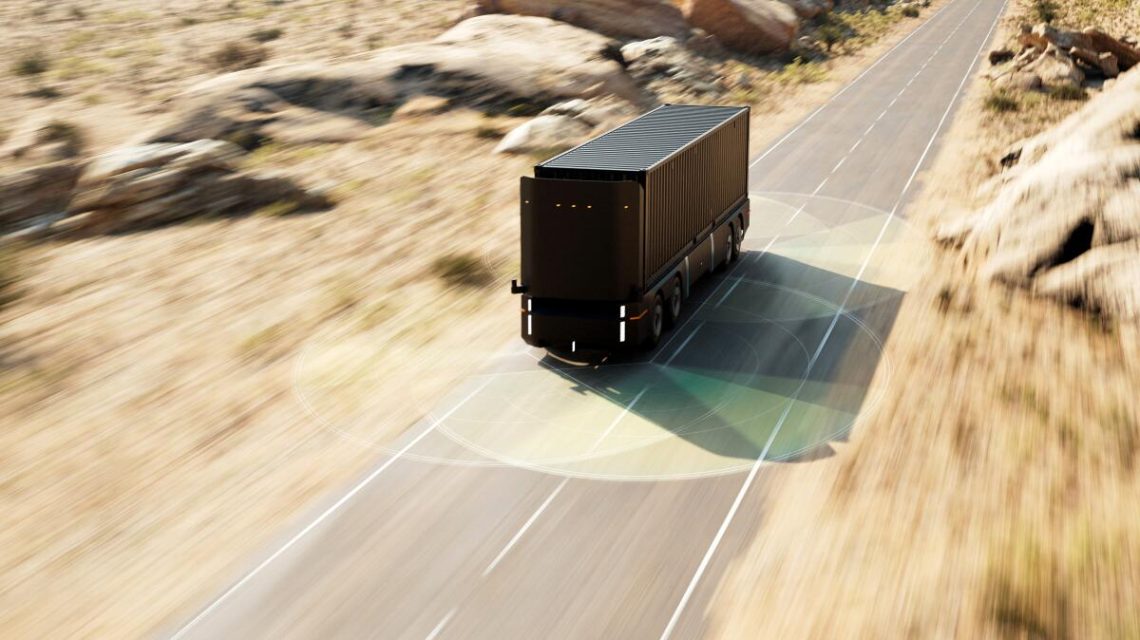
The Bay Area startup, Humble Robotics, is undertaking a significant transformation of semitrucks. Founded in San Francisco just last year, the company aims to replace the traditional, fuel-guzzling giants with electric, autonomous, and highly efficient models.
Humble Robotics has secured $24 million in funding aimed at developing a cabless freight truck. This innovative vehicle lacks standard components like a steering wheel, gas pedal, and driver’s seat. The company asserts that its redesigned truck, known as the Humble Hauler, can transport freight efficiently across California. This advancement promises cost savings and a reduction in carbon emissions.
In April, Humble Robotics received seed funding from Eclipse Capital, a venture capital firm based in Palo Alto, alongside Energy Impact Partners. The company’s vision has been supported by recent regulatory updates in California, which may soon allow autonomous trucks to operate on public roads.
“We’re building an electric autonomous platform for moving freight, aiming to do so at the lowest possible cost.” – Eyal Cohen, CEO of Humble Robotics
Eyal Cohen, boasting two decades of experience working with electric and autonomous vehicles at companies like Uber and Apple, plans to start customer trials of the Humble Hauler within the year. Recent changes in California’s DMV regulations have lifted the restriction on autonomous trucks weighing over 10,001 pounds. Testing for these vehicles, however, must begin with a human safety driver and complete extensive testing before certification.
Although Humble Robotics initially intended to test in Texas, the company plans to adapt to California’s new regulations. Cohen stated, “Our focus is now shifting back to our home state of California given these recent changes.” The firm aims to collaborate with the DMV to navigate regulatory requirements.
The company faces competition from Aurora and Kodiak, both of which are developing trucks with conventional driver components. Dan Sperling from UC Davis notes that the absence of a cab could present regulatory challenges for Humble Robotics.
Automated guided vehicles without cabs are currently operational in controlled environments like ports. Humble Robotics hopes to bring this technology to public roads, specifically around ports like Los Angeles and Long Beach, partnering with terminal operators for initial deployments.
Utilizing technology similar to that in self-driving cars, the Humble Hauler employs cameras, radar, and lidar for a comprehensive view of its surroundings, alongside AI for decision-making. Designed as a versatile Class 8 vehicle, the Hauler features an electric range of 200 miles and supports typical cargo containers.
California leads in the adoption of zero-emission trucks. About 23% of new medium- and heavy-duty truck sales in the state are zero-emission as of last year.
“For short distance moves, electric technology is fantastic,” Cohen stated.
California employs over 130,000 truck drivers, a profession significantly affected by the rise of autonomous vehicles. Teamsters California, representing 250,000 workers, strongly opposes the lifting of the ban on driverless trucks, citing risks to jobs and public safety.
Despite concerns, Cohen believes automated trucking will not fully replace human jobs soon, reassuring current truck drivers that their employment is secure for the foreseeable future.
Over time, communities are slowly accepting self-driving cars, but autonomous trucks may encounter greater resistance given public perception and safety concerns.
 FBI Receives Over 1 Million Internet Crime Complaints
  Efforts to Control AI Content Quality by Platforms Like LinkedIn and Snap
  Elon Musk’s Plan to Expand Starlink’s Role in Ukraine
  Senate Confirms Jules “Jay” Hurst III as Pentagon Comptroller
  Closed-door AI framework surprises tech policy sector
  Advancements in Heart Monitoring with AI Stethoscope and Smart Toilet Seat