At the 126th U.S. Open held at Shinnecock Hills Golf Club on eastern Long Island, tens of thousands of golf enthusiasts gather to witness an exciting battle against strong Atlantic winds and complex fairways. While golf maintains its historical traditions, the rise of artificial intelligence brings new tools to help players better understand rules and enhance fan engagement during major tournaments.
The U.S. Golf Association (USGA), the sport’s governing body in the U.S., introduces a tool named Rules AI. This advance helps players get quick, clear rulings and advice on golf rules. Craig Winter, USGA’s senior director for rules, emphasizes that despite their respect for tradition, improvements to enhance the golfing experience are welcome.
“Rules AI is about meeting golfers where they are and giving them access to answers that are as good or better than our own experts,” Winter stated.
Golf sports 24 fundamental rules, addressing everything from equipment requirements to penalties in various situations, such as hitting a ball into a bunker. Interpreting these rules can sometimes be as challenging as playing the game itself. Questions arise like, what action should be taken if a ball stops on a paved road or rebounds off an alligator into a pond.
Rules AI began piloting in late May, allowing players at select clubs to explore the technology via a USGA mobile app. An example is typing a query about moving a ball due to construction or allowable clubs in a bag, receiving prompt answers.
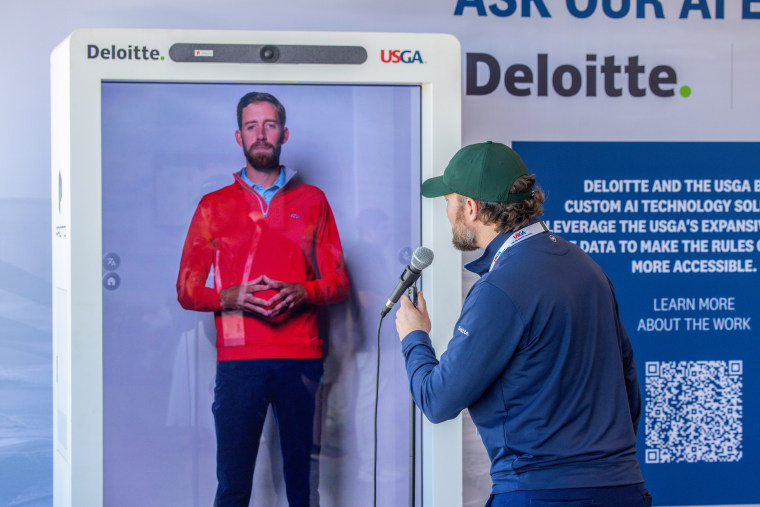
To extend the AI experience to fans at this year’s U.S. Open, interactive screens were installed near the third hole, staffed by Deloitte employees who assisted in developing the system. This setup displays an AI-generated rules official, providing concise rulings with direct citations from the rulebook.
Joe Couhig of Lewis University praises the potential benefits of Rules AI on course challenges. He admits the general nature of USGA rules sometimes creates difficulties, and a dedicated expert would help address specific situations.
Rules AI features a disclaimer noting it should not replace human official rulings and acknowledges potential AI inaccuracies. Personal interactions for tricky rules questions were historically managed through phone and email. Rules AI utilizes over 25,000 real queries from these interactions to mold its learning process.
Anthony Santora, USGA’s managing director for IT, highlights the significance of human expertise in this AI development.
“With generative AI, the data you use is what sets you apart,” Santora explained. “Those 25,000 question-and-answer pairs, they’re our magic, our superpower.”
Santora ensures Rules AI addresses only golf-related queries, with safeguards against inappropriate responses or sharing sensitive information. The rollout has been promising, aiming for nationwide availability by spring 2027, though many fans at the event were unaware of this effort.
As the U.S. Open ranks among major championships, alongside tournaments like The Masters and British Open, the USGA continues to embrace automation for improved fan engagement. Innovations include radar-tracking shot arcs and real-time highlight uploads, offering enhanced access to golf data.
Dave Giancola, USGA’s senior director of global media, recognizes AI’s potential in transforming event coverage for golf’s unique format.
“We have 30,000 shots over 72 holes from 156 players,” Giancola highlighted. “We could never staff enough people to interpret, interpolate, and put that data into a format that’s digestible.”
Recent AI-driven offerings include RangeCast, which analyzes players’ warmup shots and joins ShotCast, delivering shot-by-shot graphical visualizations. ShotCast aids fans in understanding situational plays when viewing limitations exist.
Ned Horton appreciated ShotCast for its assistance in comprehending a player’s options when shot visibility was limited. The USGA continually develops AI-generated summaries, comparing player rounds and dynamically updating leaderboard shifts.
Some spectators express reservations about AI’s place in sport, valuing golf as an escape from distractions. Giancola envisions a future where interactive technology, like AI-enabled glasses, might help track actions defiantly against open skies.
“I’m personally excited, as a fan of golf, technology, and the U.S. Open, to see what we can do,” Giancola said. “The sky’s the limit for these championships.”
 Addressing Artificial Intelligence Concerns Beyond Political Lines
  Navigating AI Responses in Health Queries
  Nationals’ Focus Turns to Player Development as Playoffs Slip Away
  Democrats Urged to Address AI Regulation Amid Trump’s Position
 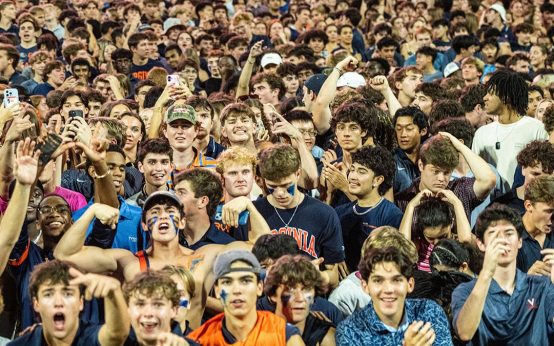 College Football Rivalries and Trash Talk
 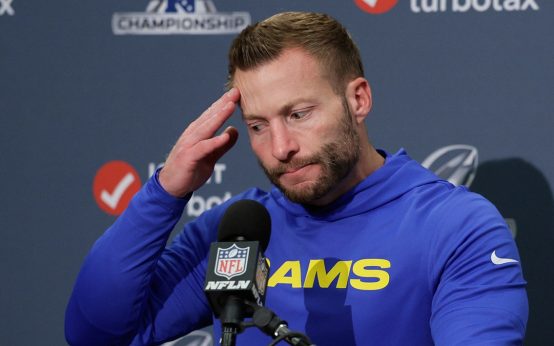 Exploring Professional Fulfillment: Sean McVay and Tom Brady’s Journey Beyond Success