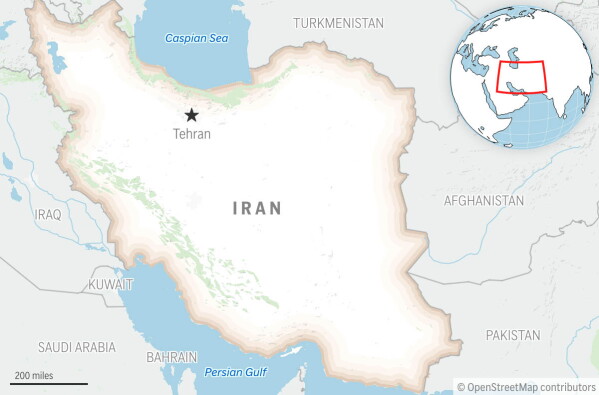
The director of the United Nations nuclear agency announced plans to inspect Iranian nuclear sites, highlighting their importance in the interim U.S.-Iran deal aimed at ending the ongoing conflict. However, an Iranian diplomat emphasized that any inspections would occur only after a final agreement is reached. The conflicting statements arise as both nations disagree publicly on the interim deal’s interpretation.
A week after the agreement, both the U.S. and Iran continue to express differing views, contributing to increased public disputes. These disagreements extend to issues like Israel’s conflict with Iranian-backed Hezbollah in Lebanon and the management of billions of dollars once unfrozen. The memorandum outlines a 60-day private negotiation period, during which leaders continue public discussions, risking the fragile ceasefire.
“I can understand political statements; they are part of the reality, but the fundamental thing I would like to remind you and draw your attention to is that there has been a Memorandum of Understanding, signed by both presidents,” Grossi stated.
The head of the International Atomic Energy Agency (IAEA), Rafael Mariano Grossi, recognized this public “war of words” but emphasized the agency’s role in determining Iran’s nuclear activities status. Since Israel’s 2025 conflict with Iran, the IAEA had been denied access to key sites, believed to hold highly enriched uranium. Iran insists its nuclear pursuits are peaceful despite enriching uranium to 60% purity, a unique stance globally.
Grossi highlighted that inspections would occur, irrespective of exact timing, due to the agreement’s explicit instructions for IAEA supervision. These assessments are crucial for the agreement, which necessitates Iran to reduce its uranium stockpile from high enrichment measures.
Iranian Deputy Foreign Minister Kazem Gharibabadi countered Grossi’s comments, emphasizing discussions and decisions on the issue only under a finalized agreement, alongside the removal of sanctions by the opposing side. He criticized any media-driven attempts to pressurize negotiations.
The IAEA was permitted to assess other nuclear facilities in Iran, like the Bushehr power plant, since the 2025 conflict. However, without inspecting enrichment sites, verifying Iran’s uranium levels or confirming the centrifuge operation remains challenging. While Tehran and the IAEA declare no ongoing uranium enrichment, nonproliferation experts express concerns about possible stockpile transfers to undisclosed locations.
Recently, the U.S. and Iran reached a deal involving the reduction of Iran’s enriched uranium stockpile and the lifting of U.S. sanctions on Iranian oil. A delicate ceasefire is in effect following these developments, though Iran’s recent strait closures and regional skirmishes test its stability.
Israel, involved in military operations in Lebanon, justifies its presence there as necessary due to Hezbollah’s threat. Direct talks between Lebanon and Israel continue, with hopes for an Israeli withdrawal. U.S. and Iranian technical discussions are scheduled to resume in Switzerland next week, with Pakistan acting as a key intermediary.
In other developments, U.S. Secretary of State Marco Rubio embarked on a diplomatic tour in the Persian Gulf, including visits to the UAE, Kuwait, and Bahrain. In Kuwait, he participated in the reopening ceremony of the U.S. Embassy, closed earlier due to the Iran conflict.
Reporting from various locations enriched the understanding of these multifaceted diplomatic and regional issues from different perspectives.
 Detroit Free Press Endorses Abdul El-Sayed in Senate Race
  Texas Senate Race: Talarico vs. Paxton Polling Insights
  GOP Lawmakers Urge Action on Cost of Living Before Elections
  White House Struggles to Address Rising Prices Amid Voter Concerns
  Holding Washington Accountable: Combatting Corruption and Self-Enrichment
  Court Order Leads to Removal of Trump’s Name from Kennedy Center