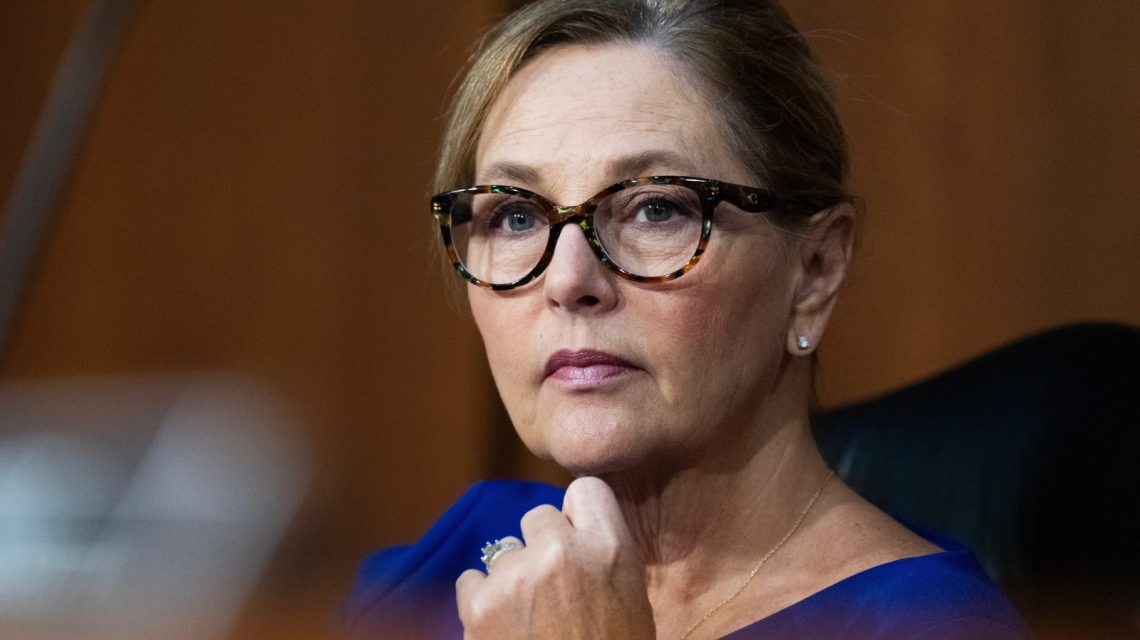
Interim South Carolina Senator Darline Graham is gaining significant momentum in her bid to become the state’s GOP Senate nominee. According to a poll by Quantus Insights, conducted between August 5 and 6, Graham is ahead with 30.4 percent support in the initial ballot. Representative Ralph Norman trails with 17.5 percent, followed by Representative Russell Fry at 16.6 percent and former Governor Mark Sanford at 15.4 percent. Undecided voters account for 11.7 percent.
When undecided voters who showed a preference were factored in, Graham’s lead increases to 33.1 percent. Norman rises to 20.4 percent, Fry to 19.6 percent, and Sanford to 17.4 percent. Newsweek reached out to Norman’s and Fry’s campaigns for comments via email, and a voice message was left for Graham’s office.
Details on the August 11 Special Primary
Early voting has wrapped up for the August 11 special primary in South Carolina, following the unexpected passing of Senator Lindsey Graham on July 11 from an aortic dissection due to cardiovascular disease, as identified by the Washington D.C. medical examiner. There are ten Republican candidates vying to succeed the late senator, including:
- Darline Graham: Lindsey Graham’s sister and acting senator, endorsed by Trump.
- Ralph Norman: A conservative congressman from South Carolina’s 5th District.
- Russell Fry: A GOP congressman from the state’s 7th District.
- Mark Sanford: Former governor aiming for a political comeback.
- Mark Lynch: Greenville businessman and past Senate candidate.
- Duke Buckner: Attorney and educator presenting himself as a conservative outsider.
- Glenda Gail Parker: A retired Air Force officer concentrating on cost-of-living issues.
- Danny Ford II: Farmer and businessman stressing government accountability.
- Mark McBride: Ex-Myrtle Beach mayor and recurrent federal candidate.
- Sam Shepherd: Biomedical engineer and entrepreneur.
Graham’s Winning Prospects
Graham, lacking prior election or office experience, received a substantial boost when President Donald Trump endorsed her candidacy. Trump expressed his endorsement on Truth Social, commending her as a patriot and revealing his long-standing acquaintance with Graham. He urged her to run, stating she would uphold her brother Lindsey’s legacy.
The Quantus Insights poll marks Graham’s strongest public polling outcome in the race yet. An Emerson College poll conducted between July 28 and 29 showed Norman in the lead with 22 percent, Graham at 19 percent, and Fry at 12 percent. Undecided voters comprised 25 percent. Meanwhile, a Resonance Media Services poll showed Graham leading with 20.8 percent and Norman at 16.9 percent.
The polling data underscores Graham’s standing as a top contender, while the competition remains fierce for the second place, which could lead to a potential runoff.
Insights from Prediction Markets
Prediction markets reveal stronger confidence in Graham’s chances compared to traditional polls. On Polymarket, users predict Graham has a 65 percent chance of securing first place in the upcoming primary election. Norman and Fry follow at around 21 percent and 9 percent, respectively. On Kalshi, Graham is estimated at 47 percent to win the Republican nomination, with Fry at 27 percent and Norman at 23 percent.
Upcoming Developments
With the voting day approaching, the race to succeed Lindsay Graham remains competitive, though Darline Graham appears well-positioned to secure the nomination, based on poll results. According to the State Election Commission, early voting concluded with over 41,000 ballots submitted in the initial days.
This primary is one of the summer’s most closely watched Republican contests, largely seen as a measure of Trump’s sway within the South Carolina GOP following his backing of Graham post-appointment.
Gibbs Knotts, a political science professor at Coastal Carolina University, indicated the primary’s broader potential repercussions. He cautioned Republicans about the risk of detrimental dynamics that could arise from internal contest negativity before the general election, noting it’s unlikely for a Democrat to win the U.S. Senate seat in South Carolina.
 Trump Announces $15 Billion Iowa Steel Mill Investment
  Abdul El-Sayed’s Health-Focused Campaign in Michigan
  Plaintiffs Challenge Identity Representation in Kansas
  Turkey’s Strategic Moves in a Changing Middle East
  Trump’s Impact on Washington’s Landscape in His Second Term
  Washington’s Intense Focus on AI: Balancing Risks and Opportunities