
On Wednesday, two massive earthquakes shook Venezuela, causing widespread destruction. At least 32 people died and 700 were injured. This disaster exacerbates the country’s ongoing political and economic challenges.
Devastating Impact
The first quake, with a magnitude of 7.2, struck just after 6 p.m. It was quickly followed by a 7.5-magnitude tremor. These were the strongest earthquakes in Venezuela in over a century. The epicenter was near San Felipe in Yaracuy state, west of Caracas.
President Delcy Rodríguez announced the immediate fatalities and injuries but noted that the figures from the worst-hit state, La Guaira, remained unreported. Many buildings in La Guaira collapsed, adding to the devastation.
In Caracas, the nation’s capital, buildings swayed and fell, leading residents to flee into the streets. Power outages plunged neighborhoods into darkness, and transportation services halted. Burst water pipes led to flooded streets.
State of Emergency
President Rodríguez declared a state of emergency due to the earthquakes. She urged healthcare professionals to report for duty and announced available accommodations for those displaced. She also called for the public to report missing persons through a government platform, traditionally used for utility outages.
International Aid and Support
Rescuers from various countries began arriving in Venezuela early Thursday. Teams from the United States, Dominican Republic, El Salvador, Mexico, and Qatar were among those offering assistance. China, Brazil, and several Caribbean nations also pledged support.
President Trump assured rapid U.S. aid delivery, coordinating through the interim government in Caracas. Secretary of State Marco Rubio confirmed deploying U.S. search and rescue teams, medical resources, and humanitarian assistance. Spain, Chile, Argentina, and Panama also offered emergency aid.
Structural Challenges
The U.S. Geological Survey noted that the affected region is prone to earthquakes. Many homes are vulnerable due to their construction materials. Past disasters, such as the 1967 earthquake, brought similar destruction to the capital, claiming over 200 lives.
Connectivity and Response Efforts
Internet connectivity dropped significantly after the earthquakes, according to NetBlocks. Connectivity levels fell from over 90% to around 65%.
With disrupted infrastructure, delivering aid posed significant challenges. Road closures, power outages, and limited communication hampered rescue and relief operations.
Community Response
The Venezuelan community in South Florida scrambled to contact relatives despite limited communication services. They also mobilized aid to support earthquake victims.
Local officials and advocacy groups called for lifting restrictions on websites to facilitate information access. They urged the Trump administration to play a leading role in relief efforts.
Historic Context
This week’s earthquakes were the most powerful since a magnitude 7.7 quake off Venezuela’s coast in 1900. That disaster struck early in the morning, toppling buildings and killing 21 people according to historical records.
Seismologists noted that the recent quakes are likely interconnected, with the first acting as a foreshock. Venezuela lies between the South American and Caribbean tectonic plates, making earthquakes a common occurrence.
 NORAD Intercepts Aircraft Near Bedminster Due to Flight Restrictions
  Wildfire Efforts in Utah Marred by Tragic Helicopter Crash
 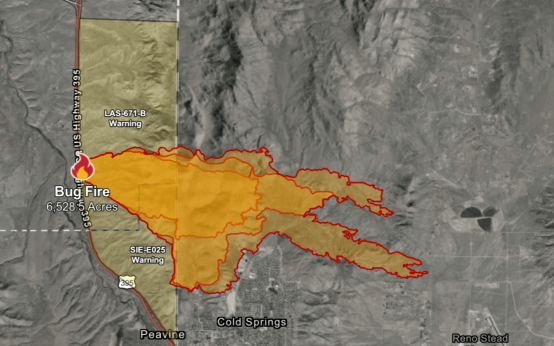 Bug Fire Forces Mass Evacuations Near California-Nevada Border
  Miss North Carolina USA Loses Crown Over Past Social Media Conduct
  Teen Arrested for Murder of Citadel Cadet and Friend
  Aaron Farinacci’s Troubled History Amid Spokane Fires