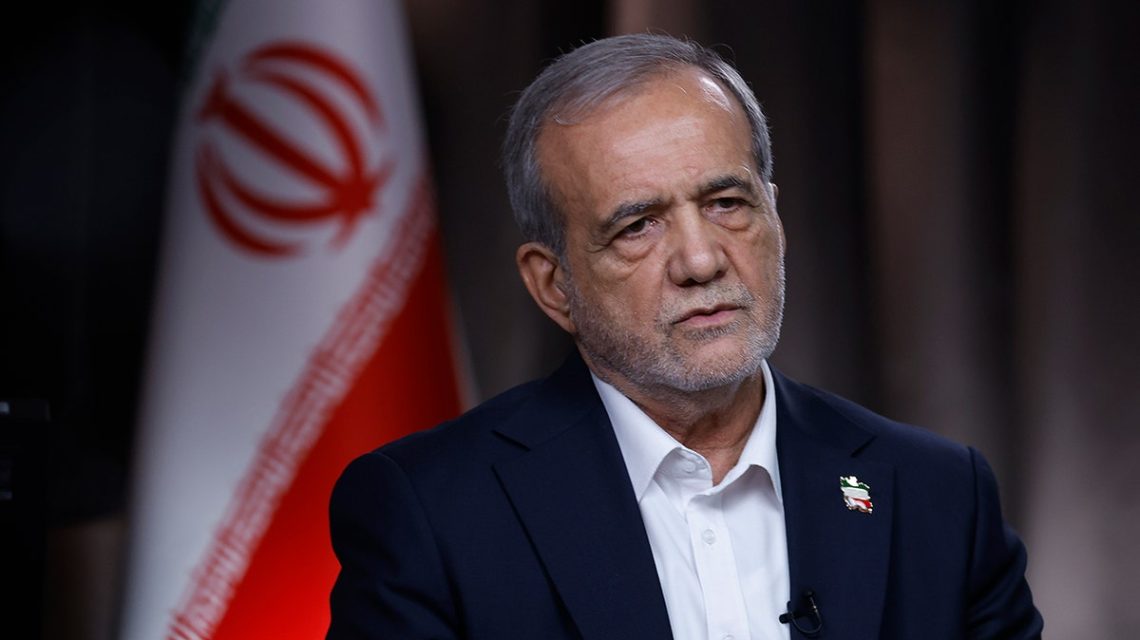
Iran’s political factions are arguing over the authority of Supreme Leader Mojtaba Khamenei, even as uncertainty surrounds his role in governing the country. Reports from Iran International have highlighted internal power struggles centered around Iranian President Masoud Pezeshkian’s relationship with the new supreme leader.
Senior cleric Mohammad-Bagher Kharrazi claimed Pezeshkian had threatened to resign and was warned by Khamenei that another resignation would be accepted. Pezeshkian’s office refuted these allegations, with Mehdi Tabatabaei, the president’s deputy for communications, labeling them ‘baseless.’ Another advisor suggested Kharrazi lacks contact with the supreme leader and is known for sharing ‘strange stories.’
Another report from Iran International claimed Pezeshkian only met Khamenei once, which lasted a few minutes, and the president questioned whether the voice he heard belonged to the supreme leader. Pezeshkian previously described a different encounter, where he spent two and a half hours with Khamenei.
Cherishing the image of Iran’s political landscape, Kasra Aarabi from United Against Nuclear Iran spoke about the struggles within what he terms an ‘Islamist oligarchic mafia system.’ He explained that under Ali Khamenei, the supreme leader functioned as the system’s ‘godfather,’ securing power and money. Mojtaba’s absence is creating uncertainty about leadership.
Aarabi noted these factions compete not over ideology, but for power and economic interests. He observed that Mojtaba Khamenei’s name is used by factions to legitimize themselves and constrain rivals, reflecting a fragile system.
Exiled journalist Mehdi Ghadimi described the resignation claims as a recurrent strategy used by reformist administrations. Similar rumors surrounded previous presidents such as Mohammad Khatami. Reformist media continue circulating resignation claims despite denial from the president’s office.
On Mojtaba Khamenei, Ghadimi speculated whether there is ‘a functioning person’ by that name capable of making decisions. He suggested that Mojtaba might be absent due to severe health issues or even death. Aarabi mentioned the difficulties in using Khamenei’s name as an authority without visible confirmation of his existence. In time, this could heighten infighting among factions.
The long absence of Mojtaba from public view is fueling doubts about his status. Iranian authorities have shared contradictory information about meetings with him. Aarabi warned that continued absence will challenge factions relying on his name.
This complex situation highlights the turmoil in Iran’s political scene, where leading figures and factions aim to maneuver for power amid uncertainty.
*Efrat Lachter, a reporter for Fox News Digital, brings 15 years of experience in global affairs, human rights, and political accountability. Known for documenting major conflicts, crises, and more, she holds a bachelor’s in communication and a master’s in political science.*
 Trump’s Use of Taxpayer Dollars for Political Ads Sparks Controversy
  Examining the Jones Act: Time for Reform?
  J. Dennis Hastert, Former House Speaker, Passes Away at 84
  Poland Prepares for Potential Conflict Amid Rising Tensions with Russia
  Drones Redefine Warfare in Ukraine
  Trump Administration’s Pre-Midterm Policy Shifts Highlight Internal Tensions