Florida’s Stance on AI Data Centers
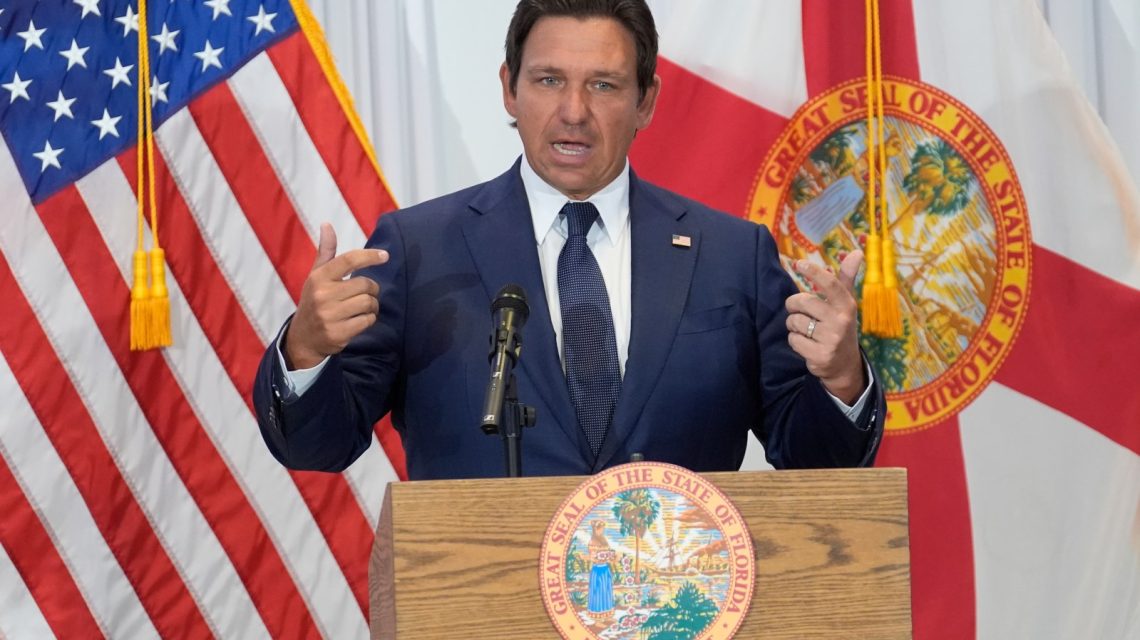
Governor Ron DeSantis of Florida has positioned himself as a prominent critic of the burgeoning expansion of artificial intelligence data centers. He argues that these energy-intensive facilities should not impose financial burdens on residential utility customers. In May, DeSantis enacted legislation mandating that state regulators ensure the costs associated with infrastructure and operations of AI data centers do not affect residential electricity bills. This makes Florida one of the first states to enforce consumer safeguards regarding the pressures these centers exert on the commercial power grid.
During the signing ceremony of the bill, DeSantis articulated, “You should not, as a hard-working Floridian, have to subsidize some of the wealthiest companies in the history of humanity.” However, his administration continues to support attractive tax incentives meant to bring these tech companies to Florida. This contrast illustrates the complex balancing act faced by state officials across the country: fostering a future-oriented high-tech economy without placing the financial strain on ordinary taxpayers.
Restrictions and Incentives
Under Senate Bill 484, AI data centers are required to bear the full expenses of their utility services. The legislation prohibits utility providers from transferring costs related to data center development or electricity onto Florida’s residential and small-business customers. It also reinforces the authority of local governments over zoning, permitting, and land use, allowing municipalities to establish stricter local standards or outright refuse project proposals.
The bill did encounter resistance during legislative discussions. Lawmakers diluted previous drafts by eliminating a clause that would have barred government officials from signing confidentiality agreements with AI data center developers.
Florida’s efforts to attract tech infrastructure date back to July 2017, when the state introduced tax exemptions for data centers, preceding the current surge of AI development. This policy removes sales and use taxes on data center infrastructure, equipment, property, and electricity usage. Initially set to expire in 2022, the exemption’s deadline has been extended by state legislators, most recently to 2025.
Tax Exemption Developments
Last year, the Legislature amended the incentive, directing it at larger projects. As of August 2025, qualifying facilities must meet a minimum cumulative capital investment of $150 million and a minimum critical IT load of 100 megawatts, up from the previous 15-megawatt threshold. This change prevents smaller facilities from qualifying in the future.
The revised tax exemption, with an application deadline of June 30, 2037, continues to encompass equipment, infrastructure, electricity, and construction materials exclusively used by data centers. GOP state Representative Wyman Duggan, who sponsored the amendment, indicated the governor’s support for the extension. “That came from the governor’s office,” he told the Tampa Bay Times.
DeSantis’s office’s budget proposal last year suggests he wanted to make the tax break permanent. Data from the State Department of Revenue shared with the Tampa Bay Times shows that three companies have benefited from the exemption since 2017: Iron Mountain, Metrobloks, and TensorWave, which operate in the Miami area. A spokesperson for Iron Mountain told the newspaper the tax break incentivizes local investment and is “not a taxpayer-funded incentive.”
“Iron Mountain and our customers pay significant property tax to Miami-Dade County, which determines how this tax income directly benefits the local community through schools, roads, and other County infrastructure,” the company stated in an email.
The Road Ahead
With DeSantis set to leave office in January 2027 due to term limits, his successor will be responsible for Florida’s tech-energy policy moving forward. Representative Byron Donalds, currently a leading candidate for the Republican nomination for governor, co-sponsored the initial data center tax exemption in 2017.
In a statement to the Tampa Bay Times, a spokesperson for Donalds defended his earlier vote while committing to stringent consumer protections in the future. “This 2017 bill was a broad tax relief bill, and as Governor, Byron will continue working to cut taxes for Floridians at every opportunity,” the statement read. “He will put Floridians first by requiring tech companies to supply their own power demand for any potential AI data center, putting ironclad taxpayer rate protections in place, and safeguarding Florida’s water resources from exploitation.”
Public opinion on the facilities is mainly skeptical. A recent Gallup survey found 70 percent of Americans oppose the construction of AI data centers in their communities, with 48 percent strongly opposed. In Florida, public sentiment mirrors regulatory measures. Nearly 90 percent of voters supported the utility-protection law signed by DeSantis in May, according to polls conducted by Tallahassee’s Sachs Media.
Local governments are already responding to the friction. More than a dozen cities and counties in Florida have instituted temporary halts to large data center approvals, citing growing concerns over local water resources, grid capacity, and environmental repercussions.
 RNC Files Lawsuit for Transparency in New Jersey’s Voter Roll Maintenance
  Italian PM Giorgia Meloni Skips UN General Assembly Amid Growing Tensions
  Calls Grow for Ireland’s Soccer Team to Boycott Matches Against Israel
  Congressman Randy Fine’s Bold Political Stance and Views on AI Regulation
  Political Messaging and Strategy Leading Up to Midterms
  President Trump Proposes ‘Super Intelligence’ as New AI Term