Iran’s joint military command issued a stern warning Thursday to all oil tankers transiting the Strait of Hormuz. They must adhere to designated Iranian routes or risk facing a “forceful response.” This development escalates tensions around a crucial channel for global energy supplies.
The Strait of Hormuz, a narrow waterway at the entrance of the Persian Gulf, holds significant importance in negotiations aimed at resolving the ongoing Iran war. The warning follows diplomatic discussions in Qatar between U.S. and Iranian representatives with mediators.
Iran also prepares for the funeral of the late Supreme Leader Ayatollah Ali Khamenei, who perished in the early stages of the conflict in February. Iranian state media broadcast footage of Khamenei’s casket arriving at Imam Khomeini Hussainiya for a farewell ceremony. This ceremony is set to begin officially on Saturday, with hundreds seen mourning and praying beside Khamenei’s casket.
The trigger for Iran’s warning remains unclear. Nonetheless, a statement from the U.S. Central Command about a meeting with Middle Eastern officials emphasized a “shared commitment to the free flow of commerce” through the Strait of Hormuz. This could have provoked Iran’s response.
The Iranian statement declared any vessel non-compliance or deviation from designated routes would result in “an immediate and forceful response” by Iranian armed forces, potentially threatening the security of the offending vessels. Iran warned against U.S. military interference, threatening “a rapid and decisive reaction.”
Under an interim agreement, Iran and the U.S. allowed ships to traverse freely for 60 days without tolls, but Iran later insisted on controlling the routes and imposing fees, disrupting longstanding maritime practices.
Oman and a United Nations initiative to create a new route near Oman’s coast led to recent attacks across the region, underscoring the volatility. Despite the strikes, ship traffic is gradually recovering. At least 258 ships passed through the strait last week, compared to 138 the prior week, as reported by Lloyd’s List Intelligence. These numbers, however, remain below pre-war levels.
The incidents on June 25 and 27 seem overlooked, according to Richard Meade, Lloyd’s List editor-in-chief, amidst ongoing constraints and uncertainties in choosing safe routes. Vessel operators continue facing dilemmas between following Iran’s demands or risking paths monitored by U.S. forces. The situation remains unstable and routes change hourly based on political decisions and security evaluations.
Meanwhile, Iranian state television reported a foreign vessel stranded in the strait, not following instructions from Iran’s Revolutionary Guard. However, details suggest the ship is linked to Iran and has been stuck for months.
Despite these tensions, recent negotiations showed “positive progress,” said Pakistan’s Foreign Ministry spokesperson Tahir Andrabi. Pakistan expressed hope that further talks would proceed swiftly after Khamenei’s funeral.
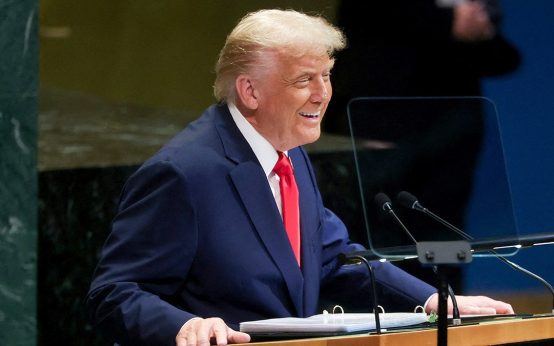 U.N. General Assembly Set to Host Key Diplomatic Moment
 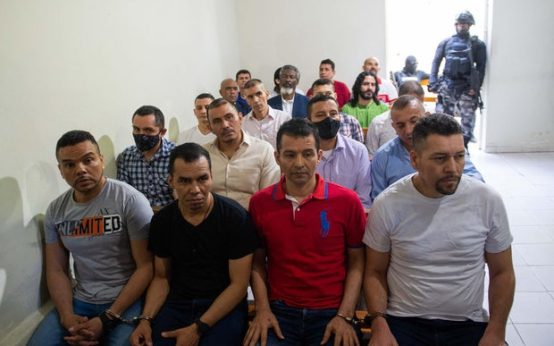 Suspects in Haitian President’s Assassination Await Extradition to U.S.
  Ambassador Avoids Timeline on Prolonged Iran Conflict
 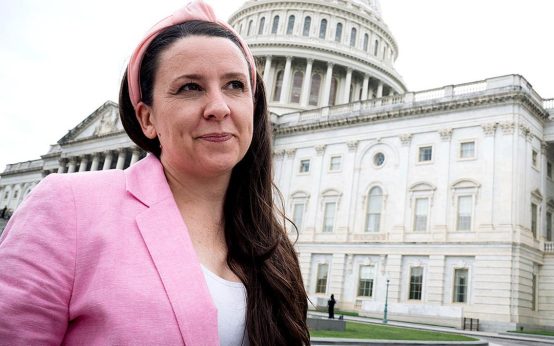 Controversy Surrounds Children’s YouTube Star and Journalist’s Revelations
  German Chancellor Friedrich Merz Faces Challenges After Election Losses
 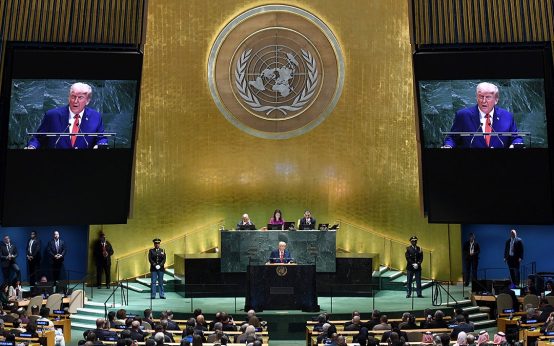 Trump’s Approach to Iran at the United Nations