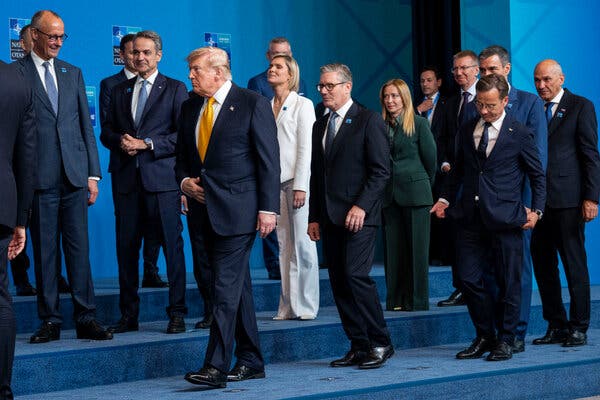
The NATO alliance reaffirmed its dedication to collective defense and expressed ongoing support for Ukraine. A signed communiqué by leaders of all member countries, including the United States, underlined “our ironclad commitment to our collective defense under Article 5.” Despite concerns expressed by former President Trump about NATO and reduced American funding, the declaration pledged 70 billion euros in military aid to Ukraine over two years from Europe and Canada.
The communiqué wrapped up a two-day summit where Trump criticized European allies, yet the summit’s proceedings continued unaffected. The allies maintained “the trans-Atlantic bond,” emphasizing the principle that “an attack on one is an attack on all,” alleviating fears that Trump might abandon Europe in times of crisis. The declaration confirmed unity in supporting Ukraine’s fight for freedom, sovereignty, and territorial integrity.
However, the document omitted repeated promises to bring Ukraine into NATO, a move that Trump opposes. The pledged 70 billion includes 30 billion euros from the European Union sourced from loans and prior national commitments. Last year, NATO promised 40 billion euros to Ukraine, extending this to cover both this year and the next.
The shift in focus reflects Trump’s demands for increased European defense spending and his move to reposition American assets towards the Indo-Pacific. This transition aims for “a modernized alliance” with greater European involvement, signaling enhanced responsibility and a stronger Europe within a fortified NATO.
Steven Erlanger serves as the chief diplomatic correspondent in Europe and resides in Berlin, having reported from over 120 countries, including Thailand, France, Israel, Germany, and the former Soviet Union.
 Where is Austin Tice?
  Trump’s Speech Targets Iran’s Nuclear Ambitions at U.N.
 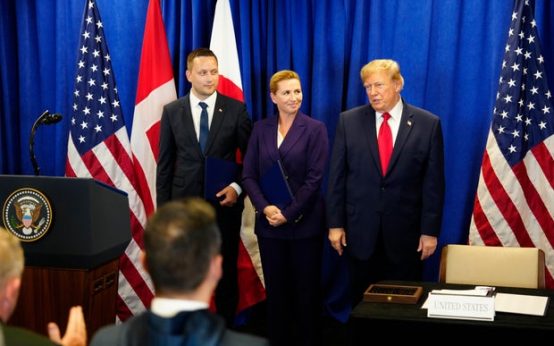 U.S., Denmark, and Greenland Sign New Security Agreement
  U.S. Military Aircraft Crash at Spangdahlem Air Base
 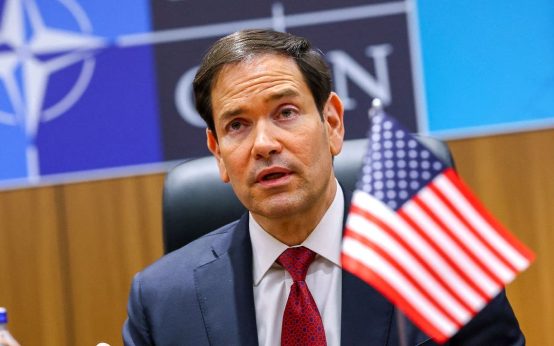 Marco Rubio Criticizes NATO’s Role Amid Middle East Conflict
  Israeli Prime Minister’s Visit to the U.N. Amid Controversy