Joanna Weiland, a resident of Aurora, felt a deep shock as she stood in her basement early Friday morning, with floodwaters rising past her ankles. By Tuesday, her lawn was filled with bags containing damaged drywall, family heirlooms, and Christmas decorations. Weiland expressed concern about her insurance, unsure if it covered flood damage.
This situation was common across Aurora, especially in the 4th and 6th Wards. According to Ald. Jonathan Nunez of the 4th Ward, basement flooding, tree damage, and power outages affected many residents with varying severity. Nunez mentioned that some basements, his included, flooded multiple times, and residents found it hard to prevent water from coming in. He stated, “It’s dispiriting when you spend hours trying to save your possessions. Many had to discard irreplaceable items.”
The Aurora area experienced eight inches of rainfall in 48 hours during several storms on Thursday and Friday, explained Jon Zaghloul, Aurora’s director of communications. Cleanup efforts continued on Tuesday. Some faced power outages for up to three days, with fallen trees obstructing roads like Roberts Street and hitting homes, reported Ald. Mike Saville of the 6th Ward. “It was quite messy in my area,” he added.
Ald. Carl Franco of the 5th Ward said residents contacted him Friday with concerns about flooding. He acknowledged memories of the 1996 flooding still lingered but reassured residents about improved flood mitigation measures. Fox Valley Park District had to close some trails and facilities due to flooding, including the Gilman Trail, which remained shut between Terry and Edgelawn avenues, confirmed Tim Wagner, their public relations strategist.
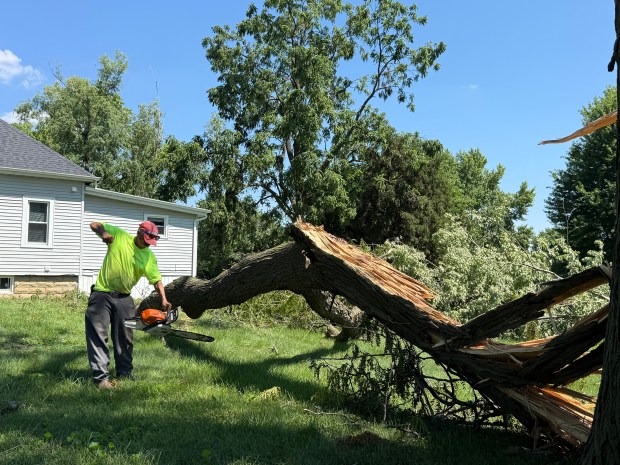
An employee from A1 Landscaping and Maintenance was seen working on a fallen tree on Jericho Road. The company had been busy addressing storm damage across multiple properties as of July 7, 2026.
Weiland continued to express anxiety over insurance coverage, worried about the cost of replacing damaged items like drywall, a treadmill, and family furniture. She said, “This and that are gone, and I’ve been photographing everything.” The floodwater left visible signs in the walls and floor of Weiland’s basement storage room.
The city of Aurora and Kane County urged residents to report uninsured damage via storm damage self-assessment surveys. The Kane County survey, available on their website, helps local and state officials evaluate storm damage to consider state or federal disaster aid. Theodore Van De Sampel, Aurora’s Emergency Management Coordinator, already received responses to the city’s survey but noted some reported public property damage. He encouraged residents to use the myAurora 311 app for public damage reports and the EMA survey for private property issues. The 311 app is accessible on most app platforms and their website.
Nunez intends to propose reopening the Ward 4 Residential and Businesses Storm Damage Grant Program to aid uninsured costs. This program previously aided residents after the August 2025 storm.
Power outages compounded the storm’s effects, with some residents struggling through days without electricity. Saville commended local businesses like Society 57 for providing a haven for those without power. Some residents resorted to staying with family or cooling off in their air-conditioned cars during the outage.
The Fox Valley Park District was hopeful that the Gilman Trail could reopen by the week’s end, although more rain was expected. Wagner noted water levels had slightly decreased but remained ankle-deep. Aurora Mayor John Laesch acknowledged the Fox Valley Park District’s efforts in assisting with tree removal and storm cleanup, particularly on Aurora’s West Side.
 Far-Left Groups Allegedly Organize Protests in Austin
 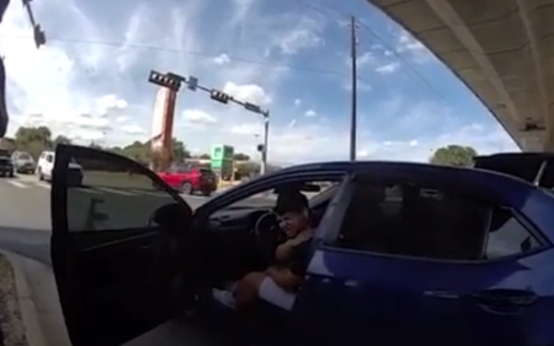 Austin Police Release Footage of Arrest After ICE-Involved Shooting
 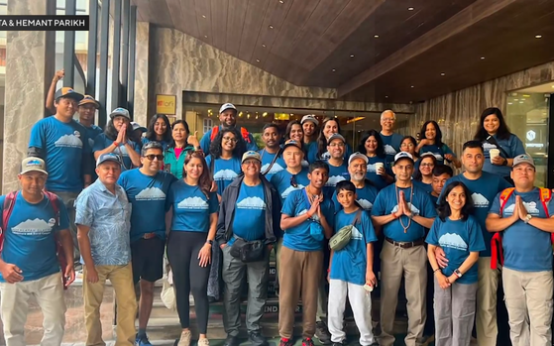 Himalayan Pilgrimage: A Couple’s Narrow Escape and Lingering Questions
  Religious Trends: Decline in Affiliation with LDS Church
 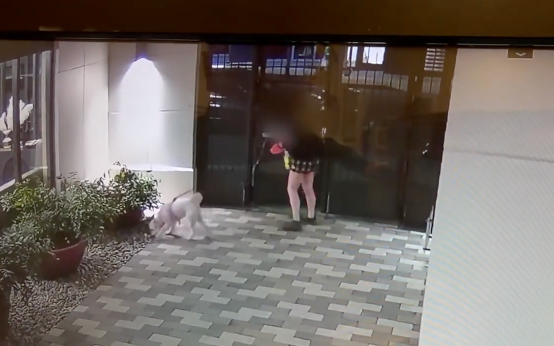 UC Berkeley Student’s Harrowing Encounter Raises Questions About Safety and Legal Protections
  Tinley Park Updates Downtown Parking Rules Amid Increased Congestion