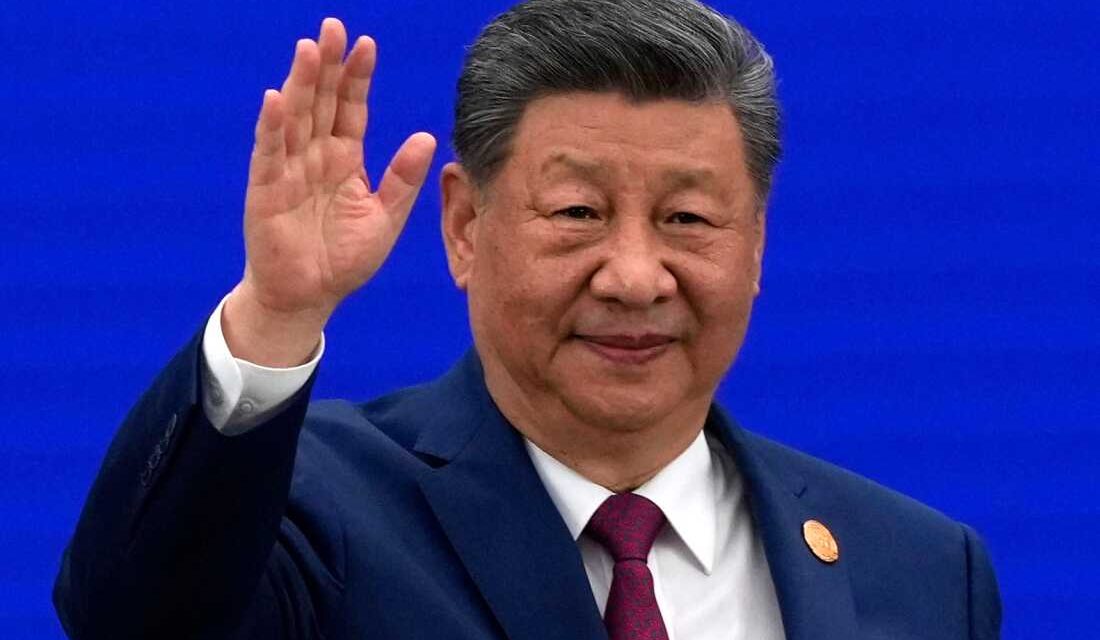
SHANGHAI — During the opening ceremony of the World AI Conference in Shanghai, Xi Jinping emphasized that developing and governing artificial intelligence should be a global partnership. He voiced concerns about national security issues being exaggerated and advocated for international collaboration in AI, challenging the notion of AI dominance by any single country.
Xi said, “The development of artificial intelligence should not be a solo performance by any single country but rather a symphony of global cooperation.” This message addressed American-led restrictions that have limited China’s access to some advanced technologies, propelling China’s own technological advancements and intensifying the competition between the U.S. and China.
Key figures attending the conference included leaders from Kazakhstan, Cambodia, Thailand, and U.N. Secretary-General António Guterres. Xi urged against emphasizing national security at the expense of other nations, a perspective China has maintained over time. He stated, “We should together oppose the practice of overstretching the concept of national security in the field of artificial intelligence, and of placing one’s own security above that of other countries.”
Xi announced China’s initiative to offer 5,000 AI training opportunities to developing countries over the next five years. He highlighted plans for expanding AI partnerships with various international groups, including the Association of Southeast Asian Nations, African Union, and BRICS countries. Additionally, China aims to provide 30 countries access to a Chinese-developed AI meteorological system for early warnings.
The previous day, China and 29 other countries, including Pakistan, Russia, and Kazakhstan, signed an agreement to establish a World Artificial Intelligence Cooperation Organization. This new intergovernmental body is poised to promote global AI governance and is headquartered in Shanghai.
State media reported that over 1,100 companies and 1,400 guests are participating in this year’s conference. Highlighted among them is Huawei, presenting its Atlas 950 SuperPoD AI computing system. Some technology analysts argue that China has shifted from catching up to the U.S. to becoming an innovator in AI. China’s five-year plan targets advancements in science and technology, including AI, until 2030. Their open-source AI models, such as DeepSeek, are gaining traction as affordable alternatives globally, especially appealing to the developing world.
 Concerns About Rapid Advancements in Artificial Intelligence
  Leading AI Companies Face Antitrust Lawsuit for Alleged Coordination
  Documentary Critiques Elon Musk’s Ambitions
  ChatGPT’s Trusted Contact Feature Aims to Support Users in Distress
  Anthropic CEO Dario Amodei Warns of AI Risks in U.S.-China Relations
  Scammers’ Strategic Tactics: When and Where You’ll Be Targeted