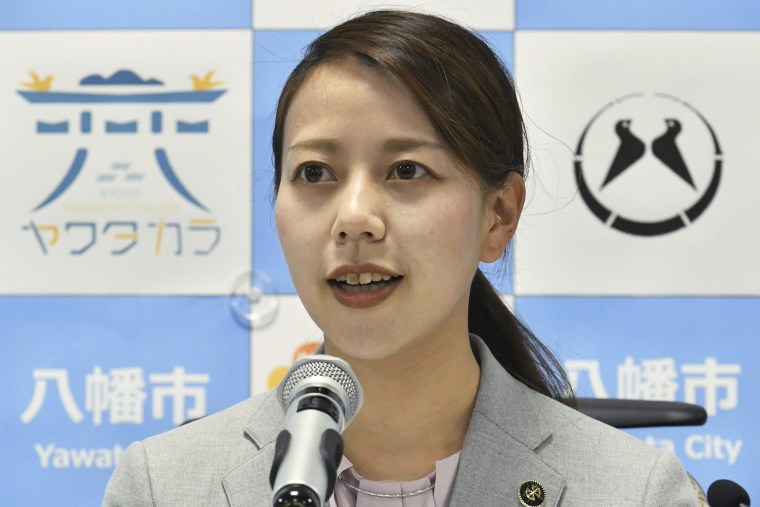
YAWATA, Japan — In a historic move, Shoko Kawata, the mayor of Yawata, a small Japanese city, has become the first sitting mayor in the country to take maternity leave. Her decision has sparked some criticism domestically, while attracting attention from international media.
Yawata, with a population of around 69,000, is located in western Japan. Kawata planned to have children after becoming Japan’s youngest female mayor in 2023, at the age of 33. Despite 16 weeks of guaranteed maternity leave for Yawata city employees, there was no existing protocol for the mayoral position. Kawata addressed this gap by creating one herself.
“I was very surprised myself to learn that I am the first mayor to (take maternity leave). It made me realize that until now there simply haven’t been many young women, or women in general, who have become mayors,”
she explained at Yawata City Hall.
Before starting her leave, Kawata participated in a street procession for Yawata’s Taiko festival. Unlike tradition, where the mayor rides on top of the mikoshi, Kawata walked behind due to her pregnancy.
While historic strides like Sanae Takaichi becoming Japan’s first female prime minister have been achieved, gender disparity remains significant, particularly in politics. Japan ranks 118th out of 148 countries in the World Economic Forum’s gender gap report, and 125th in political empowerment.
Kawata highlighted the need for reform to tackle Japan’s low birth rates. Japanese women are legally entitled to approximately 14 weeks of maternity leave, compensated with two-thirds of their wages and a birth bonus. Government workers often receive more favorable terms.
“People talk about gender equality and work-style reform, but we need to build a society in which people, across all professions, including among those in leadership roles, do not hesitate to have children. Otherwise, I believe continual population decline resulting from falling birth rates, and the resulting economic deterioration are inevitable,”
said Kawata.
Feedback from local residents was largely supportive, along with encouragement from colleagues. However, Kawata faced online criticism following extensive media coverage. Her baby is due in September.
“People who had never heard of me before only learned about me through reports focusing on the maternity leave. Some people criticized me online, suggesting that I wasn’t doing my job and was just there to take maternity leave. That was disappointing,”
she shared.
Most Yawata residents support Kawata’s decision, though some, like homemaker Chie Fujita, disagreed with the mayor receiving her full salary during leave.
“I’m a woman, and I’ve given birth myself, so I believe that as a woman’s right, she should be able to take time off when giving birth. However, regarding her salary, I don’t really agree with her receiving 100% of it while she’s on leave,”
said Fujita.
 Ontario Synagogue Shooting During Yom Kippur Leaves One Officer and Shooter Injured
  Pope Leo XIV’s Upcoming Visit to Latin America: An Overview
  Ukraine Deploys Ground Robots in ‘Operation Vivaldi’
  Understanding AI’s Impact Compared to Historical Threats
  State Department Alerts on Middle East Travel Amid Rising Tensions
  Iran’s Attacks on Bahrain: The Impact on Military Families