The Trump administration is employing distinct legal tactics towards two influential figures in Venezuela. A federal judge scheduled a June 1, 2027, trial for former Venezuelan president Nicolás Maduro and his wife, Cilia Flores, on charges of drug trafficking. They have been held in a Brooklyn jail since being seized from their Caracas residence during a January operation by U.S. forces. Both have pleaded not guilty.
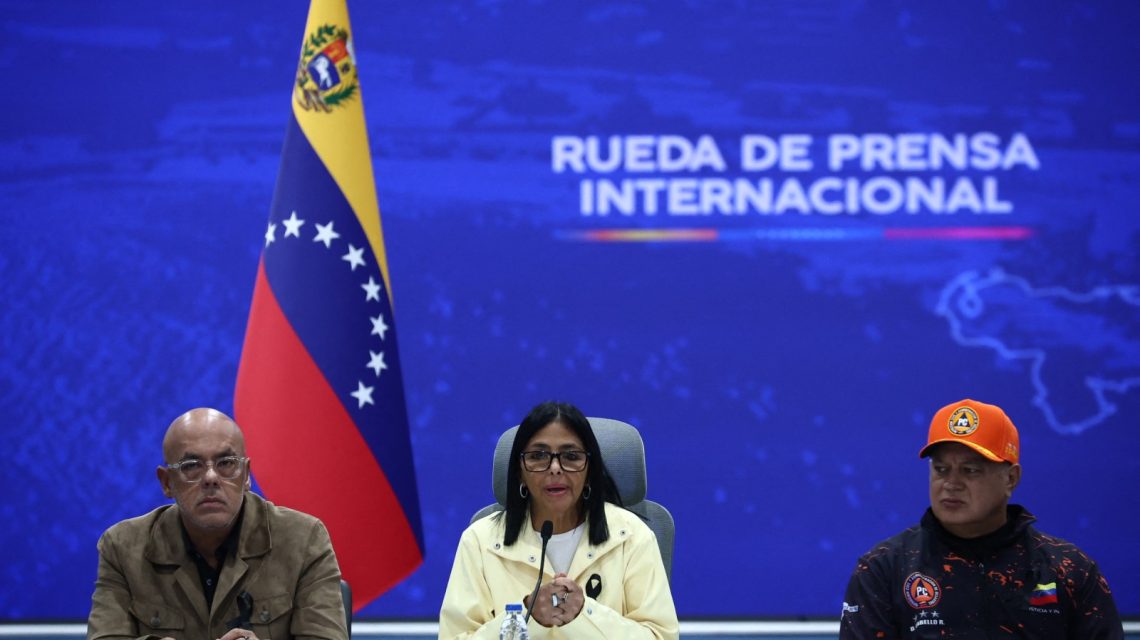
Meanwhile, in Florida, the administration told a federal court that Delcy Rodríguez, whom Washington recognizes as Venezuela’s acting president, is immune from a $314 million civil judgment related to the torture of three Americans previously detained in Venezuela. The Justice Department argued that Rodríguez cannot be held accountable in American courts while serving as head of state, as recognized by the United States.
This approach reflects a Venezuela policy that seems to pull in different directions. While the administration has hailed Maduro’s ousting as a foreign policy triumph, it shields the succeeding government, including officials accused of similar repressive acts that characterized Maduro’s tenure.
The mixed signals reflect different agendas in the administration,stated Benjamin Gedan, a senior fellow at the Stimson Center and former National Security Council director for South America.
He explained that President Trump is keen on increasing U.S. business opportunities in the energy and mining sectors and supports Delcy Rodríguez’s leadership in Venezuela.
Secretary of State Marco Rubio has pursued an alternate approach by advocating for a political transition in Venezuela. Rubio has aimed to orchestrate negotiations between the government and the democratic opposition, while the White House appears hesitant to elevate the opposition’s leading figure.
María Corina Machado, the 2025 Nobel Peace Prize recipient, leads an opposition coalition believed to have defeated Maduro in July 2024 elections. Analysts claim that the Trump administration discouraged her from returning to Venezuela, fearing it could disrupt the current arrangement with Rodríguez.
Laura Dib from the Washington Office on Latin America highlighted potential legal vulnerabilities in the arrangement, noting that Venezuela’s Supreme Court declared a “forced absence” after Maduro’s detention—a term not found in the constitution. She noted the lack of scheduled elections despite a ruling that suggested they should occur by July 2.
Dib expressed skepticism that U.S. recognition of Rodríguez might aid Maduro’s defense, emphasizing that the United States never acknowledged Maduro as president. She suggested the U.S. supports Rodríguez to ensure stability, cautioning against enabling an authoritarian regime over fostering long-term stability for Venezuelans.
Trump has cited Venezuela as an exemplar of successful regime change, contrasting this with the ongoing conflict in Iran following Ayatollah Ali Khamenei’s death. Ronal Rodríguez from Universidad del Rosario remarked that both Caracas and Washington work to exploit each other strategically.
Underlining Venezuela’s potential for commercial gains, Energy Secretary Chris Wright and Interior Secretary Doug Burgum spearheaded efforts to expand U.S. energy interests. Despite lifted sanctions and increased oil production, Laura Dib warned about pervasive corruption hindering progress, stressing that average Venezuelans have yet to benefit.
Dib highlighted the impact of earthquakes that struck on June 24, reporting over 5,000 deaths and approximately 7,000 people displaced. She cited a report indicating limited state response, raising concerns that public frustration could grow if improvements remain absent.
Ronal Rodríguez remarked that recent natural disasters complicated the administration’s narrative and posed challenges to portraying Venezuela as stable under new leadership.
 Controversy Surrounds Children’s YouTube Star and Journalist’s Revelations
 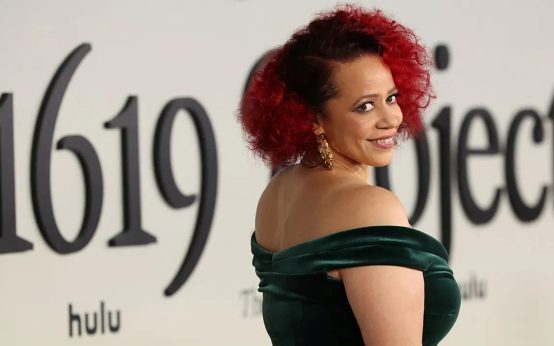 Nikole Hannah-Jones Reflects on School Choice and Its Impact
 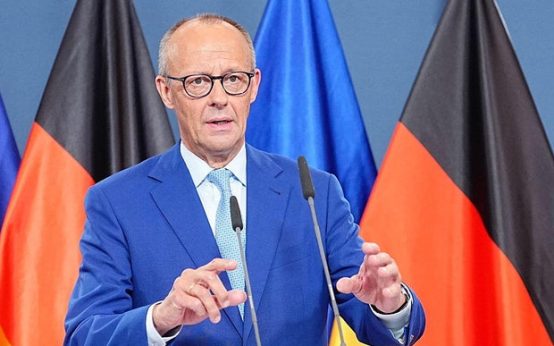 German Chancellor Friedrich Merz Faces Challenges After Election Losses
  Republican Senator Criticizes Trump’s $5,000 Check Proposal
  Trump’s Approach to Iran at the United Nations
  Trump’s Triumphal Arch Controversy