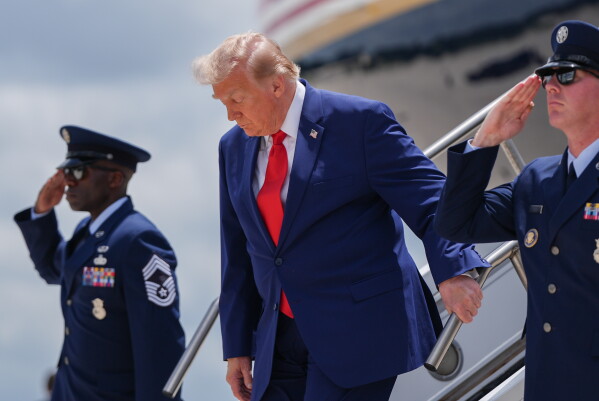
President Donald Trump frequently highlighted the “Abraham Accords” during his Middle East visit, aiming to build upon the 2020 agreements that extended diplomatic ties between Arab states and Israel. The term Abraham carries deep religious and cultural significance as a biblical patriarch honored in Christianity, Islam, and Judaism. These religions claim a majority of the world’s population.
Invoking Abraham is common when seeking interfaith unity, as all three religions respect him, although they sometimes compete to claim his legacy. Bruce Feiler, author of Abraham: A Journey to the Heart of Three Faiths, describes this dynamic: “Everybody has tried to claim Abraham as their own, but in fact Abraham belongs to everybody.”
The Abraham Accords as a Template
Signed in 2020 with U.S. mediation, the Abraham Accords established diplomatic and economic ties between Israel and the United Arab Emirates, Bahrain, Sudan, and Morocco. Future agreements, especially in regions like Gaza, could open pathways for engagement with other Muslim-majority countries.
From the Bible to the Headlines
Abraham’s story begins in the Book of Genesis as a childless elderly man promised by God to father a great nation. His journey leads to present-day Israel and the Palestinian territories. He fathers Ishmael with Hagar, an enslaved woman, and Isaac with Sarah, his wife. After Abraham’s death, Ishmael returns to assist Isaac in burying their father.
A crucial biblical event features God commanding Abraham to sacrifice Isaac, a test interrupted by an angel. While Jewish and Christian traditions focus on Isaac’s descendants, Muslim traditions emphasize Ismail (Ishmael) as a prophet and ancestor of Muhammad. The site associated with Abraham’s sacrifice is revered in Jerusalem.
Abraham: A Dividing and Unifying Figure
Christianity, Judaism, and Islam have historically vied to be seen as Abraham’s true heirs, a competition related to conflicts like the Crusades. Nevertheless, Abraham serves as a unifier, inspiring initiatives like the Abraham Accords, led by the predominantly Christian U.S., between Israel and Muslim-majority nations.
In his address after the 9/11 attacks, then-President George W. Bush recognized Islam’s roots in Abraham’s story, promoting unity and moral responsibility. Initiatives like the Abrahamic Family House in the UAE and interfaith dialogues in the U.S. use “Abrahamic” to foster inclusivity beyond “Judeo-Christian” heritage.
With Words About Abraham, Context is Key
During his Knesset speech, Trump focused on Abraham’s Jewish legacy, thanking the “God of Abraham, Isaac, and Jacob.” He applauded cooperation with Arab and Muslim leaders involved in the accords, including attendees of a summit in Egypt. His actions reflect a complex narrative over millennia involving Abraham’s legacy.
Feiler emphasizes resolving tensions inherent in Abraham’s story, involving familial and neighborly dynamics. He states, “We want it all for ourselves, but we keep being reminded that we can only live alongside the other.”
Note: This article is part of a broader religion coverage collaboration supported by The AP and The Conversation US, funded by Lilly Endowment Inc. The AP holds responsibility for the content.
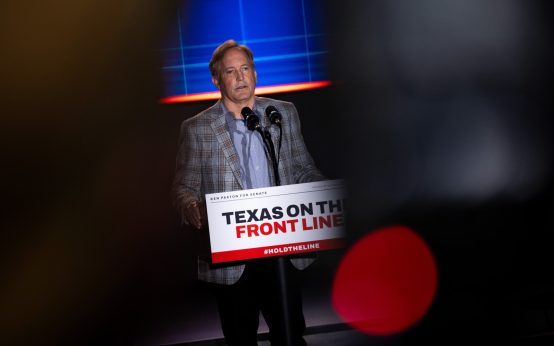 Texas Senate Race Tightens with Shifting Youth Support
 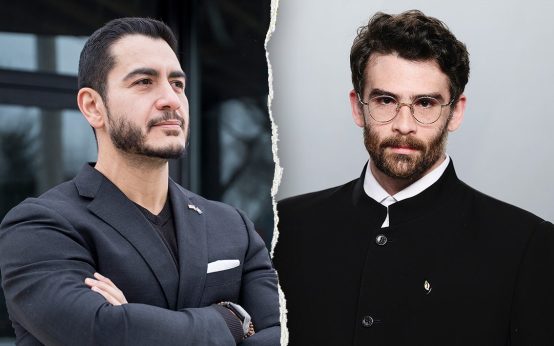 Flight 93 Hero’s Father Criticizes Ties Between Hasan Piker and Abdul El-Sayed
 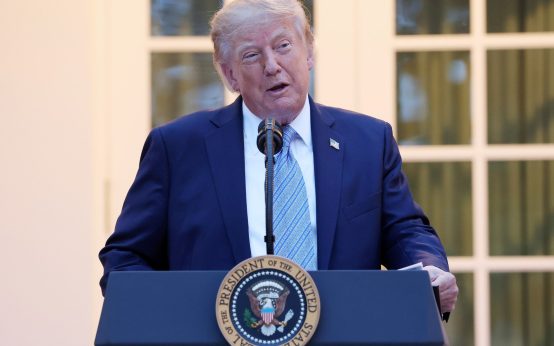 House Races Shift Amid Democratic Momentum
  Iowa Senate Race: Marist Poll Shows Democrat Josh Turek Leading Republican Ashley Hinson
  Kamala Harris and Abdul El-Sayed Campaign Together in Detroit
  New U.S. Military Bases Planned in Greenland Amid Strategic Security Deal