Health officials in North Carolina have clarified that the recent surge in cyclospora cases in the state is likely not linked to the Taco Bell outbreak. The outbreak at Taco Bell, tied to shredded lettuce from central Mexico, continues with increasing cases across various states. North Carolina officials suggest that the state’s spike in cases stems from several sources.
In a press conference on July 21, officials noted that previous years also saw a rise in cases during June and July. However, this year, the number is significantly higher. Carl Williams from the North Carolina Department of Health and Human Services stated, “There are many fresh fruits and vegetables that can serve as vehicles for cyclospora,” hinting at multiple potential sources.
It’s likely, maybe probable that there are multiple vehicles for cyclospora,” Williams said.
While in Michigan, many cases relate to Taco Bell’s lettuce, officials stress it is not a single source causing the spike. Lettuce, parsley, and cilantro frequently emerge as sources when cyclospora outbreaks occur. Williams noted these items often appear in cases but emphasized this does not directly prove them as the cause.
This summer, the U.S. witnessed a widespread cyclospora outbreak. The CDC reported 4,173 confirmed cases and 308 hospitalizations in 41 states since May 1. North Carolina alone reported 561 cases, with a sharp increase of 254 cases between July 14 and July 21, and 16 hospitalizations.
Understanding Cyclospora
Cyclospora cayetanensis is a microscopic parasite responsible for cyclosporiasis, an illness characterized by watery diarrhea, stomach cramps, nausea, fatigue, and loss of appetite. The parasite spreads through food or water contaminated with infected feces. Humans are the only known host for Cyclospora cayetanensis. Symptoms typically manifest one to two weeks after consumption of contaminated items.
Unlike other foodborne illnesses, cyclospora does not spread directly from person to person, as the parasite requires environmental exposure to become infectious. Fresh produce frequently becomes contaminated through irrigation water or environmental contact.
The North Carolina Department of Health and Human Services advises the following precautions: cut away damaged areas before preparing or eating produce, rinse produce before peeling, gently rub produce under plain running water, use a clean brush for firm produce, dry with a clean cloth or paper towel, and remove outer leaves of lettuce or cabbage.
CDC Expands Outbreak Investigation
The current cyclospora outbreak is the largest recorded in recent years in the U.S. Initially involving Michigan, Ohio, Indiana, Kentucky, and West Virginia, the CDC now includes additional cases in Illinois, Kansas, Oklahoma, and Pennsylvania. Officials note that patients in these states fell ill around the same time as those in the first five states. Ongoing investigations aim to determine the scope of the outbreak.
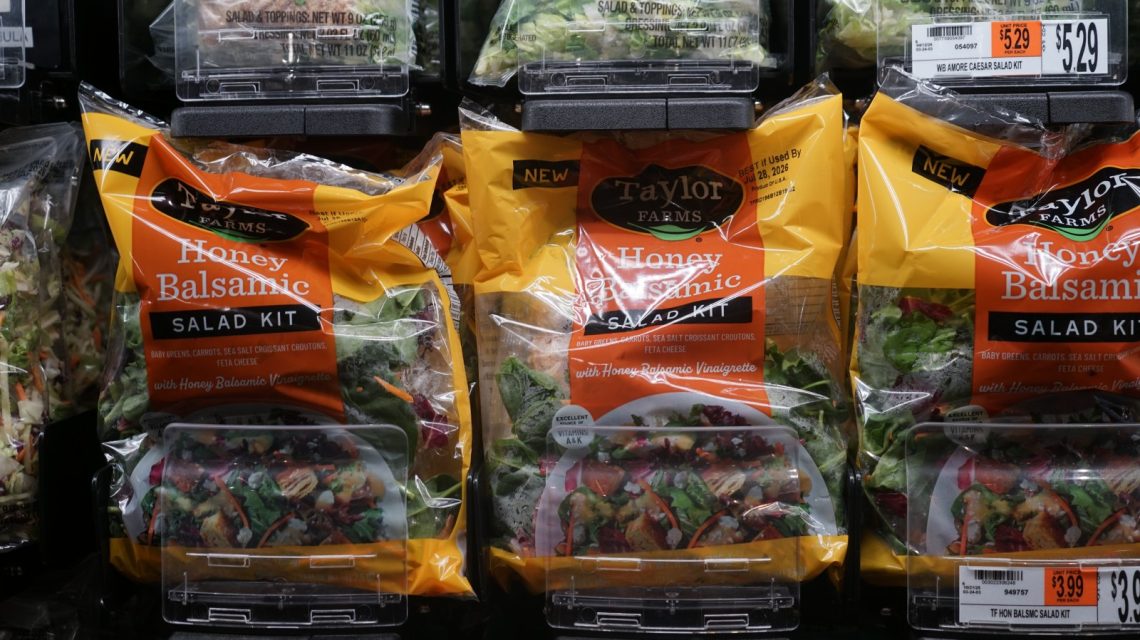
The outbreak’s source is under scrutiny, with a federal investigation prompting a significant lettuce recall. Recently, the FDA reported a false positive for the parasite from a sample by Taylor Farms, which was not part of the recall. The company’s statement stressed an FDA error in testing.
Additionally, Mexican Health Minister David Kershenobich remarked, “No evidence has been found to indicate that it originated there,” referring to the possibility of the outbreak starting from Mexican-sourced lettuce. All precautions are being taken to investigate further.
 Trump Administration Seeks to Influence NIH Grantmaking
  Understanding School Shooting Preparedness Drills
  Addressing the Complex Issue of Suicide and Its Prevention
  Quality of Sleep Linked to Risk Reduction in Various Diseases
  Exploring Diets and Their Potential to Reduce Alzheimer’s Risk
  Understanding School Safety Drills: Lockdowns vs. Active Shooter Simulations