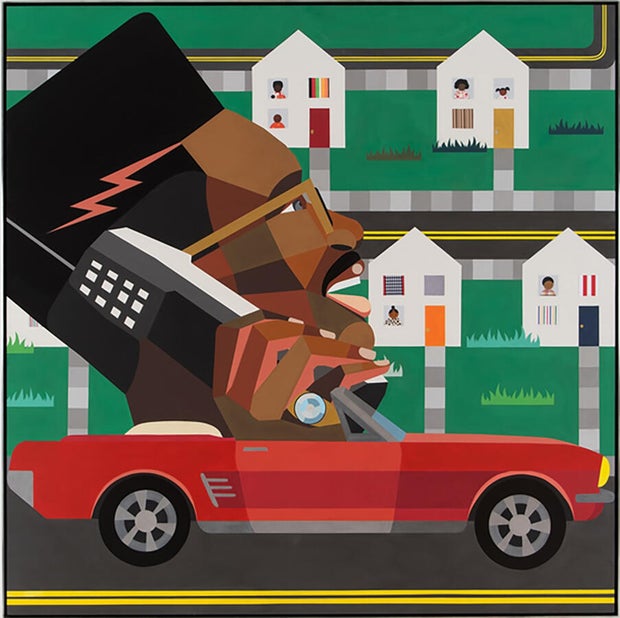
Derrick Adams, at 56, stands among the most vital artists of his era, known for his vibrant depictions of Black life in America. His work is on display at the Institute of Contemporary Art in Boston, featuring pieces like “Easy Street,” a 2025 acrylic and fabric collage.
Adams’ art is far from minimalist. He utilizes density and color to create immersive experiences, eliciting psychological responses from viewers through color associations.
Born in Baltimore, Adams moved to New York to pursue his artist career. His signature style soon garnered international attention. His work fills the interiors of the Boston museum showcasing joyous scenes of everyday life, a hallmark of his “Floater” series.
His art portrays Black life undisturbed, capturing the essence of Black joy. Adams explains that his work reflects moments of safety and normalcy. He contrasts the experiences of Black joy with general joy, highlighting societal disparities yet emphasizing resilience.
Adams often hears critiques that his work may downplay the trauma faced by Black communities. He believes honoring diverse experiences and narratives as essential. Adams advocates for artists of color to express both personal and collective stories.
Described as a leading figure in depicting Black contemporary life, Adams, however, does not concentrate on his legacy. His priority remains ensuring his art continues to exude joy. He humorously speculates about his art’s future, confident in its lasting impact.
For more information, visit derrickadams.com or view the “Derrick Adams: View Master” exhibition at the Institute of Contemporary Art in Boston through September 7.
 Navy Veteran Generald Wilson Reflects on Emotional National Anthem Performance
  Lucas Museum of Narrative Art: A New Cultural Landmark
  Northlight Theatre’s ‘The Front Page’: A Satirical Nod to Chicago’s Journalistic Past
  The Value of Unsupervised Play in Child Development
  Why the Creative Class and Global City Concepts Lost Momentum
  Aurora’s Moon Festival Showcases Cultural Diversity and Community Engagement