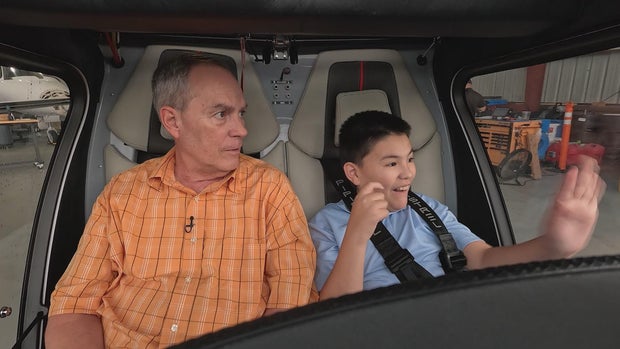
The national vaccine court, established in the 1980s, operates quietly near the White House. It serves as a model of balancing public health benefits with individual harm caused by vaccines. The court has disbursed billions to Americans who claimed vaccine injuries.
The rise in vaccine skepticism poses challenges to this court’s mission. Nevertheless, it persists in its duty. Jacob Thompson, a vibrant 13-year-old, became profoundly affected after a six-month vaccination. His case is a poignant illustration of the court’s purpose.
Jacob, born in St. Louis in 2011, was initially a healthy infant. However, after receiving a recommended DTaP vaccination, Jacob started experiencing seizures. Within months, he lost the ability to recognize his parents and suffered from severe epilepsy, facing up to 700 seizures daily.
Convinced of a vaccine link, the Thompson family sought help from Renée Gentry, a vaccine injury litigator. Gentry, who represents vaccine-injured clients, emphasizes the rarity of vaccine injuries despite the vast number of lives saved by vaccines globally.
The National Vaccine Injury Compensation Program was a response to 1980s public health challenges. Successful lawsuits against DTP vaccine manufacturers drove most out of the market. A congressional bill shielded manufacturers partly, ensuring continued vaccine production, while acknowledging potential vaccine-caused injuries.
This legislation brought together parents of vaccine-injured children and manufacturers, achieving consensus on vaccine court as the best solution. Despite the inability to sue manufacturers directly through the court, opting out remains an option, though with a lower proof burden.
Vaccine court operates uniquely without a jury, and anticipation centers on determining if a vaccine likely caused harm rather than proving negligence. Since its inception, 12,000 Americans have received close to $5 billion in compensations through court proceedings funded by a vaccine tax.
Last July, the Thompsons were awarded $2.1 million, ruling Jacob’s vaccination likely aggravated a genetic issue. A lifetime annuity was provided for his care. Although scientific certainty isn’t attainable, the court compensates to avoid missing legitimate injury cases, a policy Congress supports.
Renée Gentry acknowledges that vaccine-induced injuries rely on factors like genetics and immune systems. The no-fault system is essential, recognizing vaccines can harm without malice involved.
Vaccine Injury Table delineates which injuries qualify for compensation, expanding from six to 16 vaccines, including flu shots. Autism is notably absent. Former special masters recall extensive litigation that found no evidence linking vaccines to autism.
Despite court judgments, individuals like Robert F. Kennedy Jr. advocate for a broader scope in vaccine injury recognition. As the current Secretary of Health and Human Services, Kennedy believes in refining the injury table for better paths to compensation.
Ryan Farrell’s story highlights the court’s delays and challenges. After getting a tetanus shot, Ryan developed a rare autoimmune disease. Only years later did a ruling confirm a vaccine link. While the special master showed compassion, the process was slow, reflecting systemic backlog issues outlined by the court’s chief special master.
Citing over 3,000 pending cases, the court has sought more resources, but congressional action remains stalled amidst politically charged vaccine debates.
The Thompson family remains focused on their son Jacob, avoiding vaccine debates. They support vaccination but stress awareness of potential risks. Gentry champions a functional court ensuring rightful compensation despite societal division.
The program, designed to stimulate vaccine production while acknowledging rare harms, exemplifies bipartisan cooperation. Its existence ensures care for individuals like Jacob, underscoring the importance of the court’s continued operation.
 Quality of Sleep Linked to Risk Reduction in Various Diseases
  Exploring Diets and Their Potential to Reduce Alzheimer’s Risk
  Dengue Fever Death in Florida and the Rising Cases Across the U.S.
  Kim Kardashian Discusses Her Diagnosis of Esophagitis
  Florida Reports First Dengue Fever Death of 2026
  Concerns Over Food Safety Highlight National Security Issue