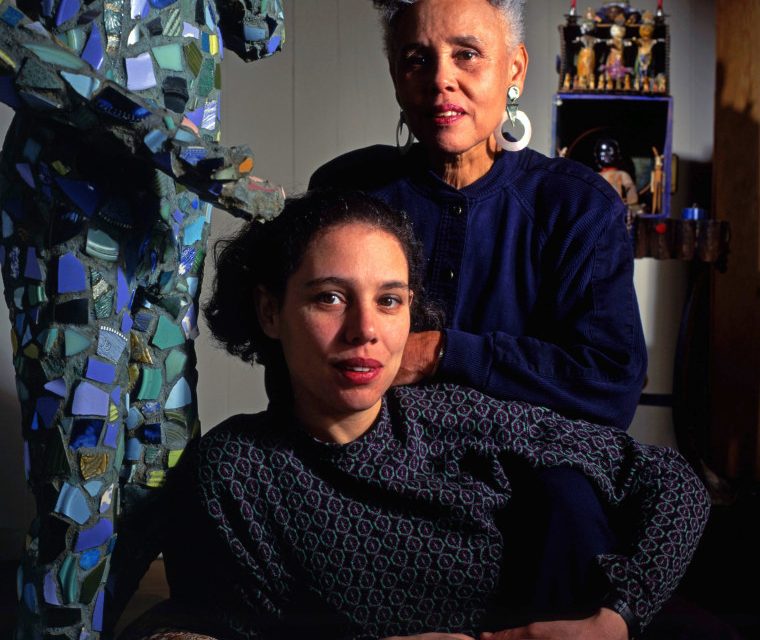
Esteemed artist Betye Saar passed away in Los Angeles at the age of 99. Her family confirmed her death just days before her 100th birthday. Saar was a trailblazer in the Black Art Movement of the 1960s, creating assemblage boxes, or sculptures from found objects, and transforming Jim Crow-era memorabilia into symbols of Black liberation.
“Her symbolically rich body of work has evolved over time to demonstrate the environmental, cultural, political, racial, technological, economic, and historical context in which it exists,” stated Roberts Projects, the Los Angeles gallery representing her.
Saar’s journey began in design, but she transitioned to art at age 35 and continued creating well into her 90s. Growing up in Pasadena, she was part of a Black artist community in Altadena and often drew inspiration from Simon Rodia’s Watts Towers.
Her artistry included painting, printmaking, sculpture, and found objects like dolls, washboards, and antiques. Themes of boats, clocks, cages, and altars frequently appeared, alongside motifs of the occult and cosmic symbolism. Her astrological sign, Leo, often manifested in the form of lions across her works.
Saar was renowned for her talent in transforming Black collectibles, heirlooms, and objects into powerful art. As said by Roberts Projects, “Among the older generation of Black American artists, Saar is without reproach.”
In 1969, she created the iconic “Black Girl’s Window,” yet its significance was only widely recognized decades later when the Museum of Modern Art in New York acquired it in 2019. Saar once remarked on her experience: “There weren’t that many galleries in Los Angeles at the time, and there certainly weren’t any for Black artists.”
“The Liberation of Aunt Jemima,” crafted in 1972, stands out among her most impactful works. It used derogatory memorabilia collected over time, such as a “mammy” character who appeared happy to serve white slave owners.
Yet Saar’s rendition transformed this figure into a revolutionary. The character, although smiling, held a rifle and a hand grenade. This piece emerged as a reaction to Dr. Martin Luther King Jr.’s assassination in 1968. As Saar recounted, “King’s death triggered a rage within me, and the mystic transformed into the warrior.”
Quaker Oat announced in 2020 that it would retire its Aunt Jemima brand, recognizing its racial stereotype origins.
Saar played a pivotal role in mentoring future generations, including the well-known painter Kerry James Marshall. Despite her work’s presence in a 1975 solo show at the Whitney Museum of American Art, significant exhibitions in large institutions became less frequent over the years. However, 2019 marked a resurgence with solo shows at the Los Angeles County Museum of Art and MoMA.
In 2026, she was inducted into the American Academy of Arts and Letters.
Angela Robinson Witherspoon, who produced a 2023 documentary on Saar titled “Betye Saar: Ready to Be A Warrior,” shared insights into her major influence. “She had boundless energy for making art,” she commented, highlighting Saar’s determination to contribute to the Civil Rights Movement while raising her three daughters.
Currently, “Let’s Get It On: The Wearable Art of Betye Saar” is on display at Roberts Projects in Los Angeles. Additionally, over 100 of her dolls are exhibited at the New-York Historical Society in Manhattan.
 The Rise of AI: High-Tech Feudalism and Societal Impact
  St. Charles Scarecrow Weekend: A Local Tradition
  Hamilton Wings Dissolution Marks End of an Era in Elgin
  Celebrating Two Decades of ’30 Rock’: A Cultural Analysis
 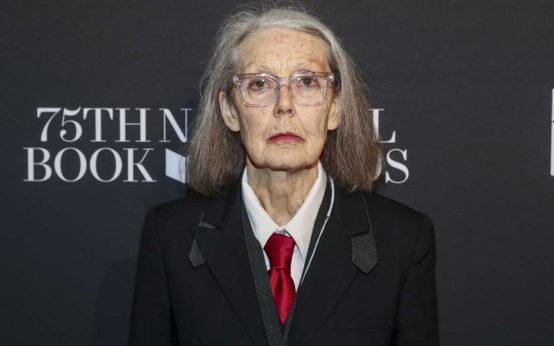 Anne Carson Named Nobel Laureate in Literature
  Understanding Immigration and Identity in California Politics