
Thousands of migrants have entered the small Spanish territory of Ceuta, located in North Africa, from Morocco. At least nine have died during the attempt. This situation has led Spain to send its military to restore order at the border. Images and videos from the area show many people, mostly Moroccans, moving along urban beach breakwaters near a border checkpoint with Morocco. Many appear to be young men, but families, including women and children, are also involved.
This rise in migrant crossings follows a surge in attempts to reach the exclave by swimming the day before. The reasons behind the mass crossing remain unclear. Spain announced plans to deploy the Armed Forces to assist the Civil Guard in Ceuta, and Prime Minister Pedro Sánchez is expected to visit the area.
An Autonomous Spanish City in Africa
Ceuta, along with Melilla, is an autonomous Spanish territory located on the northern coast of Africa. Positioned at the tip of Africa’s Mediterranean coast, these cities have been under Spanish control since 1580. They represent the European Union’s only land borders with Africa. Ceuta has a mixed population of Christians, Muslims, Spaniards, and Moroccans, living generally in harmony. However, Morocco does not officially recognize Ceuta and Melilla as Spanish and often refers to them as occupied territories.
A Diplomatic Flashpoint
This city of 85,000 residents has often been the center of diplomatic tensions between Spain and Morocco. In a significant crisis in May 2021, Morocco allowed about 8,000 people from Morocco and sub-Saharan Africa to cross into Ceuta in just two days. Many saw this as a response to Spain allowing a pro-independence leader from Western Sahara to receive medical treatment in a Spanish hospital. Tensions eased after Spain’s prime minister revised the country’s position on Western Sahara and met with Morocco’s King Mohammed VI.
A Key Migrant Destination
Spain serves as a primary entry point into Europe for migrants seeking better opportunities or escape from violence in their native countries. Ceuta and Melilla are heavily fortified due to their status as destinations for migrants reaching Spain from Morocco and other African regions. Many of those who reach these territories are returned, while others are held in shelters where they can apply for asylum in Spain.
Migrants usually swim from the Moroccan town of Fnideq, a distance of about 5 kilometers, to reach Ceuta. Others try to make the journey from the nearby town of Belyounech, which is closer. Despite this, the number of migrants reaching Ceuta and Melilla remains lower compared to those arriving in Spain through the Canary and Balearic Islands.
Over the last few decades, the immigrant population in Spain has seen significant growth. Out of the country’s 50 million people, around 10 million were born abroad. A large percentage of these immigrants come from countries like Colombia, Venezuela, and Morocco, contributing significantly to key sectors such as agriculture, tourism, and services.
 Counterpressure, Not Concessions, Crucial for Russia-Ukraine Conflict
  Ukraine’s Capital Faces Increasing Frontline Challenges
  Key Developments in U.S. Politics and International Relations
  Latest Developments in Politics and Policy
 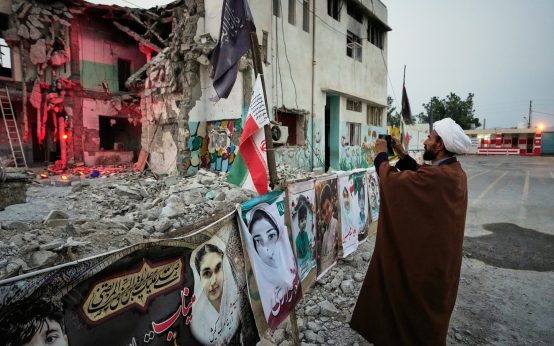 U.S. Airstrike on Iranian Girls’ School: UN Report and Global Reactions
  Cornell University Sexual Assault Investigation Reopened