
Polling stations have closed in four states where primary elections took place. The key race was in Michigan, where a significant Democratic Senate primary showcased deep-seated divisions within the party.
Dr. Abdul El-Sayed, a progressive ex-public health official, went up against Representative Haley Stevens, a centrist with strong party leader support. The winner will defend Senator Gary Peters’s seat, the Democrat retiring in a state pivotal for Senate control.
In Missouri, the Democratic establishment pushed back against the progressive left. Representative Wesley Bell defeated a primary challenge from former Representative Cori Bush, a democratic socialist. Bush, known for her critiques of Israel and as a Squad member, lost her previous St. Louis seat to Bell two years prior.
El-Sayed, advocating universal healthcare and critiquing U.S. military aid to Israel, garnered support from progressive leaders. Stevens positioned herself as a bipartisan solution to Washington’s gridlock and a strong ally of Israel, securing endorsements from state party figures.
Stevens benefited from roughly $60 million in external funding, over half from AIPAC, a pro-Israel group. This funding became a focal point in the election.
Alongside Michigan, primaries also took place in Missouri, Kansas, Virginia, and Washington.
In Michigan, the Democratic primary winner will face former Representative Mike Rogers. Democrats debated who might campaign more effectively against Rogers in a hotly contested state, with Stevens’s backers suggesting she is more electorally viable.
Concerns arise over party unity following the contentious primary, crucial for general election success.
Other Races to Watch
Virginia’s Key House Matchup: Former Representative Elaine Luria, a Democrat, will face off against Republican Representative Jen Kiggans. Both candidates are Navy veterans, in what is expected to be a closely fought race. The district hosts numerous military bases.
Kansas Governorship: State Senator Ty Masterson, endorsed by Trump, won the Republican gubernatorial nomination. The Democratic primary features two lawmakers vying to succeed Governor Laura Kelly, restricted by term limits.
Washington State’s Primary Battle: Representative Marie Gluesenkamp Perez, a centrist Democrat, seeks to resist primary challenges in her southwestern Washington district.
In Detroit, voters face choosing between Representative Shri Thanedar and democratic socialist State Representative Donavan McKinney. In another swing district, two centrists and one progressive vie to challenge Representative Tom Barrett, a Trump-distanced Republican.
In Michigan’s Senate race, Stevens struggled to address the substantial financial backing she received. El-Sayed consistently attacked this funding source, framing it as “campaign-finance zoomies.”
As usual in Michigan elections, Detroit’s vote count arrives late in the night, delaying calls in close races.
Scenes From Primary Day
Oak Park, Mich. – Detroit – Henrico County, Va. – Charlottesville, Va. – West Bloomfield, Mich. – Troy, Va. – Dearborn, Mich.
These images show voters engaged with the primary process.
Michigan’s Electoral Influence
The state’s primaries act as strategic tests for appealing to various political coalitions. Young voters from Michigan’s college regions, notably Washtenaw County and Ann Arbor, heavily support El-Sayed. Early results indicate his lead includes mail-in and in-person votes.
Missouri citizens decisively rejected a measure aiming to abolish state income tax, which covers about 65% of the budget, by increasing sales taxes. This demonstrates skepticism toward the Republican-led legislature.
Democrats aim to retain Kansas governorship despite its conservative lean. The competition between State Senators Cindy Holscher, a populist, and Ethan Corson, a moderate, prompts reflections on appealing to independents and Republicans.
Impact of External Groups
AIPAC, a pro-Israel faction, sees success with Representative Wesley Bell overcoming Bush.
Another measure in Missouri was defeated, which would have complicated passing citizen-led ballot initiatives. This maintains a voter mechanism often used for rights expansions.
State-Level Ballot Measures
Kansas voters rejected a proposal for electing state Supreme Court justices, seen as a Republican effort to alter the judiciary’s composition post-Roe v. Wade. This maintains abortion rights.
The state uses an assisted appointment process, selecting justices from a governor-curated list. Voters also upheld this system, which Democrats view as crucial for rights protections.
Republican Ty Masterson, Trump-endorsed, won Kansas’s Republican gubernatorial nomination. He is poised to potentially flip a Democratic-held office in November.
Masterson, validated by Trump, faces a competitive election with Democrats claiming viable paths to retain power.
Bush’s loss to Bell, significantly influenced by pro-Israel funding, marks continued resistance from establishment Democrats against progressive challenges.
Democratic Senate Hopefuls in Kansas
Adam Hamilton, a Methodist pastor, secured the Senate nomination for Democrats, indicating a potential surprise challenge to Republican Senator Roger Marshall.
Kansas, rarely a Democratic contender, shows potential shifts with its governor and some representatives being Democrats.
Hamilton’s focus on balanced representation may draw support from more moderate voters, despite conservative pockets likening his congregation’s base as not representative of true Kansas.
Michigan Gubernatorial Race
Jocelyn Benson, Michigan’s Secretary of State, won the Democratic gubernatorial nomination. Benson is known for her resistance against overturning Biden’s victory and election integrity defense.
Ready for a competitive election, Benson stands out for challenging federal interference with state voting processes during Trump’s tenure.
Her primary win shores up Democratic positioning in a state vital for future presidential elections.
Campaign Influence
Abdul El-Sayed’s aggressive campaign attacked undisclosed financial influences in Michigan’s race. The media coverage and political figures at his event emphasized a shift towards progressive momentum within the party, despite Stevens’s powerful allies.
In Missouri, Bell claimed a decisive victory, marking an ongoing debate on the party’s ideologies between progressives and centrists.
The Michigan primary gained additional attention as Democrats prioritized the state’s primary timing on the 2028 presidential calendar. This positions the state in strategic importance, seen as an electoral preview for future national elections.
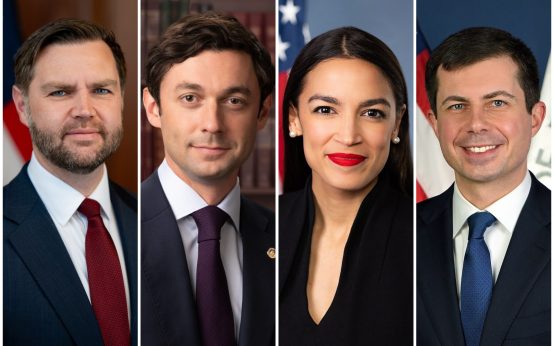 VP JD Vance Trails Potential Democratic Contenders in Early Polling for 2028 Election
  Rising Beef Prices: Causes and Policy Responses
 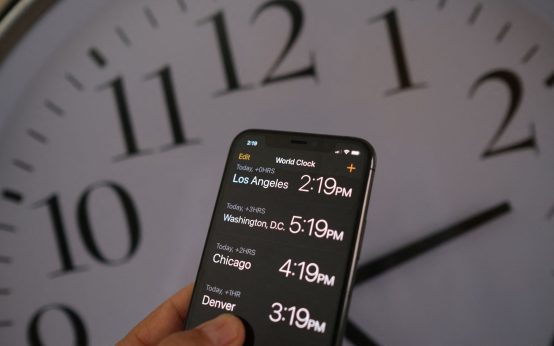 The Push for Permanent Daylight Saving Time
  Trump Visits New York Mayor Mamdani at Gracie Mansion
  Congressional Inaction Amid AI Concerns
  Zohran Mamdani Faces Backlash at Staten Island Event