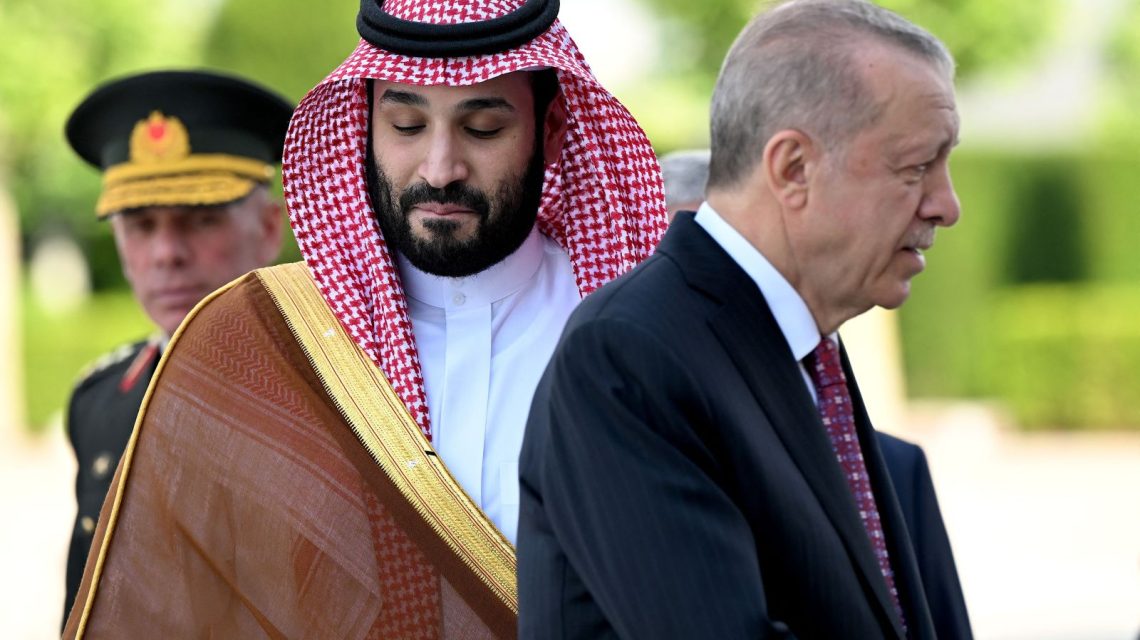
Saudi Arabia, Turkey, and Pakistan have signed a mutual-defense agreement. This deal could alter the Middle East’s power balance amid ongoing conflict involving Iran, which continues to create regional instability. The “Mecca Joint Defence Agreement,” signed recently, declares that an armed attack on any of the three nations will be considered an attack on all. This creates a NATO-like collective-defense framework. Although the agreement does not detail the military obligations of each country, it aims to enhance cooperation among these influential powers during increasing regional unrest.
The announcement comes amid a growing regional crisis escalated by the Iranian conflict. Missile attacks, maritime disruptions, and threats to energy infrastructure have accelerated regional powers’ efforts to bolster security alliances.
Why It Matters
The pact raises stakes for future attacks on Saudi Arabia. According to the agreement, an attack on one member will be seen as an attack on all three, potentially involving Turkey and Pakistan in any future crisis with Saudi Arabia. This aims to strengthen collective deterrence, though officials emphasize the alliance is defensive and not aimed at any specific country.
Saudi Arabia has become a target in the regional conflict. Recently, Iranian missile and drone attacks, and strikes by Tehran-aligned groups in Yemen and Iraq, have threatened Saudi territory, impacting shipping routes and energy infrastructure. This has led Riyadh to seek deeper security cooperation with regional partners. The kingdom has been aligning more closely with Turkey and Pakistan, forming a loose bloc with Egypt to enhance security cooperation amid competition with Iran.
Not Just About Iran
The agreement is also viewed in terms of broader Middle East competition. While concerns over Iran’s pressure are significant, analysts note the emergence of another alignment including Israel, UAE, and India. Israel and the UAE have strengthened ties, particularly after the Abraham Accords. Cooperation between Israeli Prime Minister Benjamin Netanyahu and Indian Prime Minister Narendra Modi has also grown, involving defense cooperation and multilateral initiatives with the UAE and the United States.
Analyst Marc Saxer notes, “Israel and Iran are competing for regional hegemony, while a coalition of middle powers centered on Saudi Arabia, Pakistan, Turkey, and Egypt seeks to counter both.” Recently, Netanyahu and Modi’s talks were seen as furthering Israel and India’s coordination.
Turkey and Saudi Arabia have grown closer, overcoming years of rivalry. Pakistan remains a critical security ally of Saudi Arabia, as the only nuclear-armed Muslim state.
Why U.S. Allies Are Looking Beyond Washington
The agreement appears as Saudi Arabia, Turkey, and Pakistan navigate a region affected by conflicts involving Iran and Israel, and growing uncertainty about the U.S. security role. Analysts argue this reflects a shift towards regional powers pursuing independent security arrangements.
Abdulaziz Sager, chairman of the Gulf Research Center, stated that the framework shows increased willingness among regional and middle powers to closely coordinate on security. He suggests this could lead to a more regionally driven security architecture.
What Happens Next
How the pact functions in practice remains uncertain. It establishes collective defense principles, but Reuters reported the governments’ statement did not clarify military commitments required in case of an attack. This suggests the alliance may serve more as a deterrent and political signal rather than an automatic military response.
The implications remain significant. If Saudi Arabia faced another major attack by Iran or an Iran-aligned group, Tehran would need to consider possible involvement from Ankara and Islamabad, not only Riyadh. In a Middle East defined by complex partner and rival networks, this new pact signals a move towards building regionally focused security structures as the Iranian conflict reshapes the geopolitical environment.
 Venezuelan Leadership at the United Nations
  Ontario Synagogue Shooting During Yom Kippur Leaves One Officer and Shooter Injured
  Pope Leo XIV’s Upcoming Visit to Latin America: An Overview
  Ukraine Deploys Ground Robots in ‘Operation Vivaldi’
  Understanding AI’s Impact Compared to Historical Threats
  State Department Alerts on Middle East Travel Amid Rising Tensions