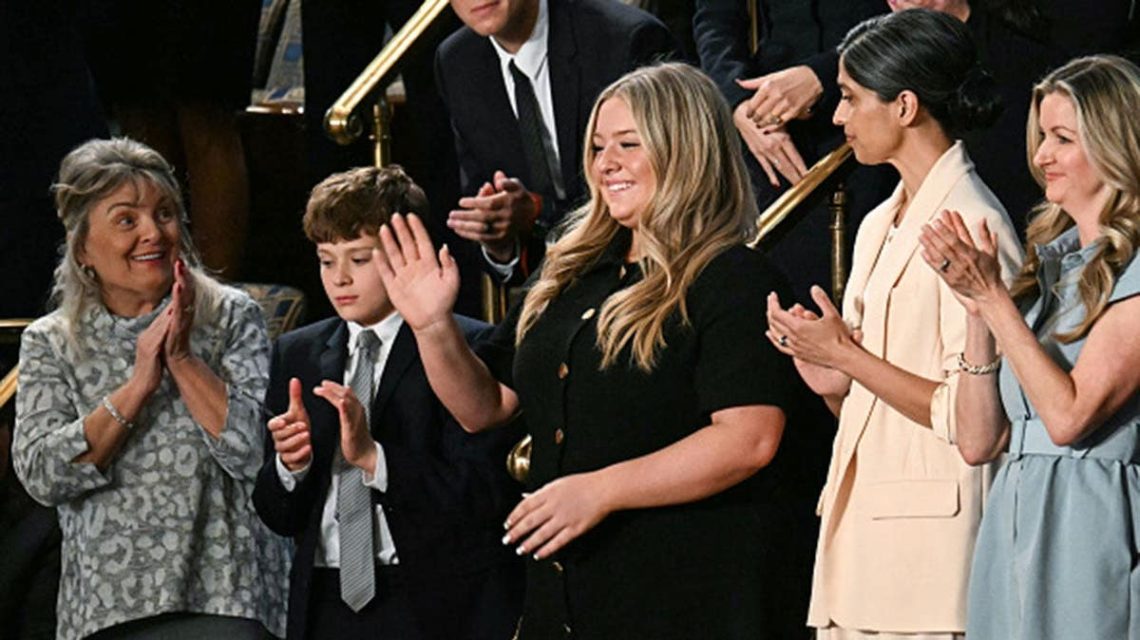
Payton McNabb, a former high school volleyball player, has been actively involved in advocating for the protection of women’s sports. Her journey began after suffering a traumatic brain injury and partial paralysis on her right side, sustained during a volleyball match against a biological male opponent. The incident has fueled her commitment to defending women’s sports and Title IX. She has since taken her cause from a volleyball court in North Carolina to the halls of Congress, testifying before lawmakers.
McNabb’s story gained attention when she was recognized by President Donald Trump during a joint session of Congress at the U.S. Capitol in March 2025. At the age of 21, McNabb continues to witness the ongoing battle in professional sports, particularly in the WNBA, where she sees potential double standards emerging.
Speaking to OutKick, McNabb praised Indiana Fever’s Sophie Cunningham for her vocal defense of women’s sports. Cunningham has taken a bold stand, highlighting the disparities in how women’s sports are treated. McNabb expressed admiration for Cunningham’s courage, especially given the backlash athletes often face when speaking on these issues.
I started speaking out when I was 18. I’m 21 now, but within the last few years, I’ve had to explain to Congress the biological differences between men and women. It seems obvious, yet it’s a matter I’ve confronted repeatedly.
McNabb appreciates Cunningham’s efforts and notes how crucial her advocacy is, particularly as a high-profile athlete. She acknowledges that many are hesitant to speak due to fear of negative consequences, a sentiment mirrored in the critique of Minnesota Lynx head coach Cheryl Reeve’s support for transgender inclusion in women’s sports. Reeve faced criticism for wearing a Trans Kids Belong shirt during a game against the Fever.
McNabb perceives Reeve’s actions as reflective of a broader issue where advocacy for women’s empowerment inadvertently allows biological males to participate in women’s sports. This, according to McNabb, raises questions about fairness and sports equity.
Beyond her advocacy, McNabb points to Caitlin Clark’s influence. Although Clark maintains a focus on basketball, McNabb emphasizes the potential impact of her voice in the ongoing sports dialogue.
Whether Caitlin Clark likes it, she’s part of the conversation. Her acknowledgment could inspire the next generation of female athletes.
Now, three years post-injury, McNabb reports substantial improvement in her health. Her commitment to advocating for women’s sports remains steadfast, driven by the hope that no other athlete will endure similar experiences.
McNabb’s efforts extend to educating others about the importance of maintaining fairness in female sports, highlighting existing discrepancies, and advocating for a sincere dialogue on the matter.
 Ronald Acuna Jr. Suffers Injury During Game Against Cincinnati Reds
  Joe Burrow’s Unexpected Post-Game Recovery
  Rangers Place Players on Waivers Ahead of Season Opener
  Cubs Face Crucial Pitching Decisions Amid Wild Card Race
  Chicago Cubs vs. Miami Marlins: 12-Inning Game Recap
  Alabama Football’s Comeback and Controversy