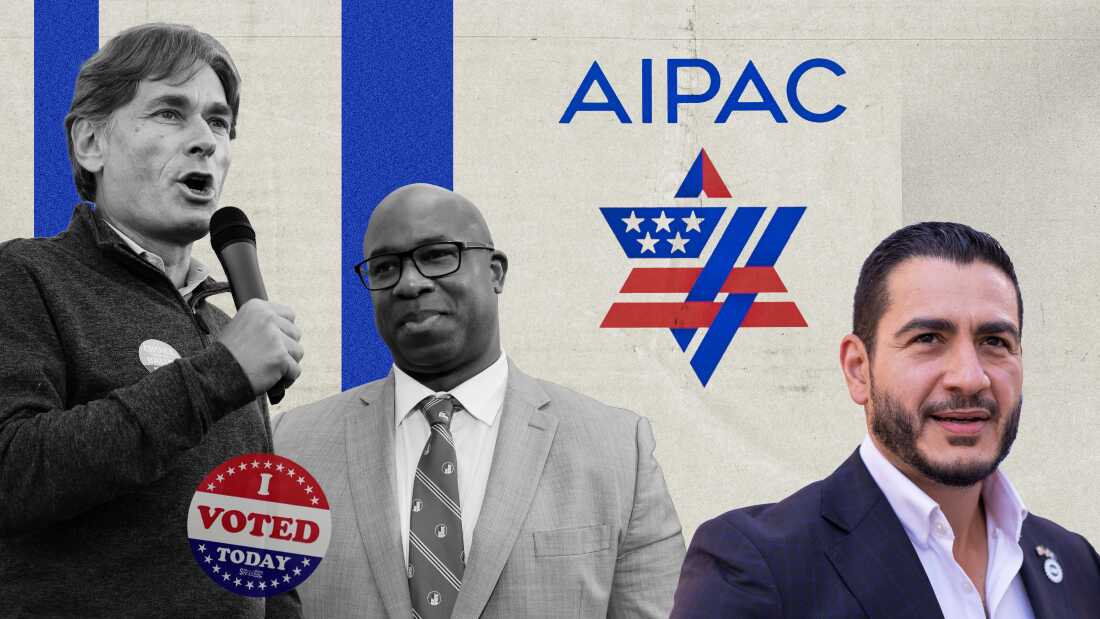
The American Israel Public Affairs Committee (AIPAC) has become a significant focus in recent elections. Democratic candidates are increasingly stating they will not accept contributions from AIPAC. In Michigan’s Democratic primary for the U.S. Senate, Abdul El-Sayed criticized his opponent, Rep. Haley Stevens, for taking AIPAC’s support. El-Sayed’s victory indicates the growing influence of the Democratic left and a rising opposition to AIPAC and political funding.
AIPAC’s Mission and Recent Changes
AIPAC, founded in the early 1950s, aims to strengthen the U.S.-Israel partnership. It has long maintained bipartisan support in Congress. “They always had a couple of basic rules. Number one, they did not endorse candidates,” said Ken Toltz, who began his political career at AIPAC. The organization shifted its approach ahead of the 2022 elections. It created a political action committee and super PAC in response to increased partisanship and campaign costs. Howard Kohr, a former chief executive, noted this strategic shift to protect allies and challenge detractors.
“We wanted to defend our friends, and to send a message to detractors that there’s a group of individuals that will oppose them,” Kohr said in 2022.
Despite higher awareness of AIPAC, many remain unclear about its purpose. Criticism of AIPAC has increased as American support for Israel declines. According to a Pew Research Center survey, 60% of U.S. adults view Israel unfavorably. Gallup found more Americans sympathize with Palestinians than Israelis. Several Democrats also voted to cut aid to Israel recently, showcasing a shift in support.
Challenges and Controversies
Critics argue AIPAC’s campaign spending has harmed its reputation and that Democrats face challenges in navigating races where AIPAC support may be a liability. AIPAC’s spokesperson for the United Democracy Project, Patrick Dorton, expressed that they focus on ensuring a pro-Israel majority in Congress.
Besides opposition to AIPAC linked to the Gaza conflict, friction comes from their stance against the Iran nuclear deal during the Obama administration and endorsing Republicans who opposed certifying the 2020 presidential election results. AIPAC helped unseat Rep. Jamaal Bowman, a critic of Israel, in the 2024 cycle.
In recent efforts, AIPAC, through its super PAC, targeted and succeeded in defeating some Democrats while bringing attention to its controversial strategies. United Democracy Project’s spending increased from $26 million in its first cycle to around $62 million, including $30 million in Michigan’s U.S. Senate primary.
Electoral Implications and Financial Activities
AIPAC’s substantial financial mobilization mirrors other influential groups. Their “win rate” is comparable to entities like the National Rifle Association. AIPAC uses regional super PACs to influence races, a common strategy among national super PACs. Economist Dany Bahar suggests AIPAC’s financial clout may not always translate into effectiveness compared to other groups.
Misconceptions persist about AIPAC’s nature and funding. Some suggest it’s portrayed by critics as foreign-controlled, a notion refuted by political analysts. AIPAC insists it’s an American organization advocating for U.S.-Israel relations.
As debates around AIPAC intensify, the group’s mission faces significant challenges.
 Vance Echoes Sanders on Immigration and Worker Protection
  FAA’s Challenges in Modernizing Air Traffic Management
  Impact of Expiring Temporary Protected Status on Haitian Workers in the U.S.
  Senate Candidate Responds to Presidential Attack with Ad on Transgender Issues
  NFL Pushes for Regulation of Prediction Markets
  Speculation Surrounds Nobel Peace Prize Award