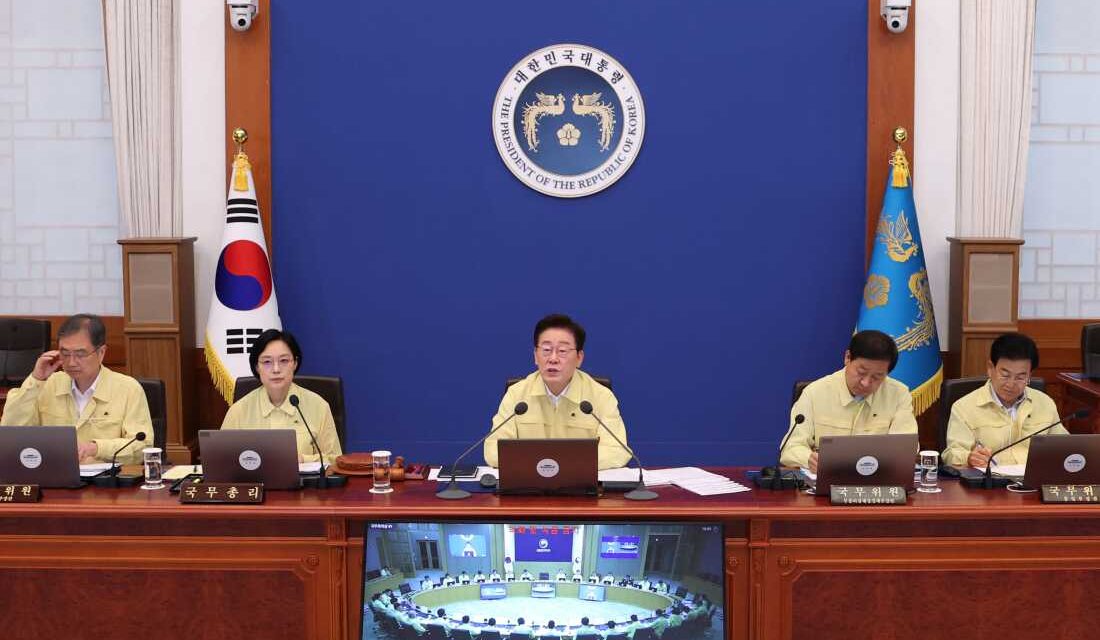
During a cabinet meeting on Tuesday, South Korean President Lee Jae Myung emphasized the critical role of a strong alliance with the United States in maintaining national security. His comments came after U.S. President Donald Trump issued an unexpected directive to significantly decrease joint military exercises. This decision caused confusion and worry among many South Koreans.
Trump’s announcement came via social media just before the commencement of the annual Ulchi Freedom Shield exercises between U.S. and South Korean forces. These drills focus on preparing for potential threats from North Korea. Trump highlighted his positive relationship with North Korean leader Kim Jong Un and South Korea’s decision not to support the U.S. in its conflict with Iran as reasons for the reduction in military exercises.
Many South Koreans view this move as a potential threat to the robustness of the historic U.S.-South Korean alliance, cemented during the Korean War from 1950 to 1953. The alliance’s strength is pivotal for South Korea’s security due to its lack of nuclear weapons. The U.S. extends its nuclear protection to South Korea, pledging a powerful response if North Korea attacks its ally.
The presence of approximately 28,500 U.S. troops stationed in South Korea underscores the strategic importance of the alliance. Nevertheless, confidence in U.S. commitment is wavering among South Koreans, exacerbated by Trump’s trade policies and a past immigration enforcement operation in Georgia targeting South Korean nationals.
A South Korean newspaper, Hankook Ilbo, commented on Trump’s decision, stating it reveals a deteriorating Korea-U.S. alliance and increases public fear. The editorial criticized the U.S. for seemingly holding North Korea in higher regard than its South Korean ally.
Importance of Solid US Alliance
In response to the situation, President Lee stressed during a cabinet meeting that strengthening the military alliance with the U.S. is essential for enhanced national security. Lee, known for advocating a fortified self-reliant defense strategy, remarked, “Our value and importance as an ally will increase as we bolster our strengths.”
The precise elements of the 11-day South Korea-U.S. training maneuvers that would be reduced were not immediately clear. However, military officials from both nations had stated the drills would parallel past years, incorporating insights from recent global conflicts, particularly those involving North Korea’s activities relating to the Russia-Ukraine conflict. The exercises are reportedly defensive rather than offensive.
In contrast, North Korea’s Foreign Ministry has accused both countries of arranging provocative exercises and has threatened to escalate its deterrence measures in response.
Tensions Surrounding Trump-Kim Engagement
Since his diplomatic efforts with Trump in 2019 failed, Kim Jong Un has avoided discussions with both the U.S. and South Korea. Analysts believe that Kim is unlikely to respond to Trump’s outreach without more significant concessions from the U.S. In recent years, Kim has expanded his nuclear capabilities and sided with Russia over its military actions in Ukraine.
The South Korean presidential office expressed optimism that the friendly relationship between Trump and Kim might facilitate productive dialogues, potentially advancing peace on the Korean Peninsula. This hope has sparked criticism from conservatives who view Lee’s government as prioritizing Kim-Trump diplomacy over vital security issues.
Park Chung-kwon, spokesperson for the conservative opposition People Power Party, pointed out that the security framework in South Korea is under serious threat due to these developments.
Impact of Reduced Military Exercises
Trump justified his call to scale back military operations in his social media communication by labeling them costly and unnecessarily hostile toward North Korea, which he claimed has respected his administration.
Trump also recounted asking President Lee if South Korea would collaborate on denuclearizing Iran, to which Lee allegedly declined. Meanwhile, South Korea maintains ongoing discussions with the U.S. regarding potential military contributions to ensure freedom of navigation in the Strait of Hormuz.
According to Leif-Eric Easley from Ewha University, Trump treats alliances like investments expecting regular returns. South Korean leadership, on the other hand, grasps the continuous negotiation of economic and security relations with the Trump administration and carefully navigates the recent changes.
 Confusion Surrounds Starlink Restrictions in Ukraine
 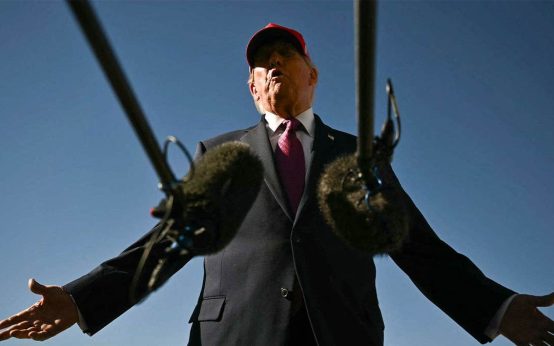 President Trump Offers Support to Pope Leo XIV After Cancer Diagnosis
  U.S. Air Force Withdraws Bomber Aircraft from UK Base
  Former U.S. Ambassador to Greece Faces Ethical Violation Allegations
  Woman Rescued After 20 Hours at Sea from Royal Caribbean Cruise
 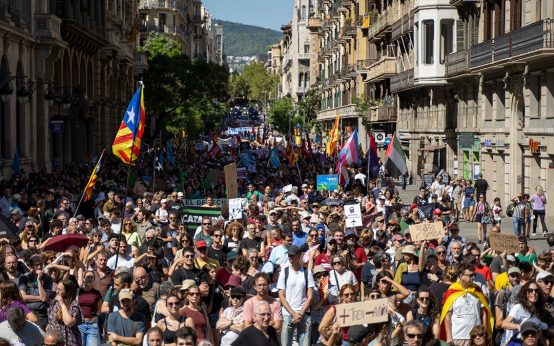 Increasing Tensions Over Tourism and Housing in Spanish Cities