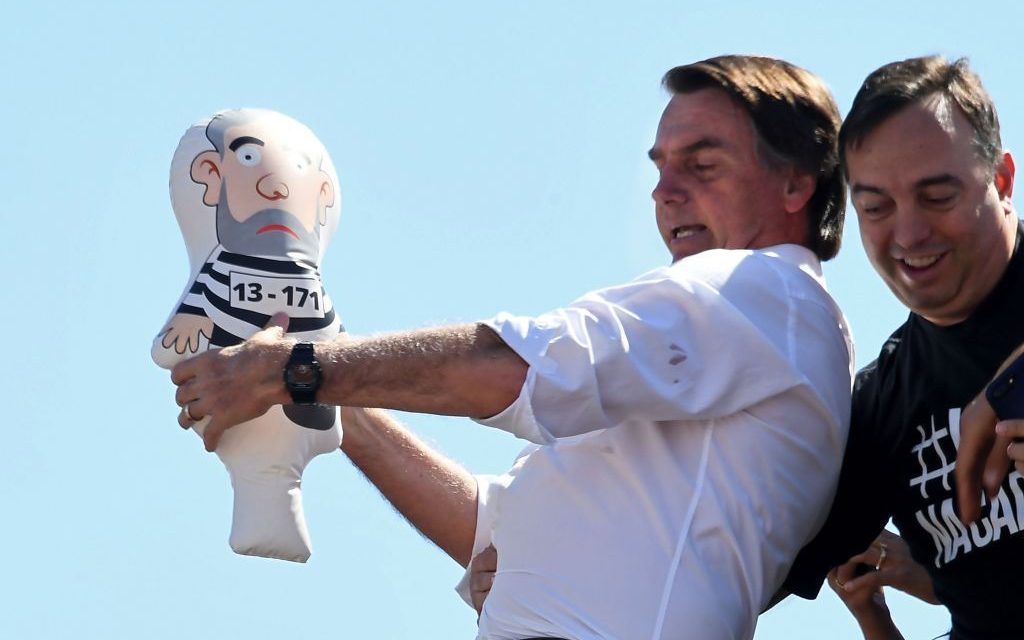
Jair Bolsonaro narrowly lost Brazil’s presidency. Following that, he lost his freedom. Now, his eldest son, Flávio Bolsonaro, aims to reclaim both.
Flávio’s Political Aspirations
Flávio Bolsonaro, a 45-year-old senator and the eldest son of Brazil’s former president, seeks to unseat Luiz Inácio Lula da Silva. He wants to free his father, who faces a 27-year sentence, and restore their family to Brazil’s presidential palace. This dual mission combines a presidential bid with a personal vendetta.
The involvement of the President of the United States, an old ally of Bolsonaro Sr., adds another layer to this story. This connection could impact the dynamic in Latin America significantly.
Lula vs. Bolsonaro: A Tense Rivalry
The last presidential election between Lula and Bolsonaro was highly competitive. Tensions ran high with accusations and strong rhetoric.
Bolsonaro painted Lula as a fraud and criminal, referencing corruption charges that were later annulled. Lula, meanwhile, cast himself as a champion of democracy, opposing what he called a dangerous former military officer.
Despite the intense contest, Lula prevailed with a slim margin: 50.9% to Bolsonaro’s 49.1%. This victory marked the closest election in Brazil’s recent history.
Bolsonaro’s Response and Flávio’s Strategy
Jair Bolsonaro followed a path similar to Trump after his defeat. He refused to concede, alleged election fraud, and questioned Brazil’s electronic voting system. His actions led to his conviction for plotting a military coup, resulting in his current house arrest due to health challenges.
Flávio Bolsonaro adopts a different approach. He launched his presidential campaign with a focus on vengeance. Polls indicate a close contest with Lula, suggesting a potential shift in Brazil’s political landscape.
The U.S. Connection
Beyond a domestic political battle, Flávio’s run has international implications. The “Donroe Doctrine” aligns the Bolsonaro clan with Washington’s interests, advocating for cooperative governments in Latin America to counter non-Western influences like China.
Under Lula, Brazil’s trade with China expanded, reaching a peak of $171 billion in 2025, significantly exceeding trade with the U.S. The U.S. administration, led by Trump’s supporters, sees this as a setback and would prefer a Bolsonaro-led government.
Given the U.S.’s interests in Brazil’s vast resources, Flávio is ready to make concessions, particularly in strategic areas like rare-earth minerals.
U.S. Pressure and Brazilian Sovereignty
Despite the Trump administration’s support for the Bolsonaros, its involvement backfired during the 2022 elections. Accusations of interference harmed its influence, and measures like tariffs on Brazilian imports did not alter the outcome.
Brazil, under Lula, maintains its stance on national sovereignty. The administration is cautious of perceived foreign meddling in its political processes.
The notion persists that collaborating with Lula could enhance U.S.-Brazil relations more effectively, but ideological motivations continue to guide U.S. policy.
As the election approaches, experts suggest Trump’s visible backing might polarize Brazilian voters, reducing his influence.
Whether Flávio succeeds in his bid or not, the outcome will significantly impact U.S. interests in Latin America, particularly in its competition with China.
The unfolding political drama, rich with international implications, illustrates the complexities of power, influence, and ideology in Brazil and beyond.
 New Hampshire Anglers Reel in Record-Breaking Bluefin Tuna
  Trump Highlights Ravens During Industrial Site Visit
  Elisha Wiesel Reflects on Jewish Identity and Antisemitism in America
  Lawsuit Challenges Changes to U.S. Immigration Policies
  Collins vs. Jackson: Maine Senate Debate Highlights
  Sen. John Curtis Calls for Hearings Involving Donald Trump Jr. and Hunter Biden