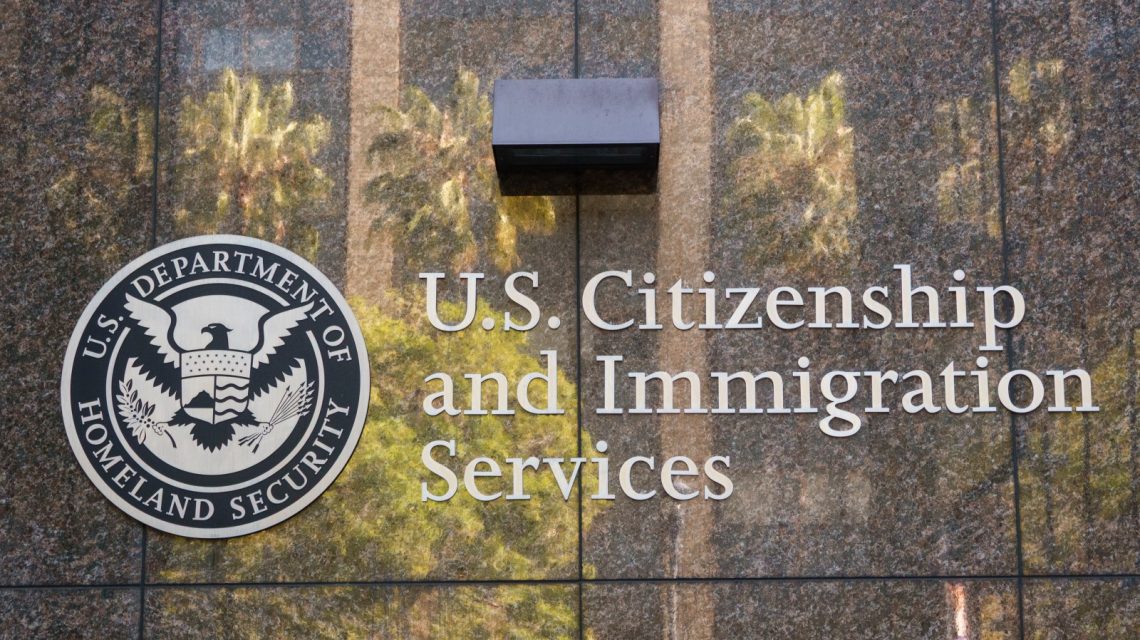
Labor unions, university faculty groups, and immigrant advocates have filed a lawsuit against the Trump administration regarding two immigration policies. These policies are said to complicate the process for some immigrants already living in the U.S. to acquire green cards without leaving the country.
The lawsuit was filed on October 5 in the U.S. District Court for the District of Massachusetts. It targets policies issued by the U.S. Citizenship and Immigration Services (USCIS) in May and August. These policies impact the adjustment of status, which enables eligible immigrants in the U.S. to apply for permanent residence without traveling abroad for an immigrant visa.
The lawsuit contends that these policies alter the regulations for individuals seeking permanent residence, potentially affecting those who applied under previous guidelines since their submissions might now be reviewed under new criteria without an initial chance to provide extra evidence.
The May and August policies play distinct roles. The May policy instructs USCIS officers to consider if an applicant sought a green card domestically instead of through consular processing. The August policy permits officers more discretion to deny applications without requesting additional evidence or issuing a denial notice first. This policy applies to both new submissions and cases pending when it was enacted.
The Trump administration’s broader immigration strategy involves changes in the legal immigration system, as part of its deportation campaign. This includes the repeal of a public-charge regulation from the Biden administration. USCIS states these changes are to encourage self-reliance and enforce immigration laws.
The lawsuit was initiated by the American Association of University Professors along with its Harvard and Boston University chapters, the Service Employees International Union (SEIU) and affiliates, Americans for Immigrant Justice, and six individual green card applicants. These groups represent academics, researchers, and service workers pursuing permanent residency, as well as individuals with relatives seeking green cards.
Newsweek has reached out to USCIS and the Department of Homeland Security for comments via email.
Changes Under Examination
Adjustment of status allows certain eligible immigrants in the U.S. to apply for permanent residency without needing to leave the country. Consular processing typically requires applicants to go through the visa process at a U.S. Embassy or consulate abroad, a point of contention in the lawsuit.
USCIS’s policy from May 21 refers to adjustment as an unusual relief form that is discretionary. Although not every applicant must leave the country, the plaintiffs claim it wrongly impacts immigrants who chose an authorized process.
The August policy causes separate issues for ongoing cases, with the plaintiffs stating that prior applicants had no cause to provide evidence relevant to the new approach, potentially facing denial without a chance to supply this evidence first.
The administration asserts the discretionary nature of adjustment of status, indicating Congress anticipated situations involving temporary or paroled immigrants departing to pursue residency.
Adjustment of status accounts for a notable segment of legal immigration. DHS data shows that in fiscal year 2024, 57 percent, or 782,800 of roughly 1.36 million new lawful permanent residents, used adjustment of status.
The Lawsuit’s Objectives
The plaintiffs claim USCIS is not authorized to penalize eligible immigrants for opting for adjustment of status over consular processing. Congress established the adjustment process in 1952, updating it multiple times, always allowing eligible immigrants to apply within the U.S. without mandating an overseas application.
The lawsuit includes six claims against the policies, alleging they overstep USCIS’s authority, improperly enforce new standards, are arbitrary, contravene rulemaking standards, conflict with immigration precedent, and violate due process. These claims await a court decision.
The plaintiffs highlight possible outcomes like family separations and disruptions to work and education if applicants must contend with their cases abroad.
A specific case involves Maria Francisca Guardado, a Salvadoran resident since 1998 whose adjustment of status was denied in September 2022 despite her eligibility. USCIS cited past immigration issues and a dismissed arrest charge as reasons for the discretionary denial. She has requested a review or reconsideration.
Another plaintiff, Miriam Esther Moreno Coto, living in the U.S. for about 26 years with three American children, faced repeated questioning regarding her choice of adjustment over consular processing. Her application was pending at the lawsuit’s filing.
Moreno Coto’s 15-year-old son, who has autism, requires consistent care and instructional support at home that she supervises. The lawsuit claims that being forced to pursue residency abroad could split the family and interfere with his care.
Skye Perryman, CEO of Democracy Forward, emphasized the administration’s refusal to respect legal immigrant actions within established systems, risking separations and community disruptions. Todd Wolfson, president of the American Association of University Professors, criticized the administration’s policies for hindering scientific contributions and creating negative environments at universities.
Next Steps
The plaintiffs request a temporary halt to these policies during the lawsuit and seek their ultimate reversal. They want the court to mandate that USCIS processes impacted applications per Board of Immigration Appeals standards. The court’s decisions on the legal compliance of these policies are pending.
 Elisha Wiesel Reflects on Jewish Identity and Antisemitism in America
  Israel Marks Anniversary of Hamas Attacks Amid Political Tensions and Ongoing Conflict
  Afghan Immigrants in the U.S. Face Uncertainty and Fear
  October 7: A Turning Point in Israel-Hamas Conflict
  U.S. Embassy Monitors Reports of Suspected Pneumonic Plague Death in Russia
  Asghar Farhadi Criticizes Hollywood’s Portrayal of Iran