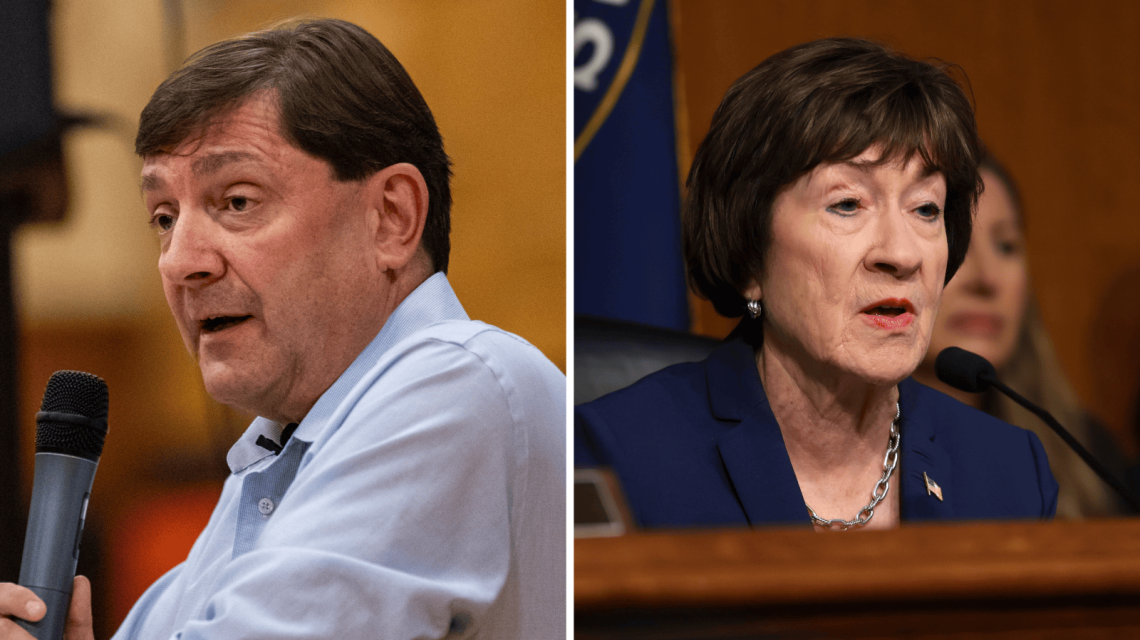
On Tuesday evening in Portland, Republican Senator Susan Collins and Democratic rival Troy Jackson engaged in the first of four debates that could influence the pivotal Senate race in Maine. Collins defended her bipartisan achievements, while Jackson linked her to President Trump and countered claims about his lack of experience. Observers did not identify a clear winner, though both contenders had significant moments.
Maine Senate Race: Key Impact
Democrats maintain a slight edge in the Senate, but Maine’s seat remains contested. Maine leans Democratic and opposed Trump in the 2016, 2020, and 2024 elections. Collins, a moderate Republican, has held her Senate role since 1996, focusing on state interests. The political climate for Republicans is challenging in 2026, with Trump’s ratings low. Collins seeks to distance herself from Trump on issues like Canadian tariffs.
Debate Highlights
The debate examined Collins’s status as a moderate versus Jackson’s portrayal of her as closely aligned with Trump. Jackson criticized Collins for her 2018 vote to confirm Justice Brett Kavanaugh, linking it to the reversal of Roe v. Wade. He also connected her to Trump’s tariffs on Canada, which were unpopular in Maine.
Collins defended her stance against these tariffs and highlighted her vote to affirm Congress’s power over the war. She stated, “the most outspoken opponent of the tariffs with Canada,” and protected Maine businesses from those effects. In one notable exchange, Collins mentioned a tariff exemption for road salt from Canada, prompting Jackson’s comment: “We can’t eat road salt.”
Collins disputed a statistic that she votes with Trump 96 percent of the time, clarifying it as 70 percent and emphasizing her role as a centrist senator. She asserted her distance from Trump, describing herself as “not exactly his favorite senator.”
Debate Performance Analysis
Reactions split along party lines. Democrats felt Jackson put Collins on the defensive, especially regarding her Kavanaugh vote. Mattie Daughtry, Democrat Senate President, said, “He had Senator Collins on her back foot.” Collins, however, impressed with her bipartisan and legislative experience. Republican strategist Denny Salas acknowledged her ability to underline her bipartisan record.
Post-debate predictions shifted slightly, with Jackson’s lead narrowing. Political commentator Phil Harriman noted, “Jackson successfully pounded on Collins’s party affiliation,” but maintained that her voting record shows her comprehensive representation of Maine.
Debate’s Influence
With polls showing a close race and many undecided voters, both candidates were keen to impress. A CBS survey showed a tie, while another poll indicated visibility issues for Jackson, who replaced Graham Platner after his withdrawal. The debates may impact undecided voters, with analyst Andrew E. Smith contending they might not be decisive unless a candidate has a major setback.
Phil Harriman opined that for unsure voters, observing debate performances could be crucial in deciding who demonstrates the capability to represent Maine effectively.
Report compiled using Martyn, Newsweek’s AI assistant.
 Sen. John Curtis Calls for Hearings Involving Donald Trump Jr. and Hunter Biden
  Understanding Immigration and Identity in California Politics
  Republican Steve Hilton’s Unconventional Campaign for California Governor
  Race for Kane County Board District 3: Candidates Address Key Issues
 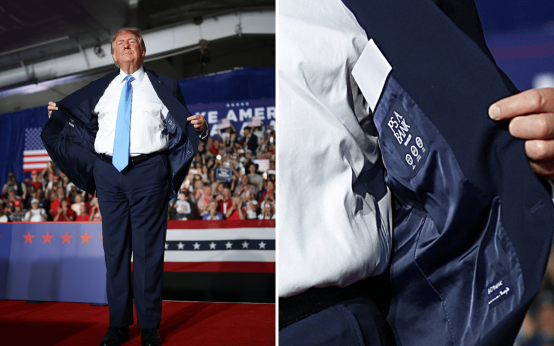 Trump’s Surprising Suit Choice Sparks Discussion
  Speculation Rises as Trump Hints at ‘Big Surprises’ Ahead of Midterms