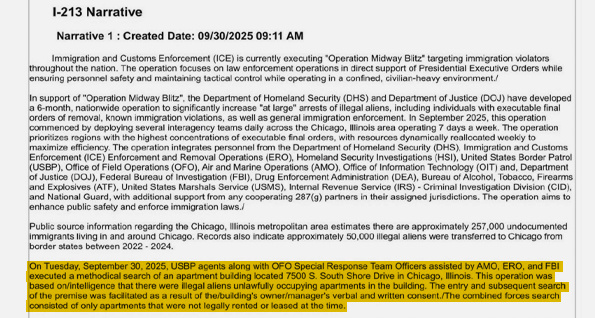
The Trump administration’s midnight raid on a Chicago apartment complex aimed to neutralize the Tren de Aragua gang, according to government claims. However, documents reveal the main reason was unauthorized immigrants occupying the premises. The landlord had already permitted federal officials to search the complex, focusing solely on suspected unlawful occupancy.
The Raid and Its Aftermath
On the night of the raid, agents broke into the building from a Blackhawk helicopter, detaining 37 individuals, both U.S. citizens and immigrants. Arrest records for two individuals highlighted that the operation targeted apartments not legally rented or leased. Attorney Mark Fleming criticized the operation as a gross misrepresentation to the public, emphasizing that the primary concern was unlawful occupancy, not gang activity.
The U.S. Department of Homeland Security’s records omit any mention of the Tren de Aragua gang, despite prior assertions. The public arrests were depicted as victories over terrorism. However, the government failed to substantiate claims that gang members were among those arrested.
Ongoing Legal Struggles
ProPublica’s investigations, including interviews with 15 detained immigrants, found no evidence linking them to gangs. A lawsuit tied to a 2022 consent decree concerning warrantless arrests is still ongoing. The DHS admitted that improper arrests happened during the Chicago deportation campaign. This has led to a legal challenge, demanding the release of detained individuals or lifting restrictions on those released.
Housing Discrimination Allegations
State officials are probing whether the landlord, Trinity Flood, and management company Strength in Management used federal agents to unlawfully expel Black and Hispanic tenants. Complaints highlight managerial failures blamed on Venezuelan tenants, with stereotypes reportedly being used to unfairly associate them with gang activity. Witnesses reported that belongings were discarded following the raid, raising accusations against the property’s management.
They took us out as if we were dogs. As if we were criminals.– Daniel José Henríquez Rojas, a deportee
Tenants expressed disbelief over the landlord’s involvement. Jean Carlos Antonio Colmenares Pérez, now deported, voiced frustration over being targeted despite adhering to rent agreements.
Lives Interrupted
Families have been torn apart due to the operation’s outcomes. Johandry José Andrade Jiménez was deported, leaving his wife to fend for their family. His story illustrates the broader impact on families who were law-abiding tenants.
Complex Decline and Management Issues
The apartment complex, largely home to African American and Venezuelan tenants, had suffered from poor conditions. Some tenants had stopped paying rent due to these issues, while others reportedly paid rent to unauthorized individuals claiming to represent management.
The property’s decline continued post-raid. Legal actions confirmed that alternatives to management were necessary, with changes made to halt further deterioration. The aftermath of the raid has accelerated these issues, leaving many displaced.
 Couple Discovers Nighttime Coyote Visits Through Surveillance Footage
  When Family Relationships Strain: Understanding Boundaries and Expectations
  Church’s Support for Israel Targeted: Flags Vandalized and Threats Received
  Tatjana Genrich Transitions to Professional Boxing
  Remembering Sam McDowell: A Baseball Legacy and Redemption Journey
  Tyler Vo’s Journey and Athletic Achievements