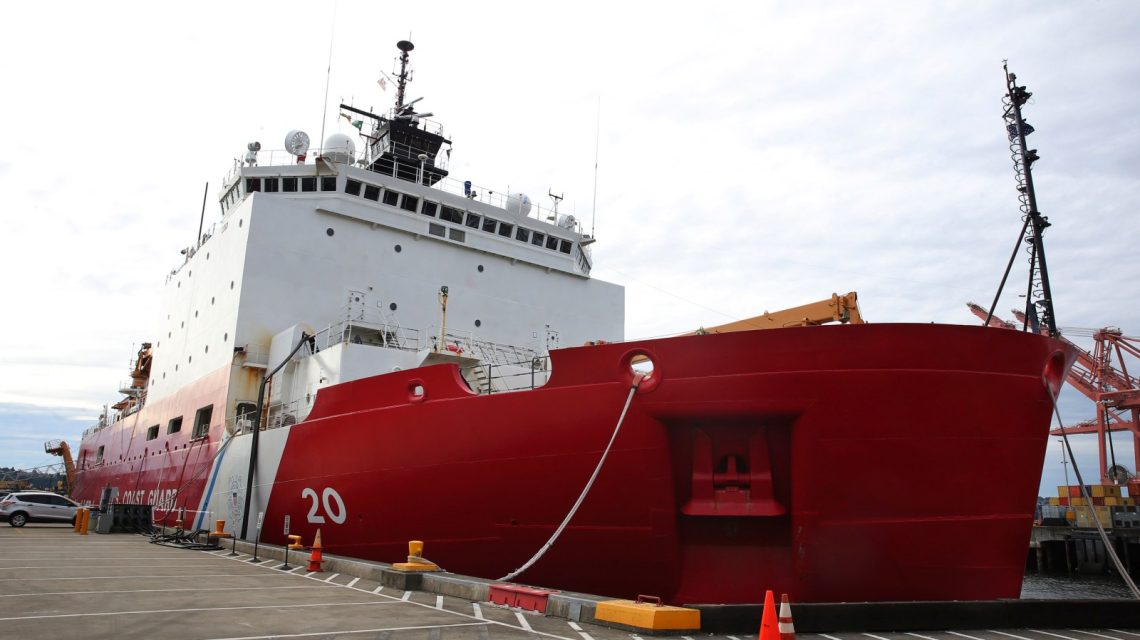
Challenges in U.S. Icebreaker Construction
The United States has encountered significant hurdles in building new icebreakers. Delays, cost overruns, and a lack of suitable technology and skilled workers have hampered progress. Seven years have passed since the U.S. government commissioned heavy icebreakers, yet none are ready. The first of three planned vessels might be operational by 2033, as reported by the Government Accountability Office.
Canada faces similar obstacles. Its government announced an $11 billion program to build six icebreakers for the Canadian Coast Guard. The first ship is expected by 2032, and the entire fleet by 2038.
Importance of the Arctic
The Arctic is increasingly vital for reasons like climate research, security, economics, and new technologies. Despite this importance, the U.S. is struggling to maintain its presence in the region.
Finland’s Expertise
Finland is known for its expertise in icebreaker construction. This year, work started on four Finnish-built icebreakers for the U.S., expected by 2028. Robin Häggblom, an adviser at Risk Intelligence, noted Finland’s proficiency, with about 60 percent of global ice ships built there.
The collaboration with Finland, a small European ally, is essential for the U.S. to learn and expand in the Arctic. Finland’s membership in NATO adds another layer to this partnership.
The Arctic Security Cutter Program
The Arctic Security Cutter program aims to build up to 11 cutters for the U.S. Coast Guard. Contracts worth $6.8 billion involve Bollinger Shipyards and Finland’s Rauma Marine Constructions. Technology and skills transfer will aid U.S. shipbuilders.
The need for these cutters is urgent. Häggblom highlighted their importance across political spectrums. Climate change research and access to raw materials make them critical. The Arctic also holds strategic importance in defense scenarios.
Russian and Chinese Activity
Russia remains a strong presence in the Arctic, boasting the longest coastline and numerous icebreakers. Finland has contributed to building Russian icebreakers.
China also probes the region, with activities ranging from climate research to shipping. It is testing regular cargo service through the Arctic’s Northeastern Passage.
U.S. Capabilities and Future Programs
The U.S. capacity to support Arctic ventures is waning. Häggblom commented, “The U.S. has let their Arctic capability atrophy.” The Arctic Security Cutter program is deemed sensible compared to other costly initiatives.
Bollinger Shipyards plans to build four vessels in Louisiana, while Davie aims for three in Texas, both with Finnish assistance. The capability exists, but executing on schedule and budget remains uncertain.
 U.S.-Canada Trade Tensions Rise Amid Tariff Conflict
  Iran Pledges Response to Expanded U.S. Sanctions
  U.S. Economic Isolation Strategy for Iran Faces Resistance from China
  The Latest Developments in U.S. Politics and Policy
  The U.S.-Canada Trade Dispute and Lessons in Coercive Diplomacy
  Challenges Faced by Wildfire Survivors in Spokane